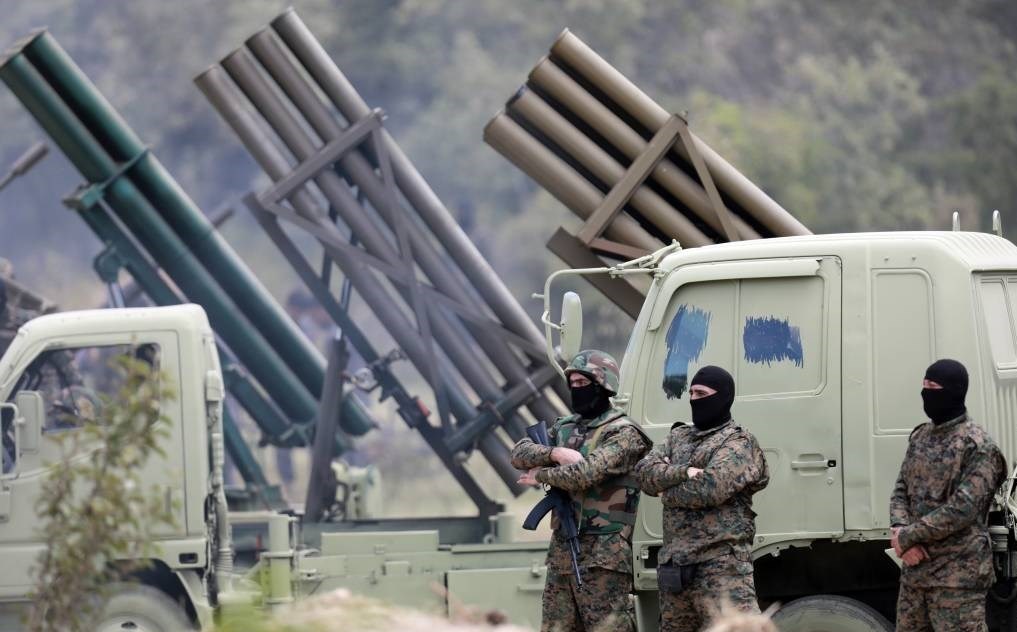
Hezbollah Drone Swarm Exposes Israeli Vulnerability in Lebanon as Doctor Killed, Troops Wounded
A wave of Hezbollah explosive drones slammed into an Israeli armored vehicle in southern Lebanon, killing a battalion doctor and wounding seven soldiers just hours before Washington announced a tentative ceasefire. The strike shows how cheap FPV and loitering munitions are turning Israel’s advance into a high-risk grind—putting medics, tank crews and infantry back in the line of fire even under U.S. pressure to pull back.
An Israeli military doctor was killed and seven soldiers were wounded in southern Lebanon after a swarm of Hezbollah explosive drones struck their armored vehicle, a lethal reminder that low-cost unmanned weapons are rewriting the risk calculus for Israel’s incursion even as diplomats try to freeze the front.
On 1 June, the Israel Defense Forces (IDF) confirmed the death of the doctor of the Shaked Battalion, part of the Givati Brigade, in combat in southern Lebanon. Israeli media, citing military sources, said “a large-scale attack by about six Hezbollah explosive drones” hit a Nimr armored vehicle carrying the medical officer around midday. The drones detonated on or near the vehicle, killing the doctor and injuring seven other soldiers and officers: three in serious condition, one moderately, and three lightly wounded. Separately, the IDF announced the death of another soldier in Lebanon, Ori Yosef Silvester, 30, underscoring the growing human cost of Israel’s operations north of the border.
For troops on the ground, the attack is a harsh illustration that the battlefield is now saturated with threats that are hard to see and harder to stop. Armored vehicles traditionally offer a sense of protection and mobility; in this incident, they became a magnet for multiple small drones able to home in on a high-value target—the unit’s medical capability. Medics and doctors, who often move toward contact lines to stabilize the wounded, now face the same exposure as frontline infantry or tank crews, with seconds or less to react to incoming FPV drones that may fly low, fast and beyond the effective reach of many vehicle-mounted defenses.
Militarily, Hezbollah’s successful use of coordinated drone swarms against an armored formation challenges a core pillar of Israel’s combat doctrine: the belief that combined-arms maneuver with heavily protected vehicles can dominate most adversaries in the region. Hezbollah media and affiliated channels have also showcased an FPV kamikaze drone attack on an Israeli Merkava Mk. IV tank near Beaufort Castle, using a fiber-optic “Ababil” platform armed with a PG‑7 pattern anti-tank warhead. Coupled with Israeli claims of eliminating Hezbollah missile-unit commander Mohammed Mousa Mteirek in nearby Nabatieh—a figure the IDF says planned hundreds of rocket and UAV launches—both sides are clearly prioritizing unmanned systems and counter-unmanned operations.
The timing tightens the pressure on Israeli decision-makers. Within hours of the drone attack, U.S. President Donald Trump announced that he had held a “very productive” call with Prime Minister Benjamin Netanyahu and, via intermediaries, reached an understanding with Hezbollah to halt mutual attacks. Lebanon’s presidency separately confirmed that Hezbollah had accepted a U.S.-brokered proposal under which Israel would refrain from striking Beirut’s Dahiyeh district if Hezbollah stopped attacks on Israel. Yet Israeli airstrikes and Hezbollah projectiles continued across southern Lebanon, and an Israeli tank was hit near Beaufort even as Washington talked about dialing back the fighting.
Inside Israel’s government, the losses in Lebanon are feeding a sharper debate. National Security Minister Itamar Ben-Gvir openly demanded that Netanyahu tell Trump “no” and strike Hezbollah “immediately” and “without restrictions,” rejecting U.S. pressure to avoid a larger ground push toward Beirut. Defense Minister Israel Katz, by contrast, has portrayed Trump’s line as acceptance of Israel’s deterrence equation—linking any Hezbollah fire on Israeli communities to potential bombing in Beirut—while insisting the IDF will keep operating in southern Lebanon “as planned.” The gap between a costly, attritional advance under drone fire and the promise of quick, decisive blows is widening.
If Hezbollah’s drone tactics continue to prove effective, Israel may be forced into rapid adaptation. That could include fielding more layered electronic warfare and hard-kill defenses on every platoon-level vehicle, adjusting movement patterns to reduce clustering, and changing how sensitive roles like doctors or forward observers are deployed. Each adaptation has trade-offs: more armor and countermeasures reduce mobility, dispersal complicates command and control, and holding medical assets further back can slow life-saving care.
For Hezbollah, every successful strike on an Israeli soldier in Lebanon strengthens its narrative of resistance and raises the domestic political cost for Israel of staying on the northern front. But each drone launched also risks triggering a disproportionate Israeli response against Lebanese infrastructure or deeper targets, particularly if civilians are killed in crossfire.
Key Takeaways
- An Israeli battalion doctor in the Givati Brigade was killed and seven soldiers wounded in southern Lebanon after about six Hezbollah explosive drones hit their armored vehicle.
- Another Israeli soldier, Ori Yosef Silvester, 30, was also reported killed in Lebanon, emphasizing the rising human cost of the operation.
- Hezbollah is using swarming FPV and kamikaze drones, including a fiber-optic “Ababil” platform armed with anti-tank warheads, to target Israeli armor near positions like Beaufort Castle.
- The incident exposes vulnerabilities in Israel’s armored doctrine and comes just as the U.S. is pressing for a ceasefire arrangement that would halt mutual attacks.
- Israeli political leaders are divided over whether to deepen operations against Hezbollah or accommodate U.S.-brokered de-escalation even as casualties mount.
Outlook & Way Forward
In the short term, Israel is likely to harden its forces in Lebanon with additional drone defenses and modify tactics to reduce exposure to swarms, but such changes take time and may not keep pace with Hezbollah’s use of cheap, rapidly produced munitions. The longer armored columns remain inside Lebanese territory, the more opportunities Hezbollah has to refine targeting techniques, gather intelligence on Israeli patterns and strike high-value enablers like medics and commanders.
Whether the drone war in Lebanon pauses or intensifies will hinge on the fragile understanding Washington is trying to cement. A credible halt to cross-border fire could freeze current lines and give both sides breathing room to reassess doctrines that assumed drones were an adjunct, not a centerpiece, of combat. If the deal fails and casualties like this doctor’s death continue, domestic pressure in Israel for a decisive campaign—and in Lebanon for a show of resilience—could push the conflict toward a broader confrontation that neither side claims to want, but both are preparing for.
Sources
- OSINT