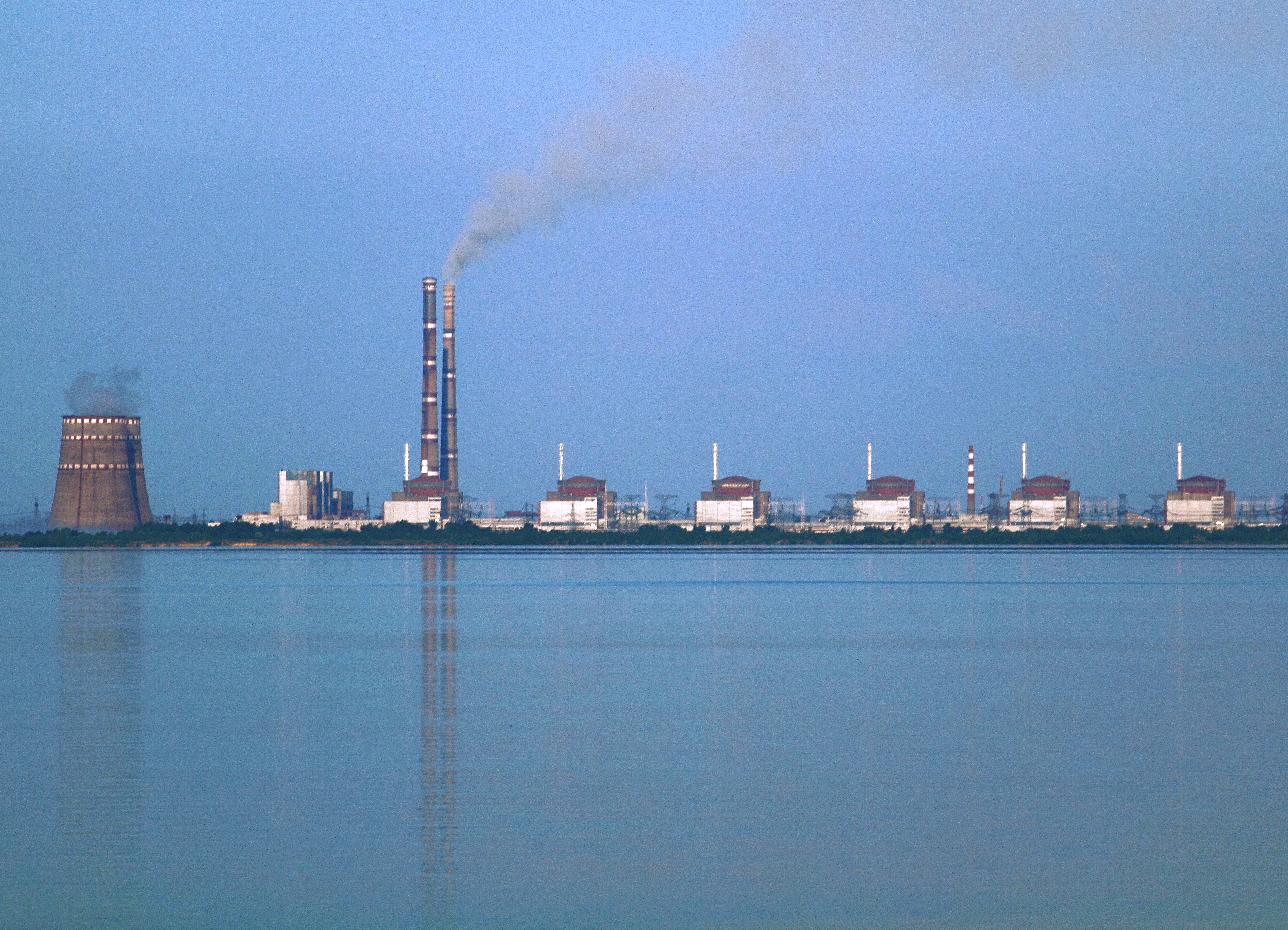
IAEA Probes Drone Damage at Zaporizhzhia Plant, Raising Nuclear Safety Alarm Beyond the Front Line
IAEA experts are inspecting damage at the Zaporizhzhia Nuclear Power Plant after a Ukrainian drone strike hit Unit 6 on May 30, according to Russian diplomatic accounts. With a live reactor complex in a war zone, nuclear engineers, local residents, and European governments are confronting a risk that is no longer theoretical.
A drone strike that damaged part of the Zaporizhzhia Nuclear Power Plant and drew an onsite inspection from the International Atomic Energy Agency (IAEA) has pushed nuclear safety back to the center of the Ukraine war. When live reactor infrastructure becomes part of the battlefield, the margin for error narrows not only for combatants, but for millions of people downwind.
On 31 May, Russia’s permanent representative to international organizations in Vienna, Mikhail Ulyanov, said IAEA experts were inspecting the site where a Ukrainian drone struck the plant’s Unit 6 on 30 May. According to his account, the mission is focused on assessing the extent and nature of the damage at Europe’s largest nuclear power facility, which has been under Russian control since early in the war. Ukraine has not publicly detailed this specific strike but has consistently argued that Russian forces are militarizing the plant and using it as cover for military operations—claims Moscow denies.
For engineers, technicians, and support staff still working at Zaporizhzhia under Russian occupation, the drone hit and subsequent inspection mean their routine safety calculations must now factor in the possibility of direct attack. Protective structures around reactor units are designed with significant redundancy, but they are not meant to be tested repeatedly by explosive drones and shelling. Local residents in nearby Enerhodar live with the constant anxiety that any strike gone wrong—a mis‑aimed drone, a fire that spreads beyond containment, a damaged power supply—could turn their town into the epicenter of a radiological crisis.
The human stakes extend far beyond southern Ukraine. A serious incident at Zaporizhzhia could spread contamination across borders, affecting agriculture, water supplies, and health systems across eastern and central Europe. Even short of a catastrophic release, repeated damage to auxiliary buildings, cooling systems, power lines, or spent fuel storage can erode safety margins and confidence among those charged with preventing the unthinkable. The presence of IAEA inspectors onsite has been one of the few stabilizing factors, but their role depends on both sides respecting a minimum set of rules.
Strategically, the reported Ukrainian drone strike illustrates Kyiv’s determination to contest Russian control over the plant and to deny Moscow the ability to shelter military assets there with impunity. For Russia, highlighting the attack through its diplomatic channels serves to cast Ukraine as reckless and to argue for constraints on Western‑supplied systems. Both sides accuse the other of endangering nuclear safety; neither has been willing to declare the complex a genuine demilitarized zone with verifiable guarantees.
If operations like this continue, several critical questions will come into sharper focus. Can a binding, enforceable safety perimeter be established around Zaporizhzhia, or will each new strike bring the world one step closer to a nuclear incident born more of attrition than intent? How long can plant staff maintain high professional standards under occupation, political pressure, and physical danger? And at what point do neighboring countries insist on stronger international measures to keep the plant out of the line of fire?
Key Takeaways
- IAEA experts are inspecting Unit 6 at the Zaporizhzhia Nuclear Power Plant after a Ukrainian drone strike on 30 May, according to Russia’s representative in Vienna.
- The plant, controlled by Russia but still staffed by Ukrainian personnel, is now facing not only frontline power disruptions but direct attack on its infrastructure.
- Local workers and residents bear immediate risk, while a serious incident could spread radiological consequences across multiple European countries.
- Both Moscow and Kyiv continue to weaponize the narrative around nuclear safety, but neither has secured a durable demilitarized status for the site.
Outlook & Way Forward
In the short term, the IAEA’s findings on the latest damage will shape diplomatic pressure on both Russia and Ukraine. Any evidence that critical safety systems have been compromised, even if only partially, will intensify calls for an expanded safety and security zone that removes heavy weapons and offensive operations from the immediate vicinity of the plant.
Longer term, Zaporizhzhia has become a test case for whether international nuclear governance can function in a high‑intensity war. Without a verified agreement that treats the facility as off‑limits for attacks, every additional drone, artillery round, or sabotage attempt increases the chance of an accident with regional implications. For European governments, energy planners, and publics still haunted by Chernobyl, the question is no longer academic: as long as this plant remains on the front line, nuclear safety is part of the battlefield, not above it.
Sources
- OSINT