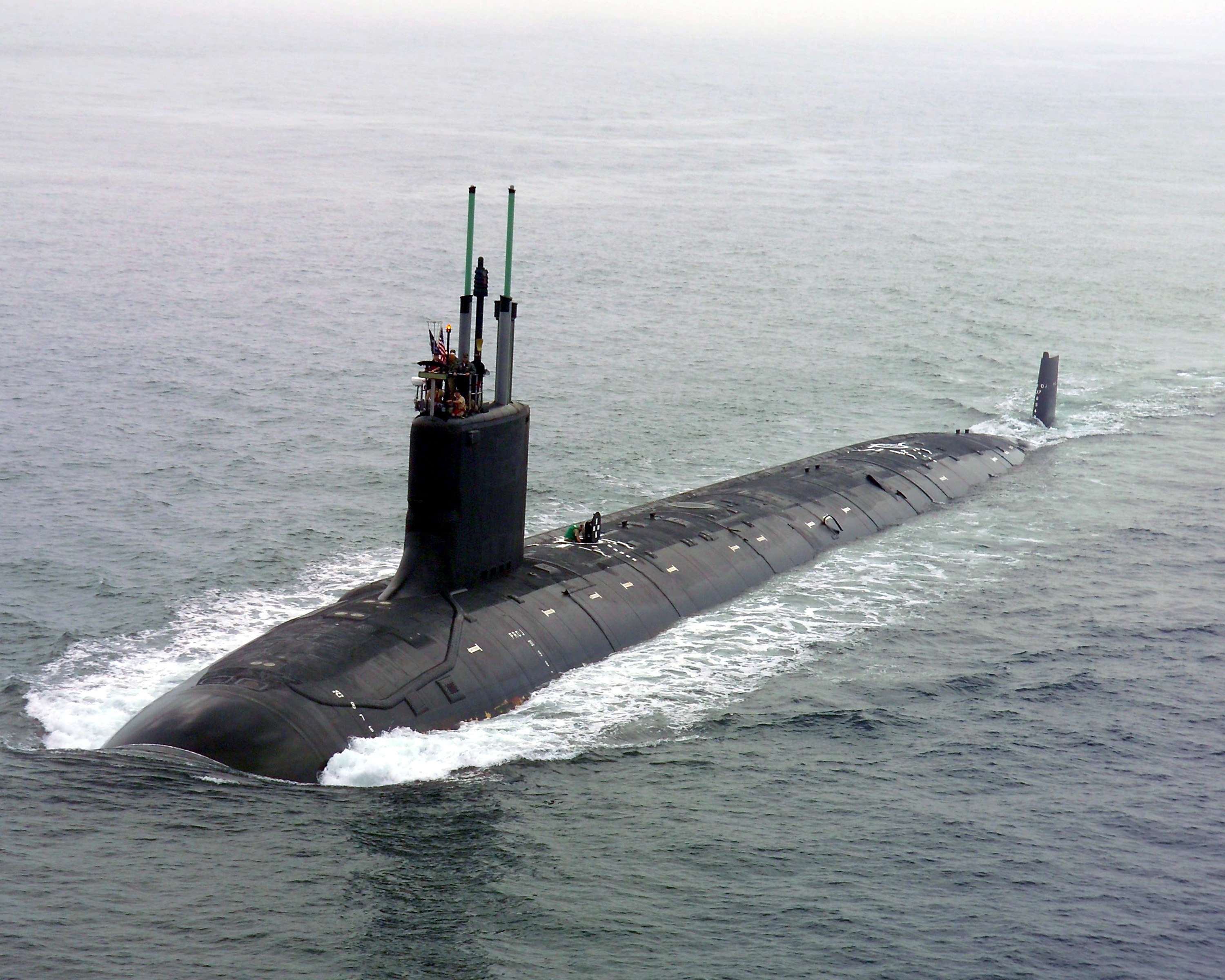
AUKUS Submarines to Range Three Oceans, Testing China and Stretching U.K. Commitments
Britain’s defense minister says future AUKUS submarines will deploy not just in the Pacific but across the Atlantic and Indian Oceans, turning a pact aimed at China into a wider overhaul of allied undersea posture. The move raises new questions about how London, Canberra, and Washington will balance China deterrence, homeland defense, and nuclear stewardship with finite crews and boats.
When Britain’s defense minister said AUKUS submarines would not be confined to the Pacific, but patrol the Atlantic and Indian Oceans as well, he quietly widened the map of a deal already rattling Beijing. The announcement turns a regional deterrence project into a blueprint for a far more global undersea presence—with all the strains that implies for fleets already running hot.
On 30 May, the U.K. defense chief stated that submarines operating under the AUKUS framework would eventually deploy across the Atlantic, Indian and Pacific Oceans. AUKUS, the security partnership between Australia, the United Kingdom and the United States, was originally sold primarily as a way to give Australia nuclear-powered attack submarines and strengthen deterrence against China in the Indo-Pacific. The minister did not release detailed timelines or numbers, but the statement signals intent: AUKUS platforms, once operational, will not be tied to a single theater.
For sailors and their families in all three countries, a truly tri-ocean remit means more time at sea, longer patrols far from home, and an even heavier operational tempo on a small cadre of highly trained submariners. Australian crews preparing to transition from conventional to nuclear-powered boats face the steepest learning curve; service life on a nuclear sub involves longer deployments and more demanding technical standards. British and American submariners, already stretched by commitments from the North Atlantic to the South China Sea, may see schedules tighten further as political leaders lean more on invisible deterrence platforms.
At the human level inside partner states, AUKUS has sparked domestic debates that this new declaration could intensify. In Australia, communities around prospective submarine bases worry about the environmental and safety implications of hosting nuclear-powered vessels. In the U.K., questions persist about whether expanded global deployments risk leaving home waters, including critical infrastructure in the North Sea and around the British Isles, less protected. For Americans, the transfer of submarine technology and potential diversion of U.S. industrial capacity to support Australian and British builds intersects with concerns about shipyard backlogs and strain on the U.S. Navy’s own fleet.
Strategically, extending AUKUS patrols into the Indian and Atlantic Oceans is a signal aimed at multiple actors. In Beijing, it will be read as confirmation that the alliance architecture forming around China is not limited to the first island chain or even the broader Indo-Pacific, but designed to follow Chinese naval and commercial footprints into the Indian Ocean and beyond. Chinese investments in ports from Gwadar to Djibouti and growing blue-water deployments will now have to factor in the prospect of AUKUS submarines shadowing them in more theaters.
For Russia, already grappling with NATO’s renewed focus on the North Atlantic and Arctic, the prospect of AUKUS boats reinforcing undersea surveillance and strike options could complicate its own submarine operations from the Kola Peninsula into the wider Atlantic. Other allies, including France and Canada, will see a denser, more Anglo-centric undersea posture in waters where they also have interests, potentially spurring both cooperation and rivalry over basing, patrol patterns and technological standards.
If AUKUS submarines do become regular visitors across three oceans, several decision points lie ahead. Industrially, the U.S. and U.K. shipbuilding bases must deliver more nuclear-powered boats and support facilities without sacrificing maintenance and modernization of existing fleets. Any significant slip could force painful choices about which theaters to prioritize. Politically, governments will have to sell their publics on the costs, risks and benefits of a long-term, nuclear-powered undersea expansion that goes far beyond China’s immediate neighborhood.
Regionally, states along key sea lanes—from the Gulf states and India to South Africa and Brazil—will weigh what increased AUKUS submarine presence means for their own autonomy and security. Some may welcome a stronger allied undersea shield against piracy, terrorism or rival navies; others will fear being dragged more tightly into great-power competition.
Key Takeaways
- The British defense minister announced that AUKUS submarines are planned to operate in the Atlantic and Indian Oceans, not just the Pacific.
- This broadens AUKUS from a primarily Indo-Pacific deterrence pact into a framework for more global undersea operations.
- Submariners and their families in the U.S., U.K. and Australia face higher operational tempo and longer, more dispersed deployments.
- China and Russia will see the move as a further tightening of allied naval pressure on their global activities.
- Allied shipbuilding and maintenance capacity will be a critical bottleneck for turning AUKUS’s expanded ambitions into sustained patrols.
Outlook & Way Forward
In the coming years, the credibility of this tri-ocean vision will depend on whether Canberra, London and Washington can translate political intent into hulls, crews and support infrastructure. Delays in submarine construction or training pipelines could force leaders to scale back or sequence deployments, prioritizing the Indo-Pacific over secondary theaters like the South Atlantic, at least in the medium term.
Diplomatically, AUKUS partners will need to manage how this expansion is perceived. Clear communication with regional states about port calls, nuclear safety, and rules of engagement will be essential to prevent misinterpretation and reduce friction. As rival powers adjust their own undersea postures in response, the oceans between continents—not just the seas near China—are set to become more crowded, more surveilled, and more central to how great-power competition is waged below the surface.
Sources
- OSINT