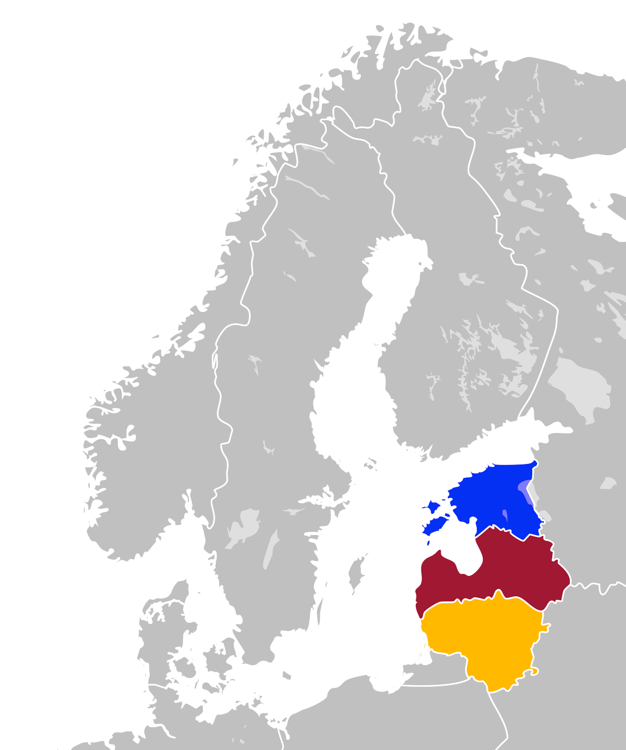
NATO Sets Up New Baltic Command To Speed Troop Deployment
Around 03:55 UTC on 28 May, reports emerged that NATO is creating a new command structure focused on the Baltic region to accelerate force deployment. The move is aimed at reinforcing deterrence and readiness along the alliance’s northeastern flank.
Key Takeaways
- At about 03:55 UTC on 28 May, NATO was reported to be establishing a new Baltic command structure.
- The command is intended to speed up deployment of allied forces to the Baltic states in a crisis.
- The step reflects heightened concerns over regional security and Russia’s posture near NATO’s northeastern border.
- It aligns with broader NATO efforts to move from “tripwire” forces to more robust forward defense.
- The new command will likely reshape planning, logistics, and infrastructure investments across Northern Europe.
On 28 May 2026, around 03:55 UTC, information surfaced that NATO is setting up a dedicated Baltic command to enhance the speed and effectiveness of allied troop deployments to Estonia, Latvia, and Lithuania. The new structure is designed to streamline decision‑making, planning, and logistics in the event of a crisis, ensuring that reinforcements can move quickly from Western Europe and North America to the alliance’s northeastern frontier.
This initiative emerges amid persistent concerns within NATO about Russia’s military posture and intentions in its western regions, including near the borders with the Baltic states and Poland. While there is no immediate indication of an impending offensive, the experience of Russia’s actions in Ukraine has sharpened the alliance’s focus on readiness, pre‑positioning, and command‑and‑control arrangements that can function effectively under time pressure.
Key stakeholders include NATO’s Supreme Headquarters Allied Powers Europe (SHAPE), national defense ministries of Baltic and Nordic allies, and host‑nation governments responsible for infrastructure and legal frameworks enabling rapid transit of troops and equipment. The new command is expected to coordinate closely with existing regional structures and may be located in or near one of the Baltic states to provide direct oversight and integration with national forces.
The move matters for several reasons. First, it represents a concrete step in implementing NATO’s updated defense plans, which emphasize moving from small, symbolic “tripwire” formations toward more robust forward defense capable of deterring and, if necessary, repelling aggression. A dedicated Baltic command can reduce bureaucratic friction and clarify responsibilities, making it easier to surge forces in a crisis.
Second, the establishment of such a command sends a political signal of alliance commitment to the security of smaller front‑line members. For Estonia, Latvia, and Lithuania, which have long advocated for greater NATO presence and contingency planning, the move is a reassurance that their defense is not an afterthought but a core mission of the alliance.
Third, it has logistical and infrastructural implications. To be effective, rapid deployment requires adequate transport routes, ports, railways, depots, and legal frameworks for cross‑border movement. The new command is likely to spur additional investment in dual‑use infrastructure and harmonization of regulations among European allies, strengthening overall resilience.
For Russia, the move will probably be portrayed as evidence of NATO encirclement or militarization of its borders. While Moscow has limited capacity for large‑scale new deployments while engaged in Ukraine, it may respond by adjusting its own force posture, conducting exercises, or engaging in signaling through aviation and naval activity in the Baltic Sea.
Outlook & Way Forward
In the near term, NATO will need to finalize the command’s location, scope of authority, staffing, and integration with existing headquarters. Allies will negotiate national contributions and the degree to which forces are assigned, earmarked, or rotationally linked to the Baltic command. Transparency measures toward non‑NATO states may be considered to reduce misperception, though the alliance is unlikely to compromise on its core deterrence objectives.
Over the medium term, the effectiveness of the new command will be tested through exercises and war‑games simulating high‑tempo deployment scenarios. Observers should monitor planned large‑scale drills in Northern Europe, changes in pre‑positioned equipment stocks, and improvements to critical transport corridors from Germany and Poland to the Baltic states. These will be key indicators of the alliance’s practical progress.
Strategically, the new Baltic command further embeds the region as a central theater in NATO’s long‑term posture vis‑à‑vis Russia. It complements other developments, such as Finland and Sweden’s accession to the alliance, which transform the geography of defense in Northern Europe. Provided that allies sustain funding and political will, the command could significantly enhance deterrence by making the prospect of a quick, decisive seizure of Baltic territory by any adversary far less plausible.
Sources
- OSINT