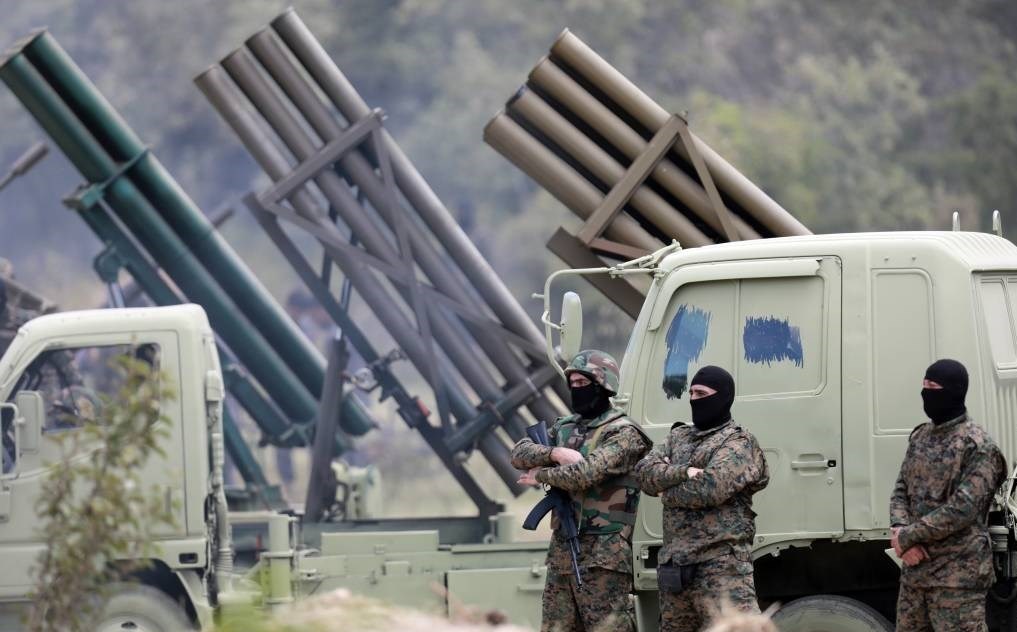
Hezbollah Rockets Kiryat Shmona Amid Intensifying Drone Campaign
A few hours before 03:04 UTC on 27 May, Hezbollah fired a single short- or medium-range rocket toward Kiryat Shmona in northern Israel, which the IDF said landed in open terrain. The incident comes as both sides adapt to escalating drone warfare along the border.
Key Takeaways
- Several hours before 03:04 UTC on 27 May, Hezbollah launched a rocket toward Kiryat Shmona in northern Israel.
- The Israel Defense Forces reported the rocket impacted an open area, with no immediate casualties reported.
- The attack underscores ongoing low-intensity but persistent exchanges across the Israel–Lebanon frontier.
- Hezbollah’s rocket use complements a growing focus on FPV drone strikes against Israeli positions.
- The incident adds to tensions that risk escalation beyond the current cross-border tit-for-tat.
In the hours leading up to 03:04 UTC on 27 May 2026, Hezbollah forces in southern Lebanon reportedly fired a single short- or medium-range rocket at the Israeli city of Kiryat Shmona, close to the Lebanese border. According to the Israel Defense Forces (IDF), the projectile impacted in an open area, and there were no immediate indications of casualties or major damage.
While limited in scale, the launch is part of a pattern of near-daily exchanges across the Israel–Lebanon frontier since the wider regional escalation linked to the Gaza conflict. Hezbollah has combined sporadic rocket and anti-tank missile fire with an increasingly sophisticated campaign employing first-person-view (FPV) attack drones against Israeli military outposts, radar sites, and infrastructure.
Kiryat Shmona, a frequent target in past confrontations, has again become a focal point of Hezbollah fire, both for its proximity to the border and its symbolic value as a northern Israeli city within reach of relatively short-range systems. The IDF’s characterization of the impact site as an "open area" suggests either an intentional attempt to signal capability without maximizing harm or effective Israeli early-warning and dispersal measures.
Hezbollah’s rocket and drone activity serves multiple tactical and strategic purposes. Tactically, it aims to fix Israeli forces along the northern front, complicate IDF force allocations, and test air defense and early-warning systems. Strategically, it functions as a pressure mechanism to influence Israeli conduct in Gaza and the wider region, while reinforcing Hezbollah’s self-image as part of a broader "resistance" axis.
On the Israeli side, the incident will be viewed through the prism of cumulative risk. Even single-rocket attacks require interception decisions, civilian alerting, and may trigger retaliatory strikes. Over time, this dynamic chips away at civilian resilience and increases the probability of miscalculation.
The principal actors in this episode are Hezbollah’s military wing, operating from positions in southern Lebanon, and the IDF Northern Command, which is responsible for defending Israel’s northern communities and responding to cross-border attacks. Political leadership in Beirut and Jerusalem remains under pressure from domestic constituencies and regional allies, constraining options for de-escalation.
Regionally, such incidents sustain a simmering front that could at any time break into a broader conflict, particularly if a rocket or drone causes mass casualties or hits a high-value military site. Internationally, continued exchanges complicate diplomatic efforts aimed at stabilizing the Lebanon–Israel border and risk drawing in external actors, notably Iran and the United States, in the event of rapid escalation.
Outlook & Way Forward
In the short term, Israel is likely to respond with limited, targeted strikes against Hezbollah assets in southern Lebanon, consistent with its established deterrence posture. The IDF will also continue refining its early-warning, interception, and civil defense measures to manage the constant low-level threat to northern communities.
Hezbollah is expected to maintain a calibrated pattern of rocket and drone attacks, carefully modulating intensity to avoid crossing red lines that could trigger a full-scale Israeli ground operation, while still demonstrating solidarity with other fronts and maintaining domestic credibility.
Key indicators to monitor include any significant increase in the volume or range of rocket fire, successful Hezbollah strikes on strategic Israeli infrastructure, or Israeli attempts to push deeper into Lebanese territory. A single mass-casualty incident on either side could rapidly shift political calculations and result in a sharp escalation, making continuous monitoring of both operational tempo and political signaling essential.
Sources
- OSINT