Israel Launches Major Air Campaign Against Hezbollah In Lebanon
Israel significantly escalated its operations against Hezbollah on 25 May 2026, with the IDF announcing large airstrikes in Beirut around 19:16 UTC and additional attacks across the Beqaa Valley and Mashgharah. Prime Minister Benjamin Netanyahu ordered intensified strikes, warning Israel would hit Hezbollah ‘with full force.’
Key Takeaways
- Around 19:16 UTC on 25 May, the IDF announced a large wave of airstrikes in Beirut, while also striking Hezbollah infrastructure in the Beqaa Valley and the village of Mashgharah.
- Prime Minister Benjamin Netanyahu publicly ordered an intensification of attacks on Hezbollah and Lebanon, saying Israel would “step on the gas” and strike “with full force.”
- Lebanese media reported at least eight Israeli strikes in Mashgharah and multiple attacks near Nuseirat in Gaza, indicating wide geographic scope for Israeli operations.
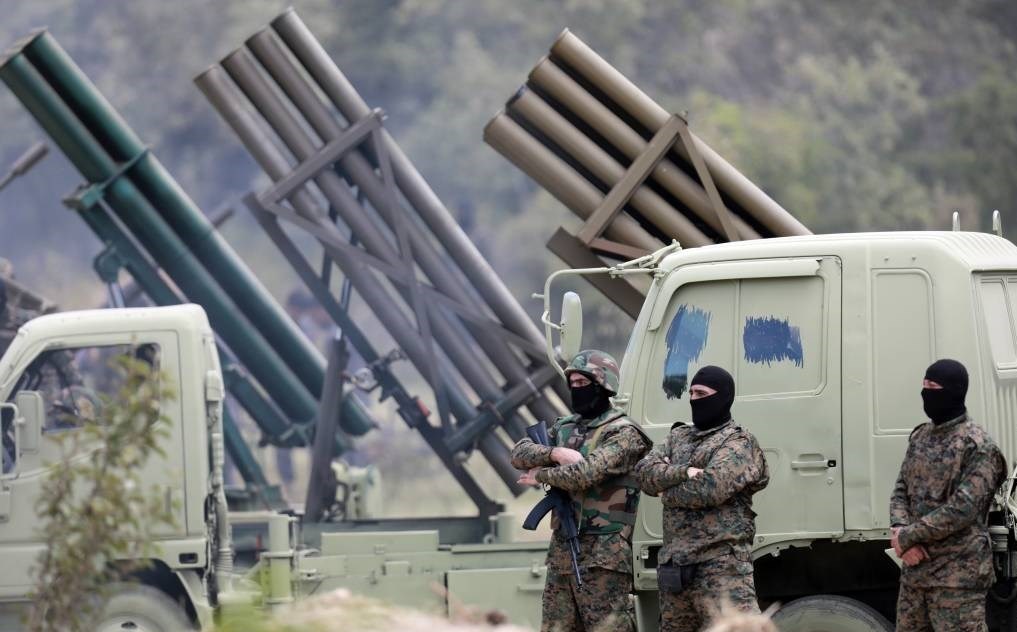
- Hezbollah conducted its own attacks, including an "Ababil" FPV kamikaze drone strike on an IDF vehicle in Misgav Am in northern Israel.
- Civilians in Beirut’s Dahieh district began fleeing amid expectations of expanded Israeli strikes, raising the risk of a humanitarian crisis in Lebanon.
On 25 May 2026, the Israel–Hezbollah confrontation sharply intensified, with Israel’s leadership and military signaling a broadening air campaign against the Lebanese group. At approximately 19:16 UTC, the Israel Defense Forces announced a large wave of airstrikes in Beirut, targeting what Israel describes as Hezbollah infrastructure. Earlier and concurrent reporting indicated strikes across Lebanon, including in the Beqaa Valley and the Western Beqaa village of Mashgharah, where Lebanese media counted about eight strikes by 20:01 UTC.
Prime Minister Benjamin Netanyahu, speaking earlier in the evening around 18:02–18:52 UTC, stated that Israel is in a state of war with Hezbollah and had ordered the military to intensify its attacks. “We will strike them with full force,” he said, adding that Israel would not ease off but would instead “step on the gas” in Lebanon. Israeli officials highlighted that in recent weeks they have eliminated multiple Hezbollah commanders, and the day’s strikes appear aimed at further disrupting the group’s command networks, logistics hubs, and missile capabilities.
Simultaneously, Israeli operations in the Gaza Strip continued. At approximately 19:56 UTC, the IDF struck several buildings near the Lulu junction in the Nuseirat refugee camp in central Gaza after issuing an evacuation warning. The parallel campaigns in Lebanon and Gaza underscore the multi-front operational tempo Israel is managing.
Hezbollah has responded with its own cross-border attacks. Around 20:01 UTC, reporting described a Hezbollah “Ababil” drone attack on an IDF vehicle in Misgav Am, in Israel’s Upper Galilee. The group reportedly employed a fiber-optic FPV kamikaze drone armed with an anti-tank RPG warhead, demonstrating the group’s adoption of low-cost precision strike technologies that have become prominent in other theaters, such as Ukraine.
Key players include the Israeli political and military leadership—Netanyahu and the IDF high command—who appear to be testing how far they can degrade Hezbollah’s capacity without provoking a full-scale war. On the Lebanese side, Hezbollah’s senior leadership remains the prime target. Israeli media around 19:07 UTC reported that Hezbollah’s deputy leader, Naim Qassem, had been the target of at least two recent assassination attempts, although details on timing and outcome remain unclear.
The civilian impact is mounting. Lebanese media and local channels reported around 20:01 UTC that residents of Dahieh, the heavily Shi’a southern suburbs of Beirut and a core Hezbollah stronghold, are fleeing in significant numbers. Some are heading north toward central Beirut and others south, amid widespread expectations of broader Israeli bombing in the area. Dahieh was heavily bombed in previous conflicts and is likely to be an early focus of any sustained Israeli campaign against Hezbollah’s urban infrastructure.
Regionally, the escalation carries substantial risks. Lebanon is under severe economic and political strain, and expanded Israeli strikes into populated areas could cause mass displacement within a fragile state already hosting large refugee populations. Any significant civilian casualties in Beirut or the Beqaa could trigger regional condemnation, pressure on Israel from international partners, and potential involvement by Iran or allied militias.
At the strategic level, this intensification intersects with wider regional tensions involving Iran, the United States, and Israel. Analysts in Israel worry about the prospect of simultaneous active fronts in Gaza, Lebanon, and potentially other arenas, at a time when U.S. attention and resources are also heavily engaged elsewhere. Hezbollah’s ability to sustain drone and rocket attacks across northern Israel will shape Israeli threat perceptions and potential consideration of more decisive ground or air actions.
Outlook & Way Forward
In the near term, Israeli air activity over Lebanon is likely to increase both in frequency and depth. Targets may include Hezbollah’s command nodes, weapons depots, air defense assets, and suspected missile production or storage sites in the Beqaa Valley and Dahieh. A key indicator will be whether Israel begins to systematically target broader civilian infrastructure associated with Hezbollah-controlled areas, such as roads and power facilities, which would signal a shift toward a more comprehensive coercive campaign.
Hezbollah will probably maintain and potentially escalate its harassment strategy along the border, using rockets, anti-tank missiles, and FPV drones like the "Ababil" to inflict military and psychological costs on Israeli forces and northern communities. Any high-casualty incident on either side—such as a mass-casualty strike in Beirut or a successful Hezbollah attack on an Israeli city—could rapidly move the situation toward a wider war.
Diplomatically, regional and international actors, including the United States, European states, and potentially Gulf countries, are likely to intensify efforts to contain the escalation. Watchpoints include public and private messaging from Washington to Jerusalem, Tehran’s rhetoric and any signs of mobilization among Iranian-linked militias, and internal Lebanese reactions to both Hezbollah’s actions and Israeli strikes. A critical variable will be whether discrete backchannel understandings can be restored to limit target sets and prevent missteps that could tip the theater into a broader, more destructive conflict.
Sources
- OSINT