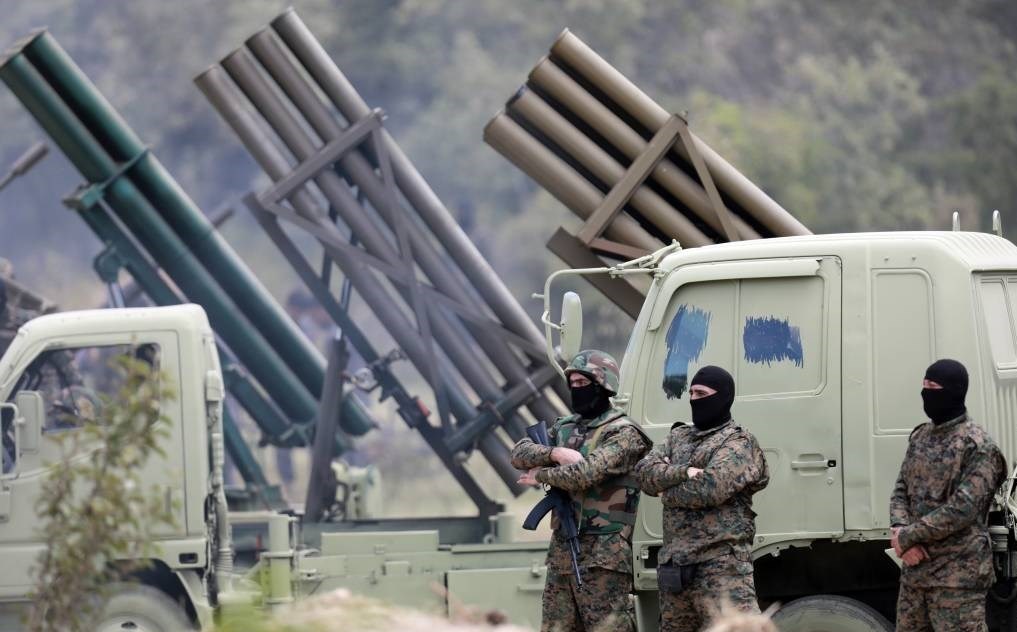
Hezbollah, Israel Exchange Deadly Strikes Across Lebanon Front
On 23 May around 19:00–20:00 UTC, Hezbollah launched multiple rocket and mortar strikes on Israeli positions in southern Lebanon, while Lebanese officials reported lethal Israeli airstrikes in Nabatieh District. The Israeli military confirmed the death of a soldier from a Hezbollah drone attack in the same cross-border theatre.
Key Takeaways
- On 23 May 2026, Hezbollah fired 122 mm rockets and 81 mm mortar rounds at Israeli positions in southern Lebanon.
- The Israel Defense Forces (IDF) reported the death of Staff Sergeant Noam Hamburger, 23, from a Hezbollah FPV (first-person-view) drone strike in southern Lebanon.
- Lebanese Civil Defense reported at least five killed, five wounded, and seven missing in an earlier IDF strike on a building in Nabatieh District.
- The cross-border violence underscores the continuing risk of a wider Lebanon–Israel war amid broader regional tensions involving Iran and the United States.
On the evening of 23 May 2026, between approximately 19:00 and 20:00 UTC, the conflict between Hezbollah and Israel flared again along the southern Lebanon frontier. Reports around 20:01 UTC indicated that Hezbollah fighters had carried out multiple attacks against Israeli Army positions in southern Lebanon, employing 122 mm 9M22U "Grad" / "Arash‑1" artillery rockets and 81 mm HM‑15 mortars with high‑explosive DIO M91 bombs.
These strikes came as the Israel Defense Forces confirmed additional casualties from Hezbollah’s expanding use of attack drones. Around 19:28–19:49 UTC, the IDF announced the death of Staff Sergeant Noam Hamburger, a 23‑year‑old soldier from the 9th Battalion, killed by a Hezbollah FPV (first‑person-view) drone in southern Lebanon. Separate IDF communications noted that another soldier had been killed a day earlier by a Hezbollah drone strike inside Israeli territory in the country’s north.
Lebanese civilians have also suffered in the intensifying exchanges. By 18:03–18:08 UTC, Lebanon’s Civil Defense reported that an Israeli strike on a building in a village on the "western route" in Nabatieh District, southern Lebanon, had left at least five people dead, five wounded, and seven missing under the rubble. The incident highlighted the persistent risk to non‑combatants in villages near suspected Hezbollah infrastructure or launch sites.
Hezbollah’s use of both indirect fire (rockets and mortars) and precision FPV drones indicates a deliberate combined-arms approach focused on degrading Israeli forward positions, observation posts, and small unit concentrations. The 9M22U Grad and comparable rockets can reach multiple kilometers across the frontier, while FPV drones give Hezbollah the ability to target specific assets such as vehicles, air-defense sensors, or individual soldiers with relatively low-cost munitions.
Israel, for its part, continues to apply airpower and precision artillery to suspected Hezbollah assets, logistics facilities, and firing points across southern Lebanon. Strikes like the Nabatieh incident are intended to raise the cost to Hezbollah of sustaining rocket and drone attacks while signaling Israel’s determination to hold the group accountable for both military and civilian casualties.
These engagements are occurring amid heightened regional uncertainty, including U.S.–Iran negotiations over a possible war-ending agreement and a heavily contested information environment. While Hezbollah frames its attacks as part of a broader axis of resistance aligned with Tehran, Israel is balancing its desire to deter Hezbollah with the risk of triggering a full-scale second front while it remains engaged on other fronts.
Regionally, the persistence of such clashes for months without a clear de‑escalation mechanism has left border communities on both sides in a state of chronic insecurity. The cumulative toll—over 3,000 Lebanese reported killed by Israeli attacks according to figures released around 19:49 UTC, and multiple Israeli soldiers killed or wounded—has increased domestic political pressure in Beirut and Jerusalem alike.
Outlook & Way Forward
In the near term, the pattern of tit‑for‑tat escalation is likely to continue. Hezbollah shows no sign of reducing its drone operations, which have proved tactically effective and psychologically impactful. Israel, in turn, is likely to intensify efforts to detect, disrupt, and destroy Hezbollah’s drone launch infrastructure and command links, including through deeper strikes into Nabatieh and other hinterland districts.
The larger question is whether developments on the U.S.–Iran track will translate into de‑escalation in Lebanon. If Washington and Tehran move closer to a formal ceasefire or deconfliction framework, Iran may encourage Hezbollah to calibrate its operations to avoid jeopardizing a strategic diplomatic achievement. However, Hezbollah retains its own calculus and may seek to maintain pressure on Israel regardless of U.S.–Iran dynamics.
Indicators of potential escalation include large salvos of medium‑range rockets, explicit Israeli threats of a comprehensive ground operation in southern Lebanon, or a mass‑casualty incident on either side. Absent a dedicated mediation channel focused specifically on the Lebanon front, the current low‑to‑medium intensity conflict risks hardening into a semi-permanent, highly volatile standoff.
Sources
- OSINT