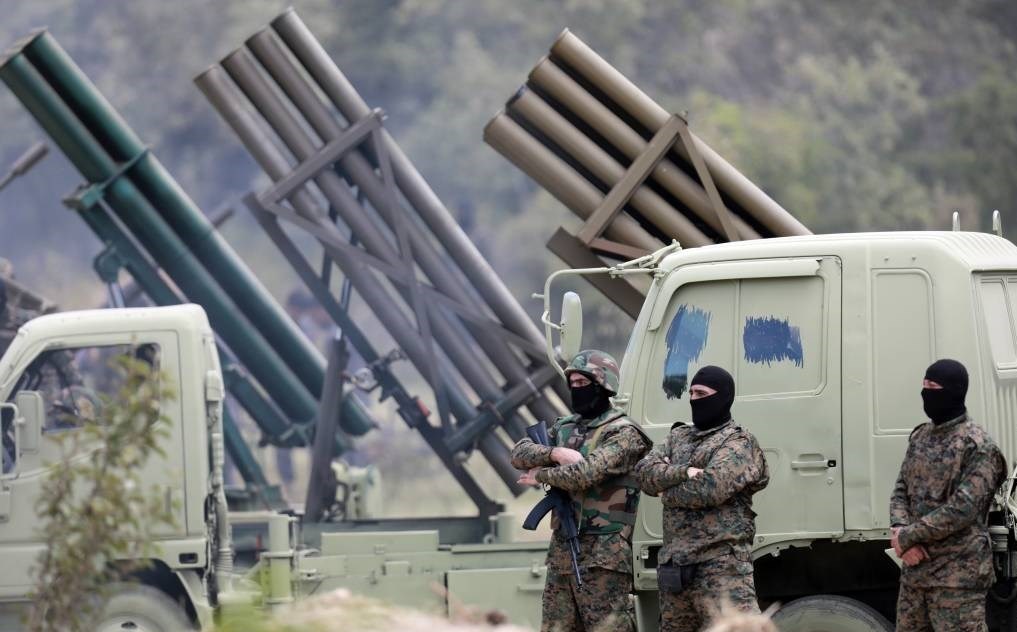
Hezbollah Drones and IDF Ground Push Deepen Lebanon-Israel Clashes
On 20 May 2026, Hezbollah claimed FPV drone strikes on an IDF logistics site in Al-Bayada and attacks on Iron Dome launchers at Jal al-Alam, while reports noted new Israeli ground advances near Khadatha in southern Lebanon. The incidents highlight a steadily intensifying border conflict.
Key Takeaways
- Around 20 May 2026, Hezbollah used fiber‑optic FPV kamikaze drones to strike an IDF logistics position in Al‑Bayada.
- The group also reported targeting Iron Dome launchers at the Jal al‑Alam site in northern Israel.
- Concurrently, new IDF ground advances were reported in and around the Lebanese village of Khadatha, roughly 12 km from the border.
- These developments point to an incremental expansion of ground operations and more sophisticated drone use along the Lebanon-Israel frontier.
- The escalation raises the risk of a broader war involving Iran and the United States, especially as Iran ties de‑escalation demands to halting fighting in Lebanon.
By the early evening of 20 May 2026, multiple reports indicated a steady uptick in both Israeli and Hezbollah operations along the Lebanon-Israel border. At 18:05 UTC, information emerged that Hezbollah had employed a fiber-optic first-person-view (FPV) kamikaze drone to attack an Israel Defense Forces (IDF) logistical position in Al-Bayada, near the frontier. The drone, reportedly armed with a PG‑7 or PG‑7L pattern RPG warhead, exemplifies the group’s increasing reliance on precision loitering munitions.
Shortly beforehand, at 17:00 UTC, separate reporting described Hezbollah attacks on Iron Dome launchers located at the Jal al‑Alam site in northern Israel. That site was also targeted roughly two weeks earlier, suggesting a campaign to degrade or at least stress Israel’s short-range air-defense architecture. While no official Israeli casualty or damage figures were included, repeated strikes on such critical assets carry both tactical and psychological weight.
In parallel, at 17:03 UTC, accounts from southern Lebanon described a new ground advance by IDF forces in the area of Khadatha, a village north of Bint Jbeil and Debel and approximately 12 kilometers from the Israeli border. Hezbollah reported exchanges of fire between its fighters and Israeli ground units in the village center, and Lebanese footage from the Khadatha area was reported in recent hours. This indicates that Israeli ground incursions, previously more limited and focused on immediate border areas, are pushing deeper into Lebanese territory.
Key actors include Hezbollah’s specialized drone and anti-air teams, the IDF’s ground and air-defense units, and political leadership in Beirut and Jerusalem. Iran and the United States are also indirectly implicated: Tehran has publicly demanded an end to all fighting, explicitly including Lebanon, as part of broader de-escalation, while Washington remains Israel’s principal security backer even as it seeks an overarching accommodation with Iran.
These developments matter for several reasons. Tactically, Hezbollah’s use of wired FPV drones equipped with anti-armor warheads reflects a mature integration of cheap, agile precision strike capabilities into its operations. Targeting logistics positions and Iron Dome launchers aims to chip away at Israel’s capacity to sustain high operational tempo and to protect its territory from rocket and missile fire.
For Israel, expanding ground activity into villages like Khadatha is designed to push Hezbollah forces back from the border, destroy launch sites and observation posts, and create tactical depth. However, deeper ground operations also expose IDF units to ambushes, IEDs, and attritional combat in complex terrain Hezbollah knows well.
Regionally, the intensifying but still localized clashes along the Lebanon-Israel border are closely linked to the larger confrontation involving Iran, Gaza, and other fronts. If the fighting remains calibrated, both sides may see it as tolerable pressure. But the combination of attacks on air-defense systems, ground probes, and overlapping diplomatic crises significantly increases the risk of miscalculation. Iran has warned that continued attacks on its territory or assets could expand the conflict “beyond the region,” while also tying any ceasefire to halting fighting in Lebanon.
Internationally, a full-scale Lebanon-Israel war would carry substantial implications: mass displacement, large-scale infrastructure damage, and potential disruption of Eastern Mediterranean energy projects. It would also test the limits of US and European crisis management at a time when their focus is split across multiple theaters.
Outlook & Way Forward
In the near term, expect Hezbollah to continue probing Israeli defenses with FPV drones, precision rockets, and anti-tank guided missiles, focusing on high-value military targets such as Iron Dome batteries, radars, and logistics hubs. Israel is likely to respond with targeted airstrikes, artillery, and limited ground raids aimed at degrading Hezbollah’s border infrastructure and drone launch sites. The depth of ground operations—how far beyond the immediate border belt the IDF is willing to go—will be a key indicator of escalation.
Diplomatically, any broader US-Iran understanding will need to address the Lebanon front explicitly if it is to meaningfully reduce regional tensions. Third parties such as Qatar, Egypt, or European states may seek to revive or adapt de-escalation frameworks akin to past UN-mediated arrangements in southern Lebanon, but these will be harder to sustain if fighting in Gaza and Syria remains intense.
Strategically, both Hezbollah and Israel appear to be testing each other’s thresholds while retaining some space for de-escalation. Analysts should watch for qualitative changes: large-scale rocket barrages deep into Israel, high-casualty strikes on either side’s territory, or a significant IDF push to clear border-adjacent Lebanese villages. Any of these developments could rapidly shift the conflict from a managed confrontation into a broader war with direct implications for regional stability and the wider negotiations between Iran and the West.
Sources
- OSINT