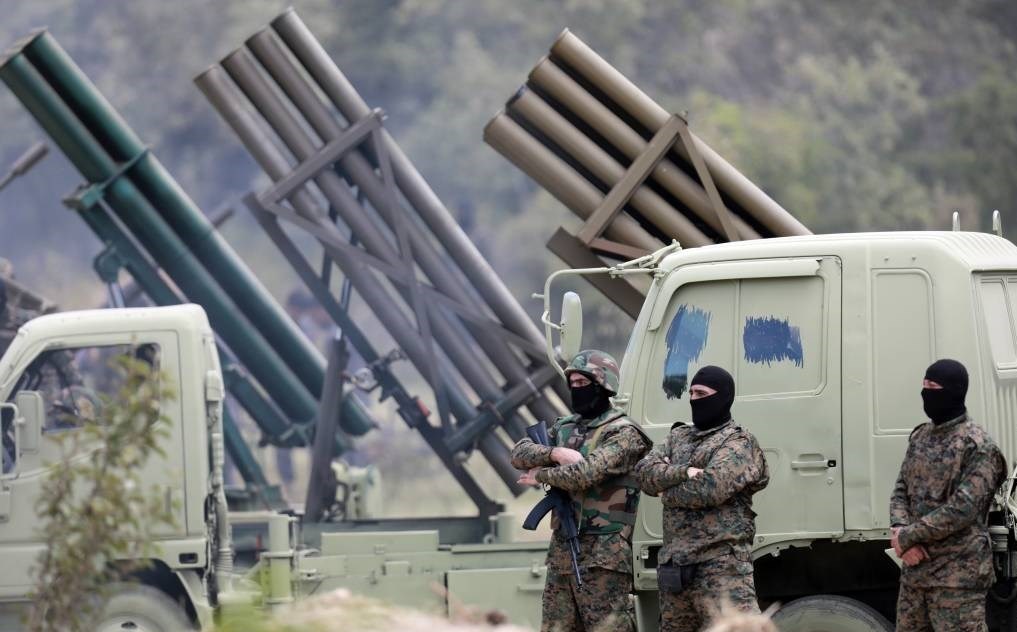
Israeli Ground Forces Push Deeper Into Southern Lebanon
On the night before 20 May 2026, with reports at 05:59 UTC, Hezbollah announced clashes with Israeli ground forces in the Lebanese village of Khadatha, about 12 km north of the border. The contact suggests a deeper Israeli advance beyond previously acknowledged operating zones.
Key Takeaways
- Hezbollah reported exchanges of fire overnight into 20 May 2026 between its fighters and Israeli ground forces in Khadatha, a village roughly 12 km inside Lebanon.
- This is the first acknowledged instance of Israeli ground activity in Khadatha, indicating a forward shift of the Israeli line of contact beyond earlier cross‑border raids and buffer‑zone operations.
- The development points to a gradual expansion of the ground theater in southern Lebanon, increasing risks of attrition and escalation.
- Hezbollah continues to frame its engagements as defensive resistance, while Israel appears intent on pushing hostile units away from its northern border communities.
- Sustained or deeper incursions could trigger broader Lebanese political fallout and potentially invite greater involvement from Iran or other regional actors.
On the night prior to 20 May 2026, with initial reports emerging at 05:59 UTC, Hezbollah announced that its operatives had engaged in firefights with Israel Defense Forces (IDF) ground units in the Lebanese village of Khadatha. The village lies north of Bint Jbeil and Debel, approximately 12 km from the Israeli border, making this one of the deepest reported Israeli ground engagements inside Lebanon in the current round of hostilities.
Hezbollah’s account describes exchanges of fire in the center of the village, indicating that IDF elements were not merely conducting border‑adjacent reconnaissance but operating within a populated area farther inland. Previous ground activity had largely been characterized as limited cross‑border incursions, engineering operations, or special forces raids aimed at destroying observation posts, launch sites, or tunnel infrastructure within a short distance of the frontier.
The presence of Israeli forces in Khadatha—if confirmed—would represent a notable shift in operational posture, suggesting either probing movements to test Hezbollah defenses or an incremental push to create a broader security belt north of the border. Hezbollah’s willingness to publicize the clash serves both as a deterrent message and as evidence to its domestic audience that it is actively resisting Israeli advances.
Key players include the IDF Northern Command, which manages Israel’s border with Lebanon, and Hezbollah’s regional units operating in the Bint Jbeil–Marjayoun arc, an area of historical significance in past conflicts. Political leadership in both Israel and Lebanon, as well as Iran’s Islamic Revolutionary Guard Corps (IRGC), are ultimately arbiters of escalation thresholds.
This development matters for several reasons. First, any deepening of ground operations increases the likelihood of casualties on both sides, property damage in Lebanese villages, and potential incidents involving civilians. Second, fighting 12 km north of the border implies that Israel is less constrained by concerns over crossing red lines, potentially signaling willingness to accept higher military and diplomatic costs to degrade Hezbollah capabilities.
Third, expanded ground engagement complicates the already precarious balance in Lebanon’s domestic politics. Hezbollah’s role as both a political actor and heavily armed militia continues to polarize the Lebanese public. Visible Israeli incursions can rally nationalist sentiment behind Hezbollah, even among critics, while also raising fears of a full‑scale war reminiscent of 2006. For Israel, operations of this depth risk drawing condemnation not only from Lebanon but also from international partners concerned about regional conflagration.
Regionally, the intensification of the Lebanese front intersects directly with developments in Gaza and the wider Iran‑Israel shadow conflict. Hezbollah has positioned itself as part of a broader axis of resistance; thus, its tactical decisions are often integrated with Iranian strategic calculations. Any perception in Tehran that Israel is seeking decisive advantage on one front could prompt compensatory measures elsewhere, including cyber operations, missile activity from other theaters, or diplomatic pressure via allied states.
Outlook & Way Forward
In the coming days, the key question is whether Khadatha represents a one‑off incursion or the start of a sustained forward presence by Israeli forces. Multiple reported contacts in the same area, engineering efforts to fortify positions, or the establishment of semi‑permanent outposts would indicate a shift toward a more durable buffer zone inside Lebanon.
For Hezbollah, the incentive is to impose costs on Israeli units operating beyond immediate border areas without provoking all‑out war. Expect continued use of anti‑tank guided missiles, indirect fire, and small‑unit tactics in villages like Khadatha and surrounding terrain. The group will also leverage media narratives to portray itself as successfully blunting Israeli advances.
External stakeholders should monitor indicators such as IDF reserve mobilization patterns, evacuation orders for northern Israeli communities, and diplomatic traffic involving France, the US, and UNIFIL contributors. A significant spike in casualties, attacks on critical infrastructure, or strikes deeper into Lebanese heartland would suggest the conflict is crossing from a contained border confrontation into a larger theater war, with attendant risks for regional stability and global energy markets.
Sources
- OSINT