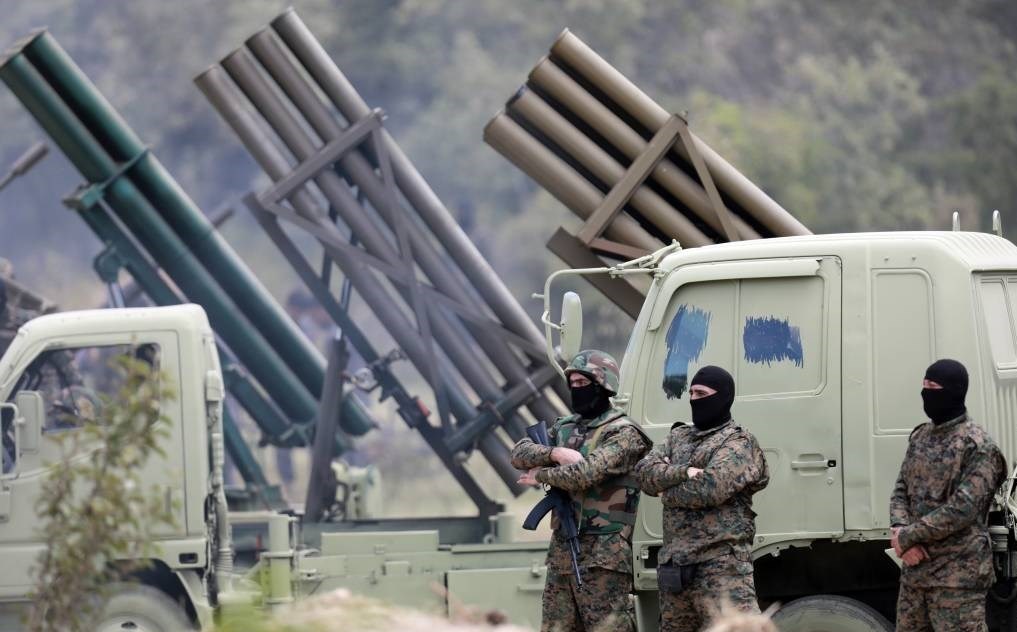
Israeli Ground Forces Push Deeper Into Southern Lebanon
On the night of 19–20 May 2026, with reports surfacing at 05:59 UTC, Hezbollah acknowledged clashes with Israeli ground forces inside the Lebanese village of Khadatha, about 12 km from the border. The engagements indicate a new phase of Israel’s ground advance beyond previous incursion lines.
Key Takeaways
- Hezbollah reported firefights with IDF ground units in Khadatha, a village north of Bint Jbeil and roughly 12 km from the Israeli border, around 05:59 UTC on 20 May.
- This is the first public acknowledgment from Hezbollah of Israeli ground activity in that village, suggesting a deeper and broader ground footprint.
- The move signals an incremental expansion of Israel’s buffer‑zone concept in southern Lebanon and raises risks of a wider conflict with Hezbollah.
- Increased ground action in Lebanon coincides with renewed IDF airstrikes in the Gaza Strip, pointing to Israeli efforts to manage two active fronts.
During the night spanning 19 to 20 May 2026, Hezbollah stated that its fighters engaged Israeli ground forces inside the Lebanese village of Khadatha, with reports on the clashes emerging around 05:59 UTC. Khadatha lies north of Bint Jbeil and north of Debel, approximately 12 kilometers from the Israeli border, making this one of the deeper reported incursions of Israeli troops into Lebanese territory in the current conflict phase.
According to Hezbollah’s account, exchanges of fire occurred in the center of the village, suggesting that Israeli units are not only operating in open terrain or along the periphery but are now maneuvering through built‑up areas further inland. This constitutes the first known instance—at least publicly acknowledged by Hezbollah—of IDF ground activity in Khadatha, thereby marking a new stage in the ground campaign.
Historically, Israeli operations in southern Lebanon have oscillated between cross‑border raids, artillery and air strikes, and deeper ground invasions, notably during the 2006 war and earlier occupation periods. The current pattern appears more incremental, with the IDF gradually pushing its forward line beyond immediate border villages in an effort to degrade Hezbollah’s capability to launch rockets, anti‑tank missiles, and infiltration operations.
The strategic rationale for an advance to villages like Khadatha likely includes several factors: disruption of medium‑range rocket units, seizure or destruction of prepared firing positions, and pressure on Hezbollah’s local logistical networks. Operating within villages also carries the aim of testing Hezbollah’s readiness and revealing its defensive deployments, albeit at the cost of higher risk to Israeli troops and increased potential for civilian casualties and displacement.
For Hezbollah, publicly acknowledging direct contact with IDF ground forces deepens its narrative of resistance and may serve domestic and regional messaging purposes. However, the group must balance the desire to inflict visible costs on Israel against the risk that heavy engagements could trigger a larger, less controllable war. Its tactics so far point to calibrated harassment and targeted engagements rather than full‑scale confrontation, likely reflecting both Iranian strategic guidance and Hezbollah’s own assessments of risk.
The move into Khadatha occurs as Israel simultaneously ramps up targeted airstrikes in the Gaza Strip, suggesting that the IDF high command is managing multiple fronts with differentiated tools: airpower and special strikes in Gaza, and a slowly expanding ground footprint in Lebanon supported by air and artillery. This dual‑front management places strain on Israeli logistics and political bandwidth while testing Hezbollah’s and Hamas’s abilities to coordinate or stagger their responses.
Regional actors, including Iran and key Arab states, will be closely watching the evolution of this ground advance. Iran, as Hezbollah’s principal backer, may see extended ground operations as both an opportunity to bleed Israel and a risk that could invite broader US or Western involvement. Arab governments nervous about another large‑scale Lebanon war will likely intensify diplomatic messaging aimed at de‑escalation, even as popular sentiment may favor Hezbollah’s resistance framing.
Outlook & Way Forward
In the short to medium term, Israel is likely to continue probing expansions of its ground presence in southern Lebanon, testing Hezbollah’s thresholds and attempting to secure a de facto buffer zone by degrading hostile capabilities within a certain depth of the border. Analysts should monitor whether IDF units establish semi‑permanent positions, forward operating bases, or defensive works in new localities, which would indicate an intent to maintain a sustained footprint rather than conduct raids.
For Hezbollah, the key decision is whether to respond with heavier firepower—such as larger rocket barrages into northern Israel, anti‑ship missile use, or complex raids—or to maintain a lower‑intensity attritional strategy. A significant escalation in Hezbollah attacks against Israeli population centers or critical infrastructure would likely trigger a far broader Israeli offensive, including intensified air campaigns and possibly wider ground incursions reaching beyond the immediate south.
Internationally, further IDF advances will drive increased diplomatic engagement by France, the United States, and the UN, all of which have stakes in UNIFIL’s mandate and in preventing state collapse in Lebanon. Early indicators of a move toward containment rather than escalation would include localized ceasefire proposals, humanitarian corridor arrangements, or third‑party monitoring around specific villages. Conversely, large‑scale mobilization announcements, reserve call‑ups, or mass civilian evacuations on either side of the border would point toward preparations for a more extensive conflict.
Sources
- OSINT