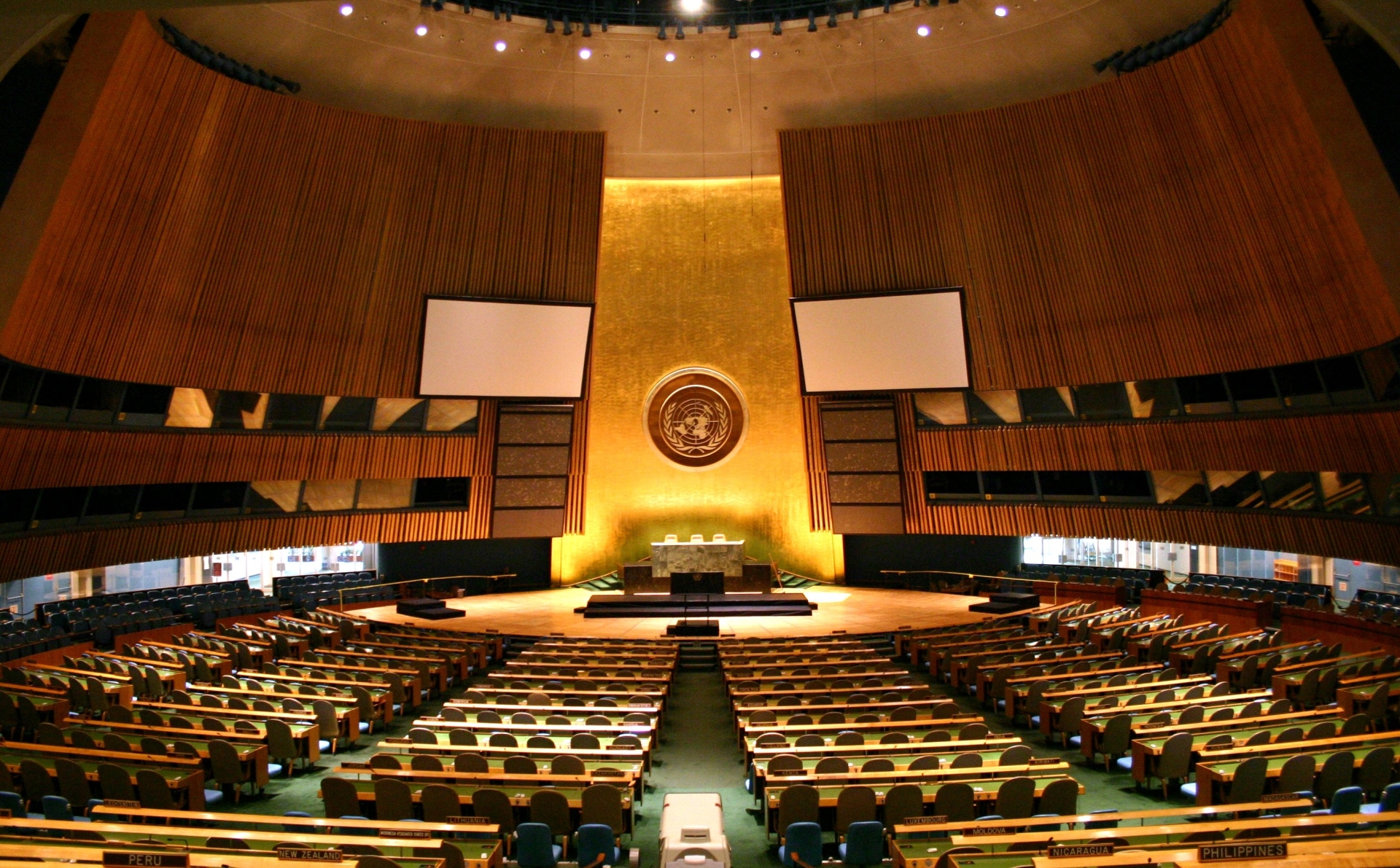
UN Slashes 2026 Growth Outlook Amid Middle East Conflict Risks
The United Nations on 19 May 2026 cut its global growth forecast for 2026 to 2.5% from 2.7%, citing the impact of ongoing Middle East conflict and related uncertainty. The downgrade underscores how geopolitical tensions are weighing on the world economy.
Key Takeaways
- On 19 May 2026, the UN reduced its 2026 global growth forecast to 2.5%, down from 2.7%.
- The downgrade is primarily attributed to Middle East conflicts, including energy market volatility and trade disruptions.
- The revision coincides with heightened tensions around Iran, Israel, and Gulf infrastructure, as well as elevated sovereign and corporate borrowing costs.
- Slower growth raises risks for debt sustainability in emerging markets and could constrain fiscal space for defense and climate spending.
At around 16:53 UTC on 19 May 2026, the United Nations released an updated global economic outlook, lowering its forecast for world growth in 2026 to 2.5%, down from a previous estimate of 2.7%. The UN identified the ongoing Middle East conflict and its spillover effects—particularly on energy markets, investor confidence, and trade routes—as a key driver of the downgrade.
The revision comes as multiple flashpoints—tensions over Iran’s nuclear and missile programs, conflict in Lebanon and Gaza, and attacks on regional infrastructure—generate persistent uncertainty that is increasingly reflected in financial markets and corporate planning.
Background & Context
Global growth has been struggling to regain momentum amid residual inflation pressures, tighter monetary policy, and supply chain reconfiguration. Conflict in the Middle East has added an additional drag, with repeated drone and missile attacks on energy infrastructure, threats to key shipping lanes, and rising defense outlays diverting resources from productive investment.
Concurrently, long-term interest rates have risen, with U.S. 30-year Treasury yields briefly surpassing 5.19% on 19 May, the highest level since before the 2008 financial crisis. Higher yields raise borrowing costs worldwide, especially for emerging and frontier markets that rely on external finance, amplifying the impact of slower growth.
Key Players Involved
The UN’s assessment reflects inputs from multilateral agencies, national statistical offices, and global financial data. While the forecast is not binding, it shapes expectations among policymakers, investors, and corporate strategists.
Key regional drivers include the standoff between the United States and Iran, Israeli military operations in Lebanon and Gaza, and instability around critical infrastructure in the Gulf. Producers and consumers of energy, particularly in Asia and Europe, are exposed to price swings and supply disruption risks.
Major central banks, including the U.S. Federal Reserve, European Central Bank, and Bank of Japan, must now balance inflation control against the downside growth risks highlighted by the UN. Japan’s top currency officials, for example, have signaled readiness for decisive foreign-exchange intervention to counter volatility, illustrating how geopolitical stress feeds into financial market instability.
Why It Matters
A global growth rate of 2.5% hovers near the threshold that many economists view as the dividing line between expansion and a quasi-stagnant environment for per-capita income in numerous countries. Even a 0.2 percentage point reduction translates into tens of billions of dollars in lost output and fiscal revenue.
For commodity-importing developing countries, higher energy and shipping costs triggered by Middle East conflict amplify inflation and trade deficits, eroding living standards and increasing political fragility. At the same time, higher interest rates and risk premiums make it harder to roll over existing debt or finance new investments, raising the specter of serial debt distress episodes.
Advanced economies are not immune: elevated defense spending to respond to geopolitical threats, combined with slower growth and high interest costs, can strain budgets and limit space for domestic priorities such as infrastructure, health, and climate mitigation.
Regional & Global Implications
The Middle East’s centrality to global energy and shipping means that prolonged instability is likely to keep risk premia elevated across asset classes. While oil prices have oscillated in response to evolving assessments—falling, for instance, after President Trump’s 19 May decision to postpone a strike on Iran—the underlying volatility remains structurally higher.
Trade patterns may continue to adjust as companies diversify away from high-risk routes and suppliers, accelerating re-shoring or near-shoring trends. However, such transitions are costly and can dampen productivity gains in the short to medium term.
Global inequality may widen further as advanced economies with stronger currencies and financial systems weather the storm better than debt-laden developing countries. This could translate into increased migration pressures, political unrest, and appetite for external security partnerships in vulnerable regions.
Outlook & Way Forward
If Middle East tensions ease—through negotiated arrangements on Iran’s nuclear program, de-escalation in Lebanon and Gaza, and enhanced security for critical infrastructure—the UN’s forecast could prove conservative. A reduction in energy and shipping risk premia would support a modest rebound in trade and investment.
However, the near-term trajectory suggests continued uncertainty. The U.S. administration’s warnings that military options remain on the table, Israel’s high alert status, and proxy activity across the region mean that further shocks cannot be ruled out. Central banks are likely to remain cautious about easing policy too quickly, given the potential for renewed commodity price spikes.
Policymakers and investors should monitor several indicators: the evolution of U.S.-Iran negotiations and any renewed strikes; attacks on shipping or energy infrastructure; sovereign bond spreads for vulnerable emerging markets; and shifts in defense and energy spending in national budgets. Absent significant geopolitical de-escalation, the risk remains that global growth could undershoot even the revised 2.5% projection, intensifying pressures on fragile states and the multilateral financial system.
Sources
- OSINT