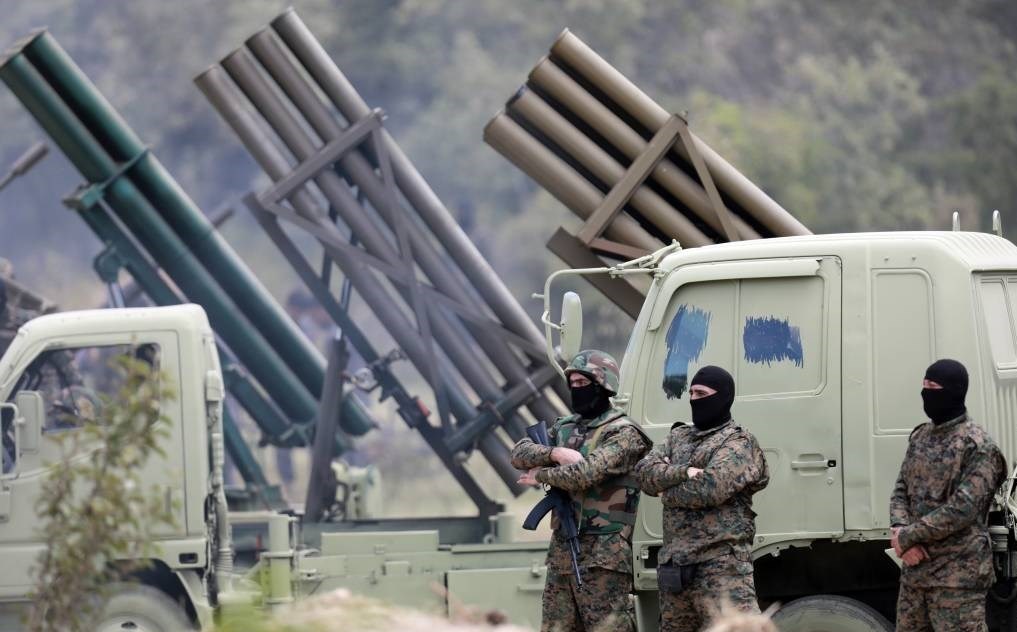
Hezbollah Expands Drone Warfare Against Israeli Forces
Reports on 19 May 2026 describe Hezbollah’s intensified use of FPV and small swarm drones against Israeli positions along the Lebanon–Israel frontier. Recent strikes include a fiber-optic-guided kamikaze drone hitting an IDF Merkava IV tank at al-Bayada.
Key Takeaways
- Hezbollah has increased its use of drones over the past five days, targeting Israeli soldiers, tanks, bulldozers, and field camps along the Lebanon–Israel border.
- A recent attack at al-Bayada employed a fiber-optic first-person-view (FPV) kamikaze drone armed with an RPG-based anti-tank warhead against a Merkava Mk. IV tank.
- The tactic of small drone swarms and precision FPV strikes has reportedly raised Israeli casualty figures over the past month.
- The evolution of Hezbollah’s drone operations reflects broader battlefield trends seen in Ukraine and elsewhere, with significant implications for regional military balances.
On 19 May 2026, multiple battlefield reports highlighted Hezbollah’s growing reliance on drones in its ongoing confrontation with Israel along the Lebanese frontier. A specific incident filed at 15:05 UTC detailed a first-person-view (FPV) drone strike on an Israeli Merkava Mk. IV tank in the al-Bayada area, where the group used a fiber-optic-guided kamikaze drone carrying an RPG-type anti-tank warhead.
Additional reporting at 15:04 UTC indicated that, over the previous five days, Hezbollah-operated drones had repeatedly attacked concentrations of Israeli soldiers, armored vehicles, bulldozers, and border-adjacent field camps in southern Lebanon and nearby Israeli settlements. Observers report a rising number of wounded Israeli soldiers in recent weeks, attributing this trend in part to the adoption of small drone swarms and precision FPV tactics.
Background & Context
The Lebanon–Israel front has been active since late 2023, with near-daily exchanges of fire, artillery duels, and targeted strikes. Hezbollah, backed by Iran, has gradually expanded its use of unmanned systems, moving from relatively simple surveillance drones to more sophisticated loitering munitions and guided FPV platforms.
This evolution coincides with global lessons from conflicts such as the Ukraine war, where cheap, agile FPV drones have proven capable of disabling heavy armor, logistics nodes, and frontline positions. Hezbollah appears to be internalizing these lessons, integrating commercial and custom-built drones into its arsenal in ways that challenge traditional Israeli force protection measures.
Israel Defense Forces (IDF) maintain significant technological superiority but face the challenge of adapting air defense, electronic warfare, and armored doctrine to a battlefield increasingly saturated with small, low-signature drones that are difficult to detect and cost-effective to deploy.
Key Players Involved
- Hezbollah – Leveraging Iranian support and local innovation to expand its drone fleet and integrate it into combined-arms tactics.
- Israel Defense Forces (IDF) – Responding with enhanced counter-UAS measures, fortifications, and tactical adjustments, while absorbing a steady attrition of casualties.
- Iran – Providing technological, financial, and training support that likely underpins Hezbollah’s drone capabilities.
- Civilians along the border – Exposed to increased risk as drones strike in or near populated areas and as both sides intensify retaliatory fire.
Why It Matters
Hezbollah’s drone campaign is strategically important in several respects:
-
Tactical Challenge to Armor: The use of FPV drones armed with RPG-based warheads directly threatens even heavily armored platforms like the Merkava IV. While not guaranteed to destroy main battle tanks, these drones can damage external systems, force crews to button up, and restrict maneuver.
-
Cost-Imposition Strategy: Small drones are cheap relative to the targets they attack. Requiring Israel to deploy high-end air defense interceptors or costly electronic warfare assets against $1,000–$5,000 drones imposes a favorable economic exchange ratio for Hezbollah.
-
Psychological Impact: Persistent drone threats increase stress on frontline soldiers and residents in affected settlements. The perception that the sky is saturated with small, hard-to-detect threats can erode morale and complicate routine operations.
-
Doctrinal Spillover: Hezbollah is often seen as a test bed for Iranian tactics that might be employed elsewhere, including against US or allied forces in the region. Its operational experience with FPV drones is likely being fed back into Iran’s broader military planning.
Regional and Global Implications
Regionally, the intensification of drone warfare along the Lebanon–Israel border risks wider escalation. If Israeli casualties mount or a mass-casualty incident occurs in a civilian area, domestic pressure on the Israeli government to conduct major ground or air operations in Lebanon will rise. Hezbollah, in turn, may respond with heavier rocket and missile salvos, dragging the entire northern theater into a broader conflict.
Beyond the Levant, the sophistication of Hezbollah’s drone use is closely watched by armed groups across the Middle East and beyond, who may emulate its tactics. The spread of knowledge about fiber-optic guidance, swarm coordination, and field-expedient warhead integration lowers barriers for non-state actors to field effective precision-strike capabilities.
For advanced militaries, the theater underscores how even technologically superior forces can be challenged by low-cost, proliferated systems. NATO’s own leadership has recently acknowledged the centrality of drones, software, and electronic warfare in modern conflict, reinforcing the relevance of the Lebanon front as a live laboratory.
Outlook & Way Forward
In the near term, expect Hezbollah to continue refining its drone playbook, combining reconnaissance, battle damage assessment, and strike roles in increasingly integrated operations. The group may experiment with coordinated multi-drone attacks on high-value targets, such as command posts or key radars, to probe Israeli defenses.
The IDF will likely expand counter-UAS deployments along the northern border, including short-range air defenses, jamming systems, and passive protection measures for vehicles and personnel. Public communications may emphasize technological solutions to reassure Israeli citizens, but the adaptation process will take time and resources.
Strategically, the trajectory of drone warfare on this front will influence calculations in Tehran, Jerusalem, and Western capitals about the risks of a full-scale confrontation. If both sides perceive that attritional drone exchanges remain manageable, the conflict may stay at a simmer. However, a miscalculated strike—particularly one causing extensive civilian casualties or a major loss of high-value military assets—could trigger a rapid and uncontrolled escalation, making this border one of the key flashpoints to watch in the broader Middle Eastern security environment.
Sources
- OSINT