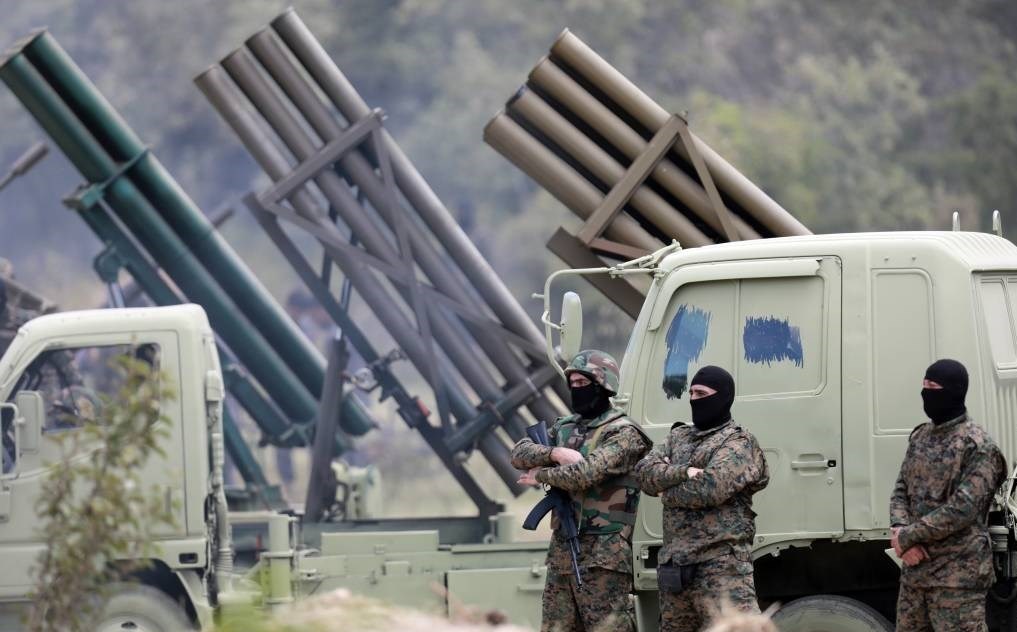
Hezbollah Drone Hits Israeli APC, IDF Suffers Officer Fatalities
On 16 May, Hezbollah used a fiber-optic first-person-view kamikaze drone to strike an Israeli M113 armored personnel carrier near Bint Jbeil in southern Lebanon, according to reports around 19:01 UTC. The same day, the IDF announced the killing of a battalion commander and another soldier in combat in Lebanon, underscoring the escalating lethality along the border.
Key Takeaways
- Hezbollah employed a fiber-optic FPV kamikaze drone armed with an RPG warhead to strike an Israeli M113 APC near Bint Jbeil on 16 May.
- The IDF confirmed the deaths of at least two officers in Lebanon the same day, including a battalion commander in the Golani Brigade and a captain.
- The incident illustrates Hezbollah’s effective integration of precision loitering munitions against Israeli armor.
- Persistent cross-border clashes raise the risk of a broader Israel–Hezbollah war drawing in regional actors.
On 16 May 2026, around 19:01 UTC, reports from southern Lebanon indicated that Hezbollah had successfully targeted an Israel Defense Forces (IDF) M113 armored personnel carrier near Bint Jbeil using a first-person-view (FPV) kamikaze drone. The drone, guided via fiber-optic link and equipped with a PG-7-type high-explosive anti-tank warhead, reportedly struck the vehicle in a precise attack amid ongoing cross-border hostilities.
Earlier and contemporaneous statements from the IDF confirmed that Israel had suffered multiple fatalities in Lebanon. Announcements around 19:09–19:47 UTC named a Golani Brigade battalion commander and a 24-year-old captain, Maoz Israel Recanati, as killed in combat in southern Lebanon. While not all casualty details are directly tied to the Bint Jbeil strike, the timing underscores a particularly costly day for Israeli ground forces operating along or beyond the northern frontier.
Hezbollah’s use of fiber-optic FPV drones marks an evolution in its tactical toolkit. Unlike radio-controlled systems, fiber-optic guidance is more resistant to jamming and can deliver high-fidelity control up to the moment of impact. Armed with an RPG-type warhead, such drones pose a serious threat to legacy armored platforms like the M113, which lack modern active protection systems and robust top-armor.
The engagement near Bint Jbeil fits into a broader pattern of escalating exchanges since the latest Gaza war widened to the northern front. Hezbollah has systematically targeted IDF outposts, vehicles, and observation positions across southern Lebanon, while Israel has conducted extensive air and artillery strikes on surveillance sites, weapons depots, and command infrastructure. Over the weekend, the IDF reported hitting approximately 100 Hezbollah targets across southern Lebanon, including the Tyre area.
On the Israeli side, the loss of senior ground officers in the same theater is operationally and symbolically significant. Battalion commanders are critical links between high-level planning and frontline execution; their deaths can force rapid reorganization, strain command cohesion, and affect troop morale. At the political level, repeated high-ranking casualties increase domestic pressure on the government either to escalate decisively or to reassess the costs of sustained operations.
This confrontation matters not only for Israel and Lebanon but for the wider regional balance. Hezbollah is a key component of Iran’s deterrence architecture against Israel and the United States. Its demonstrated ability to penetrate Israeli armor with relatively low-cost drones magnifies the perceived effectiveness of Tehran’s asymmetric warfare model. At the same time, sustained IDF strikes deep into Lebanese territory test the limits of Hezbollah’s tolerance before it contemplates a broader mobilization.
For Lebanon, ongoing clashes deepen economic and social strains in an already fragile state. Civilian communities in southern Lebanon face displacement risks and infrastructure damage, while Israel’s northern communities endure regular alerts and intermittent evacuations. The country’s weak central government has limited capacity to shape Hezbollah’s calculus or to negotiate de-escalation on its own.
Outlook & Way Forward
In the near term, both sides are poised to continue the current pattern of tit-for-tat escalations. Hezbollah is likely to replicate and refine its FPV drone tactics against IDF vehicles and small outposts, leveraging night operations and terrain masking. Analysts should watch for evidence of more advanced munitions, cluster payloads, or coordinated swarm attacks that could significantly raise IDF casualty rates.
Israel, meanwhile, will likely intensify efforts to locate and destroy drone launch cells, fiber-optic control nodes, and storage sites. Expect increased use of electronic warfare, counter-UAS systems, and precision airstrikes targeting suspected drone teams, potentially at greater depth inside Lebanon. The IDF may also reconsider the exposure of older armored platforms near the frontline, accelerating deployment of more survivable vehicles or active protection retrofits.
Strategically, the key question is whether the northern front remains a controlled secondary theater or slides into full-scale war. Factors to monitor include: the frequency and rank of Israeli casualties; major Hezbollah strikes on strategic assets or population centers; and any direct involvement or signaling from Iran. Diplomatic channels, primarily via the United States, France, and the U.N., will work to prevent a broader conflagration. However, with each lethal exchange—such as the 16 May drone strike and officer fatalities—the margin for miscalculation narrows, raising the stakes for the entire Levant.
Sources
- OSINT