Hezbollah Escalates Drone Strikes on Israeli Armor and Positions
On 16 May 2026, Hezbollah released footage showing FPV drone attacks on Israeli armored vehicles and positions in southern Lebanon, while alerts sounded in northern Israel. Around the same period, a Hezbollah FPV drone reportedly hit an IDF armored bulldozer near Deir Siryan.
Key Takeaways
- By early afternoon on 16 May 2026, Hezbollah publicized FPV drone strikes on an Israeli Namer armored personnel carrier in Bint Jbeil and on positions near Al‑Bayada and Aadaysit Marjayoun in southern Lebanon.
- Hezbollah also claimed an FPV kamikaze drone attack on an IDF Caterpillar D9 armored bulldozer near Deir Siryan, likely using a fiber‑optic guided system with a shaped‑charge warhead.
- Concurrently, Hezbollah drone alerts were reported in Metulla, northern Israel, underscoring ongoing cross‑border UAV threats.
- The operations highlight Hezbollah’s growing integration of low‑cost FPV drones into anti‑armor and harassment tactics against Israeli forces.
- This escalation increases the risk of a broader Israel–Hezbollah war, with potential spillover across the region.
On 16 May 2026, a series of coordinated Hezbollah drone and rocket activities underscored the intensifying, low‑grade war along the Israel–Lebanon frontier. By around 12:39 UTC, alerts in Metulla in northern Israel indicated suspected Hezbollah drone activity crossing or approaching the border. Shortly thereafter, at approximately 13:01 UTC, Hezbollah released video footage depicting an FPV (first‑person‑view) drone striking an Israeli Namer armored personnel carrier in the Lebanese border town of Bint Jbeil, a long‑standing flashpoint in previous conflicts.
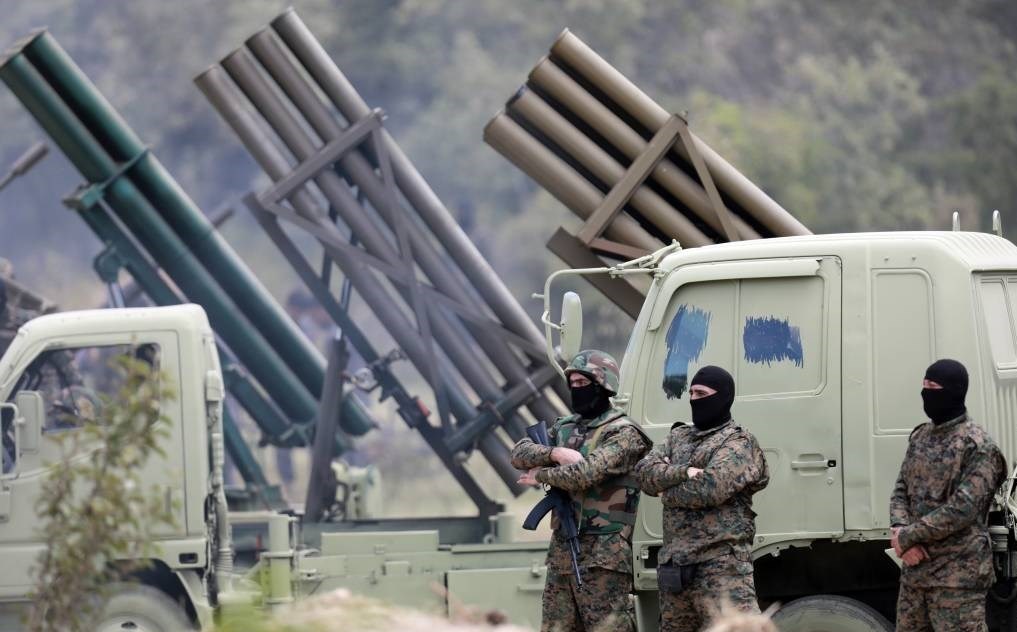
At the same timestamp, additional footage showed Hezbollah forces launching drones and rockets at Israeli positions near the southern Lebanese towns of Al‑Bayada and Aadaysit Marjayoun. Separate reporting by 14:04 UTC detailed an FPV drone attack against an IDF Caterpillar D9 armored bulldozer in the Deir Siryan area. The system was described as a fiber‑optic‑guided kamikaze drone armed with a PG‑7‑type HEAT warhead, designed to penetrate heavy armor.
These actions fit an emerging pattern of Hezbollah’s reliance on small, precision‑guided unmanned systems to erode Israel’s tactical advantages without triggering the immediate, large‑scale responses that might follow massed rocket barrages or cross‑border ground incursions. FPV drones equipped with anti‑armor munitions allow relatively low‑cost attacks against high‑value platforms such as armored personnel carriers, engineering equipment, and fortifications, while keeping Hezbollah operators dispersed and harder to target.
The key operational actors are Hezbollah’s specialized drone and anti‑armor units, and the IDF formations deployed along the northern front, including armored and engineering elements. The Namer and D9 are critical components of Israel’s ground maneuver and fortification capabilities; persistent attacks on them can slow operations, complicate logistics, and impose psychological stress on crews forced to operate under constant overhead threat.
Strategically, Hezbollah’s messaging around these strikes serves multiple purposes. Domestically, the footage reinforces its narrative of active resistance and technological adaptation. Regionally, it signals to allies and rivals that Hezbollah has internalized and localized the FPV drone tactics widely seen in the Ukraine war and other recent theaters. For Israel, the videos serve as both propaganda and actionable intelligence on Hezbollah’s evolving capabilities, including possible adoption of fiber‑optic guidance to mitigate jamming and electronic warfare.
The escalation carries significant implications for regional stability. A sustained campaign of precision drone attacks against IDF assets could provoke harsher Israeli responses, including wider airstrikes deep into Lebanon, potentially drawing in additional actors such as Iran. As Hezbollah is widely regarded as a core component of Iran’s deterrence architecture, its actions on this front are not just local skirmishes but also instruments in the broader confrontation between Iran and a US‑backed coalition.
Outlook & Way Forward
In the near term, expect Hezbollah to continue probing Israeli defenses with FPV drones and targeted rocket volleys, seeking to refine tactics that exploit gaps in Israel’s short‑range air defense and electronic warfare coverage. Indicators to watch include an increase in successful hits on armored vehicles, attempts to strike command posts or radar sites, and the appearance of larger or more sophisticated UAVs in the theater.
Israel is likely to respond by accelerating counter‑drone measures, including more dense deployment of soft‑kill systems, tactical lasers where available, and doctrine changes for armored units operating near the border. A critical question is whether the IDF chooses to treat these attacks as manageable attrition or as casus belli for a broader campaign to degrade Hezbollah’s drone infrastructure inside Lebanon.
The key risk is miscalculation: a particularly lethal strike—causing mass casualties among Israeli troops or civilians—could trigger a rapid escalation cycle, drawing in more extensive Israeli air and ground operations and more intense Hezbollah rocket fire reaching deeper into Israel. International diplomatic efforts will aim to contain this dynamic, but as long as Hezbollah and Israel both see value in limited confrontation, the probability of an unplanned slide into larger war will remain elevated.
Sources
- OSINT