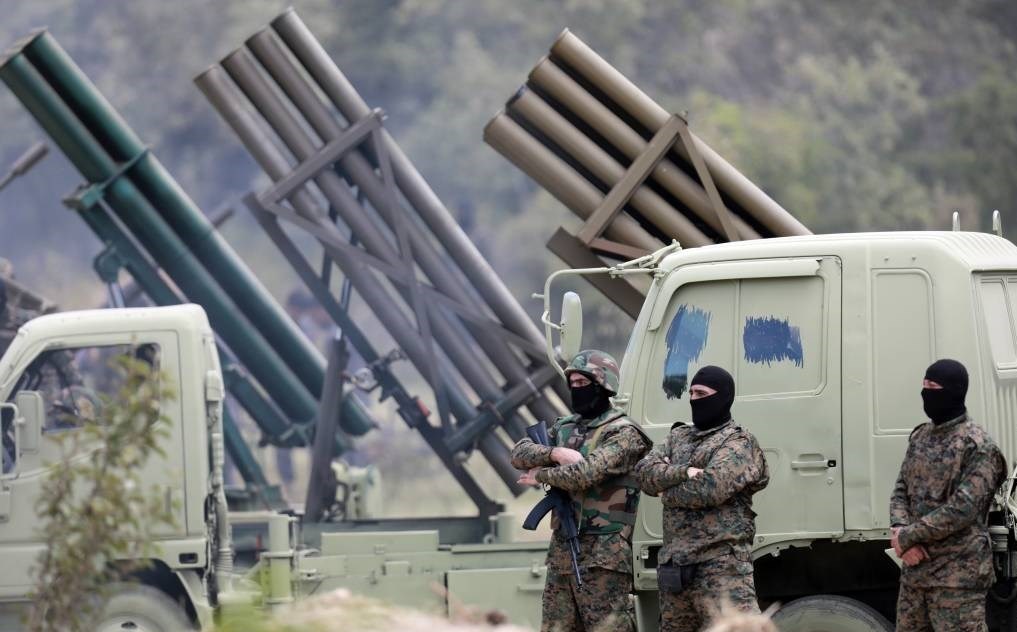
Hezbollah and Israel Trade Rockets, Drones in Intensifying Border Fight
Around 13:00 UTC on May 15, Hezbollah claimed rocket and drone attacks on Israeli military positions, while the IDF reported destroying a launcher used to fire rockets toward Kiryat Shmona. Reports also indicated a rising tempo of Hezbollah FPV drone strikes across northern Israel and southern Lebanon.
Key Takeaways
- Around 13:00 UTC on 15 May 2026, Hezbollah conducted rocket and kamikaze drone strikes on Israeli army positions, using Grad‑type rockets and Shahed‑derived drones.
- The IDF said overnight strikes destroyed the launcher used by Hezbollah to fire multiple rockets at the Kiryat Shmona area.
- Hezbollah is steadily increasing FPV drone attacks on Israeli forces in northern Israel and occupied southern Lebanon, posing a serious challenge to IDF defensive planning.
- The exchange signals a deepening, technologically evolving front along the Israel–Lebanon border with implications for wider regional stability.
On May 15, 2026, the conflict along the Israel–Lebanon frontier showed signs of qualitative escalation as both Hezbollah and the Israel Defense Forces (IDF) reported intensified use of rockets and drones. Around 13:00 UTC, Hezbollah announced that it had carried out combined rocket and drone strikes against IDF positions, employing 122mm 9M22U Grad rockets launched from locally assembled systems and “Shahed‑101” class kamikaze drones.
These attacks targeted Israeli military positions rather than urban centers, continuing a trend of tactical strikes aimed at outposts, surveillance sites, and staging areas across northern Israel and occupied sectors of southern Lebanon. The use of both rocket artillery and loitering munitions demonstrates Hezbollah’s growing integration of conventional and unmanned systems in coordinated operations.
In response, the IDF reported that during the night leading into May 15, its forces had located and destroyed the launcher from which Hezbollah had fired multiple rockets toward the Kiryat Shmona area. Kiryat Shmona, near the Lebanese border, has long been a focal point in cross‑border exchanges. The IDF did not detail the method of destruction but underscored the action as a retaliatory measure and a signal of its intent to suppress rocket‑launch capabilities close to the border.
Simultaneously, reporting in both Arabic and English indicated that Hezbollah has been steadily increasing its use of FPV (first‑person‑view) attack drones against IDF positions in occupied southern Lebanon and northern Israel. These small, relatively inexpensive drones can be guided in real time by operators to strike armored vehicles, observation posts, and troop concentrations, bypassing some of the IDF’s heavier air‑defense systems optimized for larger threats.
The rising tempo of FPV drone activity poses a compound challenge. From a tactical perspective, it forces the IDF to invest heavily in local electronic warfare, point air defenses, and hardening of small units and infrastructure. From a strategic perspective, it signals Hezbollah’s ability to replicate lessons drawn from other theaters—particularly Ukraine—where FPV drones have altered battlefield dynamics. This evolution could erode some of Israel’s traditional technological edge in the northern theater.
For Hezbollah, these operations serve multiple purposes: signaling solidarity with Palestinians amid continuing conflict in Gaza, testing and refining new capabilities, and maintaining pressure on Israel’s northern front to complicate IDF force allocation. The group’s use of Shahed‑derived loitering munitions also underscores ongoing Iranian support and technology transfer, linking this localized confrontation to the broader regional standoff between Iran and Israel and their respective partners.
Israel’s leadership has recently emphasized the importance of buffer zones in Gaza, Lebanon, and Syria to alter the Middle East’s security map. Prime Minister Benjamin Netanyahu has stated that Israel intends to maintain and potentially expand security perimeters to diminish the reach of Iran‑aligned actors. The intensifying exchanges with Hezbollah feed directly into internal Israeli debates over whether to pursue a larger ground campaign in Lebanon or to continue relying on airpower and limited cross‑border raids to manage the threat.
For Lebanon, continued escalation carries grave risks. The country is already dealing with deep economic crisis and political paralysis. A broader war would devastate infrastructure and exacerbate humanitarian pressures, particularly in the south. International actors—including the United States, France, and the UN—have repeatedly attempted to shore up the fragile status quo anchored in UN Security Council Resolution 1701, but the proliferation of drones and precision weapons is stretching that framework’s relevance.
Outlook & Way Forward
In the immediate term, the border theater is likely to remain characterized by tit‑for‑tat strikes: Hezbollah will continue limited but high‑visibility rocket and drone attacks on IDF assets, while Israel will target launch infrastructure, command nodes, and suspected drone teams. The key question is whether either side miscalculates, leading to mass casualties or a spectacular strike that compels a major escalation.
Watch indicators such as a marked increase in range or payload of Hezbollah attacks, use of more advanced precision munitions, or IDF strikes deeper into Lebanese territory beyond traditional engagement zones. Evidence of large‑scale IDF mobilization or public statements preparing the Israeli populace for a northern campaign would signal potential transition from containment to offensive posture.
Over the medium term, both sides will adapt technologically. Expect Israel to accelerate development and deployment of counter‑drone systems, including directed energy weapons and advanced jamming, while Hezbollah refines FPV tactics and potentially scales up local production. Diplomatic efforts will focus on preventing the northern front from becoming a full‑scale second war alongside Gaza and the broader Iran–Israel confrontation. Absent a durable political arrangement addressing Hezbollah’s armed status and border security, however, the frontier is likely to remain a volatile laboratory for evolving drone and rocket warfare with periodic spikes of intense violence.
Sources
- OSINT