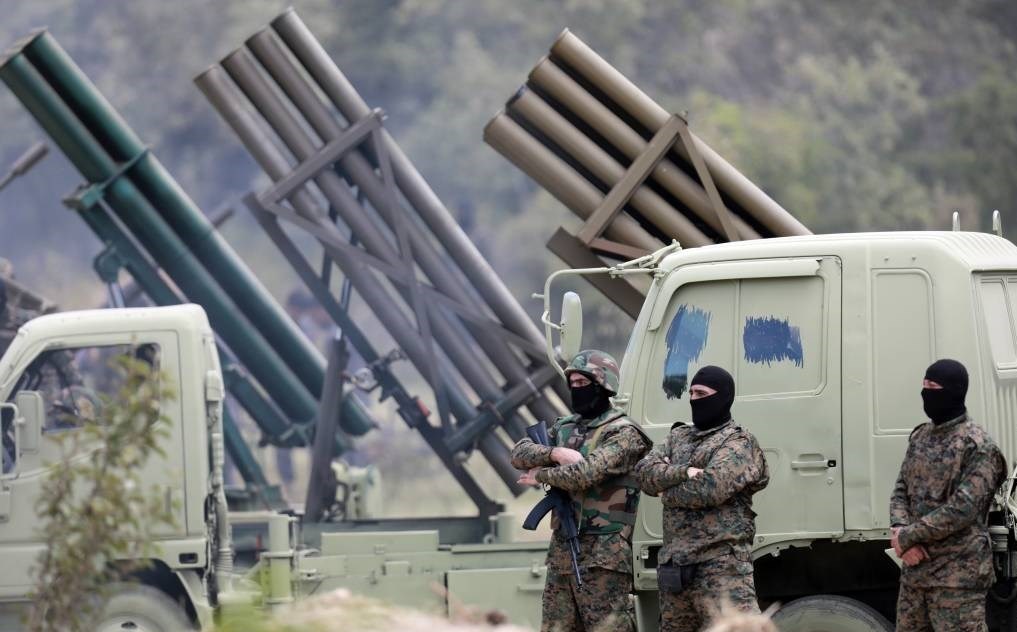
Hezbollah Drone and Missile Strikes Hit Multiple Israeli Targets
Overnight into 14 May, Hezbollah published footage of several FPV drone and anti‑tank guided missile attacks on Israeli military assets along the Israel–Lebanon border. Reports around 04:01 UTC show hits on a Merkava tank, D9 bulldozer, Humvee, supply truck, and a building occupied by IDF soldiers.
Key Takeaways
- Around 04:01 UTC on 14 May, Hezbollah released footage documenting multiple attacks on Israeli targets along the Israel–Lebanon frontier.
- FPV drones struck a Merkava tank at a border crossing, a D9 bulldozer on the Naqoura coastal road, a Humvee, and a supply truck in Tayr Harfa.
- An anti‑tank guided missile hit a building in Houla, southern Lebanon, that Hezbollah says housed at least 12 IDF soldiers.
- The incidents highlight the intensifying use of precision drones and guided munitions by Hezbollah and the continued risk of broader escalation on the northern front.
In the overnight hours leading into 14 May 2026, Hezbollah publicized a series of attacks against Israeli military targets along the Israel–Lebanon border, with footage released around 04:01 UTC. The videos depict first‑person‑view (FPV) drone strikes on armored vehicles and logistics assets, as well as an anti‑tank guided missile (ATGM) strike on a structure reportedly housing Israeli forces inside southern Lebanon.
One FPV drone strike targeted an Israeli Merkava main battle tank stationed at a border crossing; the munition detonated against the side of the turret. Another drone struck an Israeli D9 armored bulldozer driving along the coastal road near Naqoura, impacting the front of the vehicle’s anti‑drone cage. Separate clips from Tayr Harfa in southern Lebanon showed FPV drones hitting an Israeli Humvee and a supply truck, with the drone on the truck detonating at the vehicle’s center.
In the most strategically notable incident, Hezbollah released footage of an ATGM strike on a building in the town of Houla, southern Lebanon. Prior to the missile launch, Hezbollah fighters tracked the movement of a group of at least 12 Israeli soldiers entering the structure, which was then engaged with a guided munition. The attack also served to underscore Hezbollah’s continued presence in towns near Houla despite ongoing Israeli operations.
Background & Context
The Israel–Lebanon border has been an active secondary front since the outbreak of major hostilities in Gaza, with Hezbollah and the Israel Defense Forces (IDF) engaged in regular exchanges of fire. Hezbollah has increasingly employed precision strike capabilities, including ATGMs and FPV drones, to target IDF outposts, vehicles, and equipment along the frontier.
FPV drones—essentially small, camera‑equipped quadcopters or fixed‑wing drones flown in first‑person view—have proliferated across modern battlefields due to their low cost, ease of modification, and high accuracy against point targets. Their use by Hezbollah reflects lessons learned from other conflicts and signals a further diffusion of such capabilities to non‑state actors.
Key Players and Tactical Implications
-
Hezbollah: The group is demonstrating advanced small‑unit reconnaissance and strike coordination, using surveillance to identify IDF movements and structures housing personnel, and then engaging them with drones or ATGMs. The release of curated footage is intended both for operational signalling and domestic and regional propaganda.
-
Israel Defense Forces (IDF): The IDF has invested heavily in counter‑drone measures and hardening of vehicles, as reflected by the anti‑drone cages seen on the D9 bulldozer. However, repeated successful FPV hits indicate that existing defenses are not fully mitigating the threat, especially against soft‑skinned logistics vehicles and static positions.
On the tactical level, the attacks underscore that even heavily armored systems like Merkava tanks are vulnerable to top‑attack or side‑impact drones targeting external sensors, reactive armor, or less protected areas. Logistics nodes and mobility assets, such as bulldozers clearing or constructing positions, are similarly at risk.
Why It Matters
The cluster of attacks documented on 14 May illustrates an incremental but significant shift in the lethality of the northern front. Hezbollah’s use of precision drones and guided weapons complicates Israeli force protection and may drive changes in IDF posture, including reduced exposure in border‑adjacent areas, increased dispersion, and greater reliance on remote or unmanned systems.
The ATGM strike in Houla is particularly sensitive. A successful hit on a building known to house IDF soldiers within Lebanese territory highlights both Hezbollah’s intelligence gathering and the ongoing Israeli ground or near‑ground operations in border‑adjacent Lebanese villages. Civilian risk is elevated whenever such engagements occur within or near inhabited areas.
The highly public nature of the released footage is designed to send deterrent and prestige signals to multiple audiences: Israel; Lebanese domestic constituencies; and regional allies and rivals, including Iran and other militant groups observing Hezbollah’s tactics.
Regional and Global Implications
Regionally, these developments increase the risk that localized clashes could escalate into a broader confrontation. A mass‑casualty event—such as a successful attack on a building housing a large number of soldiers, or a mis‑aimed strike hitting civilians—could trigger stronger Israeli retaliation, potentially expanding airstrikes deeper into Lebanon or prompting more extensive ground operations.
The attacks also contribute to the broader regional trend of non‑state actors fielding increasingly sophisticated precision capabilities. Observers in the Gulf, Iraq, Syria, and beyond are likely to study Hezbollah’s drone employment patterns, feeding into a wider proliferation of similar tactics.
From a global perspective, the use of cheap FPV drones to threaten advanced armored systems will further influence military procurement and doctrine, reinforcing the need for integrated counter‑UAS solutions at the tactical level. Defense industries in multiple countries are already accelerating development of electronic warfare, hard‑kill, and soft‑kill systems tailored to small drones.
Outlook & Way Forward
In the short term, more such Hezbollah attacks along the border are likely, both as retaliation for Israeli operations and as part of a calibrated pressure campaign. The IDF will probably respond with precision strikes against suspected launch sites, command nodes, and observation posts in southern Lebanon, aiming to degrade Hezbollah’s drone and ATGM teams.
The trajectory of escalation will depend on casualty levels and political calculations in Beirut, Jerusalem, and Tehran. A single incident causing mass IDF casualties or significant civilian harm on either side could serve as the trigger for a sharper uptick in hostilities. Intelligence monitoring should prioritize evidence of Hezbollah repositioning heavier assets closer to the border, as well as changes in Israeli airstrike patterns.
In the medium term, both sides are expected to invest further in drones—Hezbollah in offensive FPV and reconnaissance platforms, Israel in defensive counter‑UAS and offensive strike drones. Absent a broader diplomatic arrangement linked to the Gaza conflict and Lebanon’s internal politics, the northern front is likely to remain a low‑to‑medium intensity conflict zone with episodic spikes in violence and persistent risk of miscalculation.
Sources
- OSINT