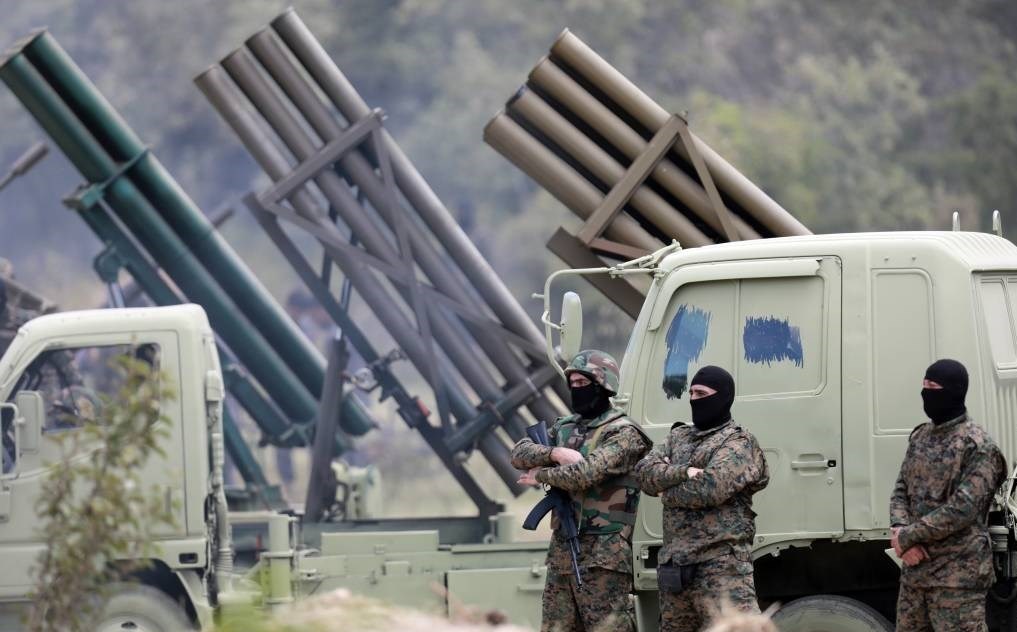
Hezbollah Drone Alerts Raise Tensions in Northeastern Israel
On 13 May 2026, alerts over suspected Hezbollah drones were reported in northeastern Israel. The incident highlights persistent cross-border friction amid a wider regional standoff involving Lebanon and Iran-aligned groups.
Key Takeaways
- Drone alerts linked to Hezbollah were reported in northeastern Israel on 13 May 2026.
- The incident underscores ongoing low-intensity cross-border hostilities between Israel and Hezbollah.
- The alerts occur against the backdrop of broader regional tensions involving Iran and its allied groups, including conflict dynamics in Lebanon.
- Continued drone activity increases risks of miscalculation and potentially wider escalation along the Israel–Lebanon frontier.
At approximately 04:57 UTC on 13 May 2026, reports indicated that drone alerts associated with Hezbollah activity were issued in northeastern Israel. While details on the number of drones, their flight paths and any resulting damage or interceptions were not immediately specified, the alerts themselves are part of a pattern of recurring cross-border incidents since the outbreak or intensification of hostilities along the Israel–Lebanon border.
Hezbollah, the Lebanese Shiite armed group and political party, has increasingly incorporated unmanned aerial systems into its arsenal, using drones for reconnaissance, psychological impact and, occasionally, armed strikes. Israel maintains a dense air defense and early warning system along its northern front, designed to detect and, if necessary, intercept aerial threats emanating from Lebanon and Syria.
The latest drone alerts come amid heightened regional tensions, including open conflict in parts of Lebanon and increased rhetorical and operational friction between Iran and the United States. Iran’s reported insistence on ending the war in Lebanon as a condition for resuming talks with Washington underlines the centrality of the Lebanese theater to broader regional dynamics. In this context, Hezbollah’s actions are closely watched as both a barometer and a lever of Iranian strategy.
Key stakeholders are the Israeli Defense Forces (IDF), Hezbollah’s military wing, and civilian populations in northern Israel and southern Lebanon. The IDF faces the dual challenge of reassuring Israeli communities exposed to frequent alerts while avoiding actions that could inadvertently trigger a larger confrontation. Hezbollah, for its part, must balance domestic Lebanese considerations, its deterrence posture vis-à-vis Israel, and its alignment with Iranian objectives.
The significance of the drone alerts lies less in the immediate tactical impact and more in their cumulative effect on crisis stability. Persistent low-level incidents, especially involving drones that are harder to detect and attribute than conventional rockets, can strain command-and-control systems and political decision-making. Each event carries a non-trivial risk that misidentification or miscalculation could prompt a disproportionate response, leading to rapid escalation.
Regionally, continued unrest along the Israel–Lebanon border complicates diplomatic efforts to reduce tensions and avert a wider war that could draw in other actors, including Syria-based militias and potentially regional powers. The alerts also highlight the broader proliferation of drones among non-state actors, who increasingly use them to challenge technologically superior state adversaries.
Outlook & Way Forward
In the near term, sporadic drone incursions or suspected incursions along the Israel–Lebanon frontier are likely to continue. Israel will maintain a posture of high readiness in its northern air defenses, while calibrating its responses to avoid providing Hezbollah with propaganda victories or triggering an uncontrolled escalation. The use of electronic warfare, jamming, and non-kinetic methods to counter drones can be expected to grow alongside kinetic intercepts.
Strategically, the evolution of Hezbollah’s drone capabilities and Israel’s countermeasures will remain a focal point for regional security analysts. The frequency, altitude and payload of future drone flights, as well as whether they penetrate deeper into Israeli territory or remain near the border, will be key indicators of intent and risk tolerance on both sides. Diplomatic efforts—whether through direct channels, international intermediaries, or UN frameworks—aimed at establishing clearer rules of the game along the border will be important, though difficult, to achieve. Without such mechanisms, the risk that a single drone incident escalates into a broader conflict will persist, especially against the backdrop of wider U.S.–Iran and regional rivalries.
Sources
- OSINT