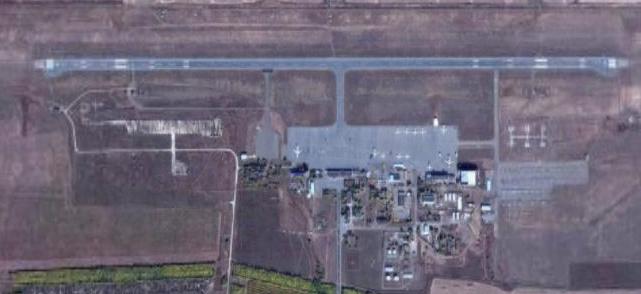
Russian Gas Facilities in Orenburg Hit in Long-Range UAV Strike
Authorities in Russia’s Orenburg region reported a UAV attack on gas industry sites around 16:40–16:45 UTC on 12 May, with casualties and damage still being assessed. Ukrainian leadership framed the strike as a distant “mirror response” roughly 1,500 km from the front.
Key Takeaways
- Russian officials report a UAV attack on gas industry facilities in Orenburg region on 12 May, with injuries and damage under evaluation.
- Ukrainian leadership publicly described the strike as a "mirror response" about 1,500 km away, implying Ukrainian responsibility.
- The attack demonstrates continued expansion of long-range Ukrainian UAV operations deep into Russian territory.
- Targeting gas infrastructure could have localized energy implications and broader psychological impact inside Russia.
On 12 May 2026, at approximately 16:40–16:45 UTC, reports from Russia’s Orenburg region indicated that the area had come under attack by unmanned aerial vehicles, resulting in injuries and unspecified damage. Local authorities confirmed that Orenburg, a key hub in Russia’s gas industry located near the Kazakhstan border, had been struck and that emergency services were assessing the consequences. Shortly thereafter, Ukrainian President Volodymyr Zelensky referenced a strike in Orenburg targeting enemy gas-industry facilities, characterizing it as a "mirror response" delivered roughly 1,500 kilometers from the front lines.
This incident follows a pattern of increasingly deep Ukrainian UAV operations against Russian energy, logistics, and military infrastructure. While early phases of the conflict saw attacks focus on border regions and occupied territories, the last year has brought repeated strikes on oil depots, refineries, and industrial targets hundreds of kilometers inside Russia. Orenburg, while not on most previous target lists, is significant as part of Russia’s natural gas transport and processing network, with pipelines and associated infrastructure that support both domestic supply and export routes.
Key actors include the Russian regional government and emergency services in Orenburg, who must manage local damage control and public messaging, and Ukraine’s long-range strike units, which develop and operate the UAVs used in such missions. Russia’s national leadership and security services will also be involved in investigating air defense performance, potential flight paths, and any gaps exploited by the attackers.
The strike matters in several dimensions. Militarily, deep strikes force Russia to disperse and harden critical infrastructure and to allocate advanced air-defense systems away from front-line support, complicating its resource allocation. Even if physical damage is limited, the need to protect sprawling energy networks imposes substantial operational and financial costs.
Psychologically, attacks on distant regions like Orenburg challenge the Kremlin’s narrative that the conflict is a distant operation with little impact on the Russian heartland. Civilians living far from Ukraine are reminded that they are within reach of Ukrainian capabilities, which may gradually erode domestic perceptions of security. Ukrainian messaging that explicitly highlights the distance and the target type underscores this psychological angle.
Economically, immediate impacts will depend on which facilities were hit and how quickly they can be repaired or bypassed. A localized disruption to gas processing or transport might be managed through rerouting and redundancy, but persistent attacks could gradually degrade reliability, increase maintenance burdens, and create bottlenecks, especially in winter months or peak export periods. International gas markets would be sensitive to any sign of structurally reduced Russian export capacity, though a single strike of uncertain scale is unlikely to move prices significantly by itself.
The strike also contributes to a broader normalization of deep-penetration UAV warfare, which blurs traditional front lines. As both sides invest in longer-range, more precise drones, the geographic scope of vulnerable targets expands, raising questions about escalation thresholds and reciprocal attacks on dual-use infrastructure.
Outlook & Way Forward
In the near term, Russian authorities are likely to increase air-defense coverage around high-value energy facilities in Orenburg and other interior regions, potentially moving systems from less critical areas. Expect tightened airspace restrictions, increased patrols, and new guidance for energy operators on passive protection measures.
Ukraine will likely interpret the operation as validation of its strategy to stretch Russian defenses and impose strategic costs through selective infrastructure attacks. As domestic and foreign support for expanding indigenous drone production continues, similar long-range missions against energy, logistics, and defense-industrial targets are probable. The choice of targets and timing will be shaped by both military logic and signaling objectives.
From a broader strategic perspective, the cumulative effect of such strikes may push Russia to reconsider how it segments civil and military infrastructure, and whether to adopt more overt retaliatory doctrines against Ukrainian critical infrastructure. International observers should monitor for any escalation in Russian attacks on Ukrainian power grids, fuel depots, or transport nodes that appears directly linked to these deep strikes. A sustained tit-for-tat against national energy systems would heighten humanitarian risks and complicate post-war reconstruction, making diplomatic efforts to restrain targeting practices a potential area for external engagement.
Sources
- OSINT