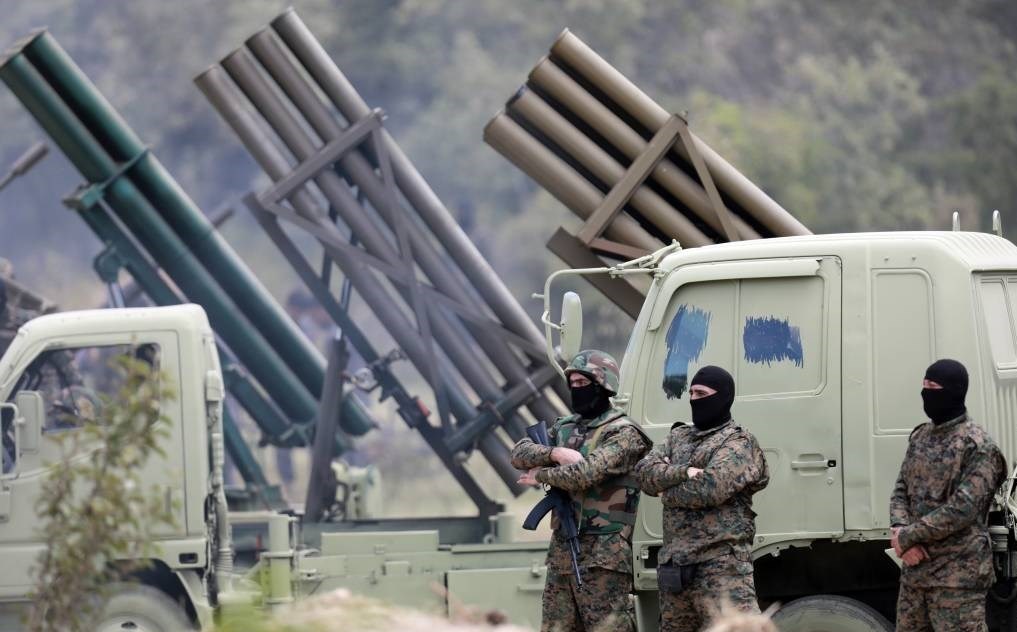
Hezbollah FPV Drone Hits Israeli Merkava Tank Near Border
On 9 May around 12:00 UTC, Hezbollah released footage of a fiber‑optic first-person-view kamikaze drone striking an Israeli Merkava tank near Alma al-Shaab in southern Lebanon. The attack illustrates the group’s growing use of precision loitering munitions against Israeli forces along the frontier.
Key Takeaways
- Hezbollah claims an FPV kamikaze drone strike on an IDF Merkava Mk.4 tank near Alma al-Shaab in southern Lebanon.
- The incident, publicized around 12:00 UTC on 9 May 2026, used a fiber‑optic guided platform with an RPG-type HEAT warhead.
- The strike is part of a broader uptick in Hezbollah attacks, including 26 claimed operations the previous day in response to an Israeli strike in Dahieh.
- Tactics highlight the rapid diffusion of low-cost precision strike capabilities in the Lebanon–Israel theater.
Around midday on 9 May 2026 (circa 12:00 UTC), Hezbollah publicized video footage showing a first-person-view (FPV) kamikaze drone hitting what it identified as an Israeli Merkava Mk.4 tank near Alma al-Shaab in the Tyre district of southern Lebanon, close to the Israeli border. Reporting on the incident described the platform as a fiber-optic guided FPV drone carrying a high-explosive anti-tank warhead, likely adapted from a PG-7 or PG-7L rocket-propelled grenade.
Hezbollah’s media output framed the strike as a precise hit on an armored target belonging to the Israel Defense Forces (IDF). Israeli officials have not publicly confirmed damage details, but the IDF had earlier in the day reported detecting and neutralizing an explosive drone in northern Israel with no casualties, indicative of an active drone threat environment along the frontier.
The attack came on the heels of an intense series of Hezbollah operations. On 8 May, the group claimed responsibility for 26 attacks against Israeli positions, 18 of which it described as direct retaliation for a previous Israeli strike in the Dahieh suburb of Beirut that killed a senior commander of Hezbollah’s Radwan special forces. The latest tank strike appears to be part of this retaliation cycle and signals a continued willingness to engage Israeli ground units with increasingly sophisticated unmanned systems.
Key actors in this episode include Hezbollah’s military wing, which has invested heavily in drone capabilities, and the IDF formations deployed along the northern border. The use of fiber-optic control lines reduces the susceptibility of the drone to electronic jamming, a technique Israel relies on to counter conventional radio-controlled systems. By pairing cheap airframes with anti-tank warheads, Hezbollah is attempting to erode Israel’s armored advantage while conserving its more expensive missile inventories.
This development matters tactically because it demonstrates a convergence of insurgent and state-level capabilities: precision-guided attacks on armored vehicles delivered by very low-cost platforms. Such attacks complicate Israeli force protection and may force changes in how and where heavy armor is deployed in exposed areas. For Hezbollah, successful publicized strikes bolster deterrence messaging and internal morale, while signaling to other actors in the so-called “resistance axis” the viability of FPV drones in contested border zones.
Strategically, the pattern of daily cross-border events—drone launches, artillery exchanges, and targeted strikes—sustains a low-intensity conflict that carries constant escalation risk. The elimination of the Radwan commander and Hezbollah’s multi-day retaliation highlight how quickly localized incidents can expand. The use of drones against high-value hardware such as Merkava tanks increases the chance that Israel could respond with more far-reaching strikes deeper into Lebanon, including against command-and-control and production nodes.
Regionally, the trend underscores the diffusion of tactical drone warfare across the Middle East, from Yemen to Iraq and now intensively on the Lebanon–Israel front. It challenges traditional deterrence models that focus on rockets and missiles and raises questions about the sufficiency of existing air defense architectures when confronted with swarms of small, low-signature platforms.
Outlook & Way Forward
In the short term, further tit-for-tat incidents along the border are highly likely. Hezbollah is expected to continue integrating FPV and other unmanned platforms into its targeting of IDF positions, particularly observation posts, vehicles, and small outposts within line-of-sight from southern Lebanon. Israel will respond with a mix of kinetic strikes on launch teams, electronic warfare, and potential preemptive actions against suspected drone workshops or stockpiles.
Over the medium term, both sides are likely to adjust their doctrines. The IDF may disperse armor more, enhance overhead cover, and invest in counter‑FPV technologies—such as directed-energy systems, hard‑kill interceptors, and enhanced perimeter sensors. Hezbollah will seek to refine guidance, payload options, and operational concepts that maximize psychological and propaganda value while minimizing losses.
Diplomatic de-escalation options remain limited while broader regional tensions—especially involving Iran and ongoing conflicts elsewhere—persist. However, significant civilian casualties or a major Israeli loss could trigger international pressure for renewed understandings around rules of engagement on the border. Analysts should watch for changes in the frequency and depth of Israeli strikes inside Lebanon, shifts in Hezbollah rhetoric about red lines, and any emerging third-party efforts to mediate localized deconfliction, which would indicate concern that the FPV drone campaign is pushing the theater toward a wider confrontation.
Sources
- OSINT