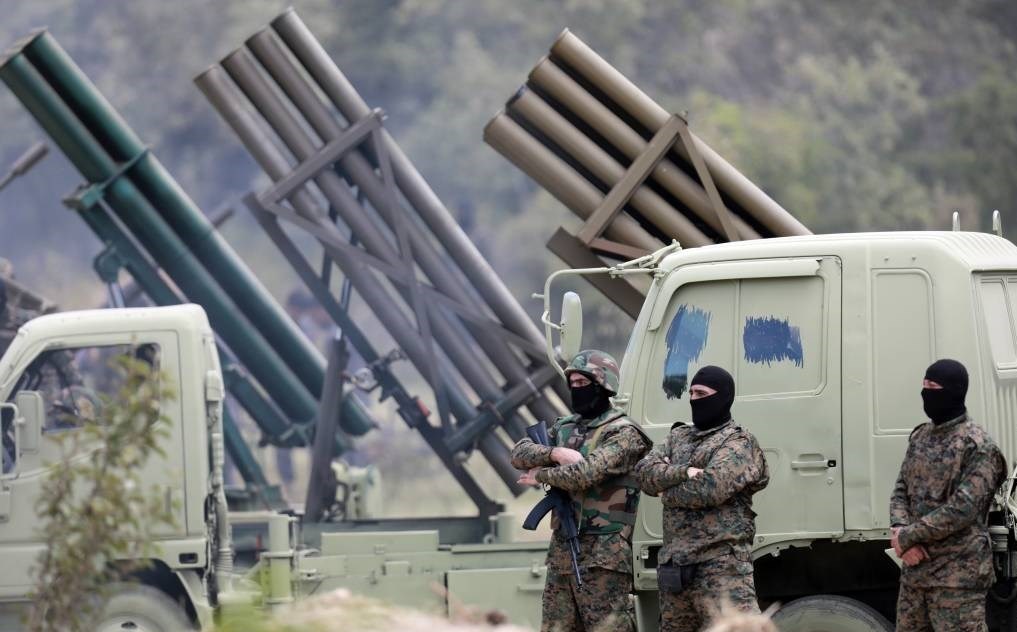
Hezbollah Rocket Barrage Targets Israeli Positions at Al-Bayada
Hezbollah launched rockets at Israel Defense Forces positions near Al-Bayada on 5 May 2026, using an improvised 122mm multiple rocket launcher system. The attacks, reported around 21:01 UTC, employed Grad and Arash-1 artillery rockets amid ongoing cross-border tensions.
Key Takeaways
- On 5 May 2026, Hezbollah fired rockets at IDF positions in the Al-Bayada area along the Israel–Lebanon border.
- The group used an improvised 122mm multiple rocket launcher configured to fire 9M22U Grad and Arash-1 rockets.
- The strike underscores the continued risk of escalation on the northern Israeli front amid broader regional tensions involving Iran and the U.S.
- Israel is likely to respond with retaliatory strikes and enhanced border security measures.
- The incident feeds into concerns that localized clashes could broaden into a wider confrontation.
On 5 May 2026, at approximately 21:01 UTC, Hezbollah conducted a rocket attack against Israeli Defense Forces (IDF) positions in the vicinity of Al-Bayada, near the Israel–Lebanon border. The group reportedly employed an improvised 122mm multiple rocket launcher capable of firing Soviet‑designed 9M22U “Grad” rockets as well as Arash-1 artillery rockets, indicating a blend of legacy and more recent munitions.
Initial information did not specify casualties or the extent of damage to IDF infrastructure, but the use of a multiple rocket launcher suggests an intent to saturate a specific target area, possibly observation posts, patrol routes, or small bases. The attack is part of a persistent pattern of cross-border exchanges between Hezbollah and Israel, which have fluctuated in intensity since the outbreak of wider regional confrontations involving Iran and its network of aligned groups.
Key actors in this incident include Hezbollah’s military wing, the IDF Northern Command, the Lebanese state (which formally bears responsibility for preventing attacks from its territory but has limited control over Hezbollah), and external stakeholders such as Iran and the United States. Tehran has increased rhetorical and, in some theaters, material support for its regional allies amid its own standoff with Washington over nuclear and maritime issues.
The significance of this rocket strike lies less in its individual scale and more in its timing and technical attributes. The presence of improvised launcher systems and varied rocket types points to Hezbollah’s continued adaptation of its artillery capabilities, allowing rapid setup, firing, and displacement to reduce vulnerability to counter-battery fire and airstrikes. Each such engagement tests Israeli detection and interception systems, offers data for both sides, and gradually raises the psychological and political cost of sustained border tensions.
Regionally, the attack contributes to a multi-front pressure environment on Israel, which already faces security challenges in Gaza, the West Bank, and from long‑range missile and drone threats potentially linked to Iran. Germany and other European states have reiterated that Israel’s security is non‑negotiable, while also criticizing settler violence in the West Bank, illustrating the complex diplomatic environment in which these security incidents occur.
For Lebanon, Hezbollah’s actions risk drawing the country deeper into conflict at a time of acute economic and political fragility. Any significant Israeli retaliation that targets infrastructure or populated areas could exacerbate Lebanon’s humanitarian crisis and fuel domestic criticism of Hezbollah’s decision‑making, even as the group maintains broad military autonomy.
Outlook & Way Forward
In the immediate term, Israel is likely to respond with targeted strikes on suspected Hezbollah launch sites, logistics nodes, or observation posts, calibrated to punish the attack while trying to avoid rapid spiraling into a full‑scale campaign. The scope and precision of Israeli retaliation will serve as a key indicator of whether this incident is treated as routine escalation or as part of a more serious deterioration.
Hezbollah, for its part, will balance the desire to demonstrate resistance and solidarity with other fronts against the risk of provoking a sustained Israeli operation similar to past conflicts. The group may continue low‑intensity harassment—sporadic rocket fire, anti‑tank guided missile attacks, or drone incursions—while relying on messaging to frame its actions as deterrent rather than offensive.
Strategically, the risk is that cumulative incidents like the Al-Bayada strike erode escalation thresholds. As tensions with Iran rise over the Strait of Hormuz, nuclear negotiations, and strikes on regional partners, the potential for a miscalculation that links the northern Israel–Lebanon front to a broader confrontation increases. Analysts should monitor changes in IDF force posture along the northern border, Hezbollah’s rocket and drone activity tempo, and diplomatic interventions by key international actors seeking to prevent a localized escalation from igniting a wider regional war.
Sources
- OSINT