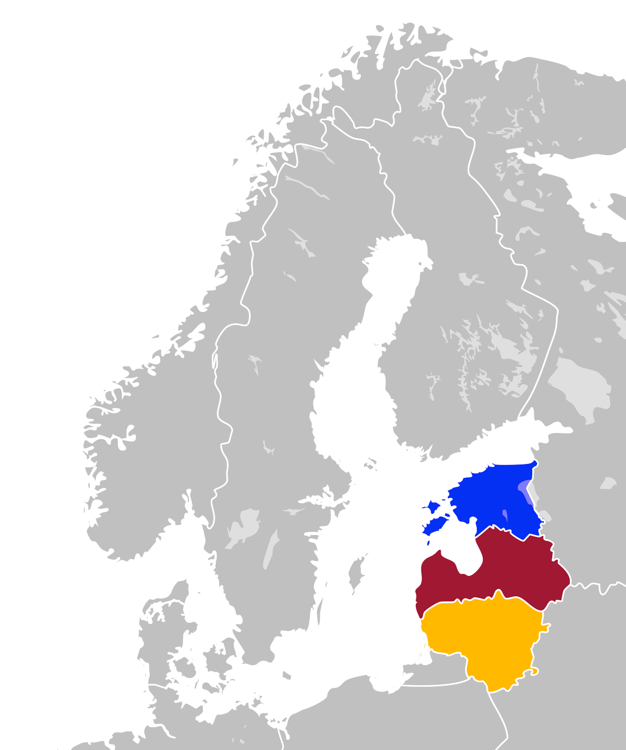
European officials warn Russia may test NATO in Baltic or Arctic
Senior European and NATO defense officials fear that Russia could, within the next one to two years, attempt limited operations involving drones or maritime actions in the Baltic Sea or Arctic to probe NATO responses, according to comments reported on 4 May 2026. They still view a direct large‑scale attack as unlikely while Russia remains engaged in Ukraine.
Key Takeaways
- On 4 May 2026, European officials voiced concerns that Russia may "test" NATO in the coming 1–2 years.
- Scenarios under discussion include targeted drone operations or limited maritime incidents in the Baltic Sea or Arctic regions.
- Officials assess that a full‑scale Russian attack on NATO remains unlikely as long as Russian forces are heavily committed in Ukraine.
- The warnings reflect growing anxiety over a potential "window of opportunity" Moscow might perceive before Western rearmament fully matures.
- NATO members are accelerating defense planning and capability upgrades, particularly on the alliance’s northern and eastern flanks.
During discussions reported around 07:49 UTC on 4 May 2026, multiple European and NATO defense officials expressed concern that Russia could seek to probe the alliance’s resolve and response mechanisms over the next one to two years through limited and deniable actions, rather than a full‑scale attack. The scenarios most frequently cited include targeted drone operations, maritime incidents, or hybrid measures in the Baltic Sea and Arctic regions, areas where NATO’s presence is growing but vulnerabilities remain.
These assessments come amid a broader debate within European capitals about how Russia might adapt its strategy as the war in Ukraine stretches on. While most officials still judge that Moscow is unlikely to risk a direct conventional confrontation with NATO while its forces are heavily engaged in Ukraine, they worry that the Kremlin may nonetheless see value in calibrated tests that fall below the threshold of open war. Such actions could be aimed at gauging alliance cohesion, exploiting legal and operational gray zones, and shaping public perceptions of NATO’s willingness to defend its periphery.
Potential methods under discussion include drone overflights or incursions near critical infrastructure, harassment or close approaches to naval vessels and aircraft, interference with undersea cables or energy links, and cyber‑enabled disruptions framed as technical failures. The Baltic Sea, now effectively surrounded by NATO members following recent enlargements, and the rapidly militarizing Arctic, where Russia maintains substantial capabilities, are seen as prime theaters for such experimentation.
Key actors in this emerging dynamic are Russia’s political and military leadership—who must weigh the benefits of testing NATO against the risks of miscalculation—and the alliance’s northern and eastern members, including the Baltic states and Nordic countries. Within NATO, military planners and policymakers are working to refine contingency plans, rules of engagement, and rapid response mechanisms that can handle ambiguous provocations without stumbling into uncontrolled escalation.
The strategic significance of these warnings lies in what they reveal about European threat perceptions and planning timelines. Many governments anticipate a dangerous period over the next few years before increased defense spending and industrial ramp‑up translate into fully deployable capabilities. Some analysts argue that Russia, aware of this lag, may view it as a window in which to exert pressure on its neighbors or undermine confidence in NATO guarantees, especially if the political landscape in key allied capitals appears uncertain.
At the same time, the assessment that a direct attack remains unlikely suggests that deterrence is still viewed as broadly effective, at least at the level of large‑scale war. The greater concern centers on the so‑called gray zone, where attribution can be contested and political unity more easily frayed. This is particularly acute in domains such as drones and unmanned maritime systems, where emerging technologies outpace existing norms and detection capabilities.
Outlook & Way Forward
Over the coming 12–24 months, NATO is likely to prioritize enhanced surveillance, rapid attribution, and clear communication protocols in the Baltic and Arctic theaters. This will include expanded use of unmanned systems, space‑based sensors, and integrated air and missile defense networks, alongside more frequent multinational exercises aimed at rehearsing responses to ambiguous or incremental provocations.
For Russia, the calculus will hinge on domestic political conditions, the trajectory of the war in Ukraine, and perceptions of Western resolve. If Moscow concludes that NATO is distracted or divided—especially by crises elsewhere, such as in the Middle East—it may be more inclined to experiment with limited tests. Conversely, highly visible and unified allied responses to any small‑scale incidents could dissuade more ambitious probes.
Analysts should closely monitor patterns of air and maritime encounters in the Baltic and High North, anomalies involving critical infrastructure, and the tone of Russian strategic messaging about NATO’s borders. At the political level, sustained investment in alliance cohesion and defense industrial capacity will be crucial in narrowing the potential window Russia might seek to exploit. The warnings aired on 4 May underscore that, even as Ukraine remains the main battlefield, European security planners are already looking ahead to a more contested and unpredictable era on NATO’s northern and eastern flanks.
Sources
- OSINT