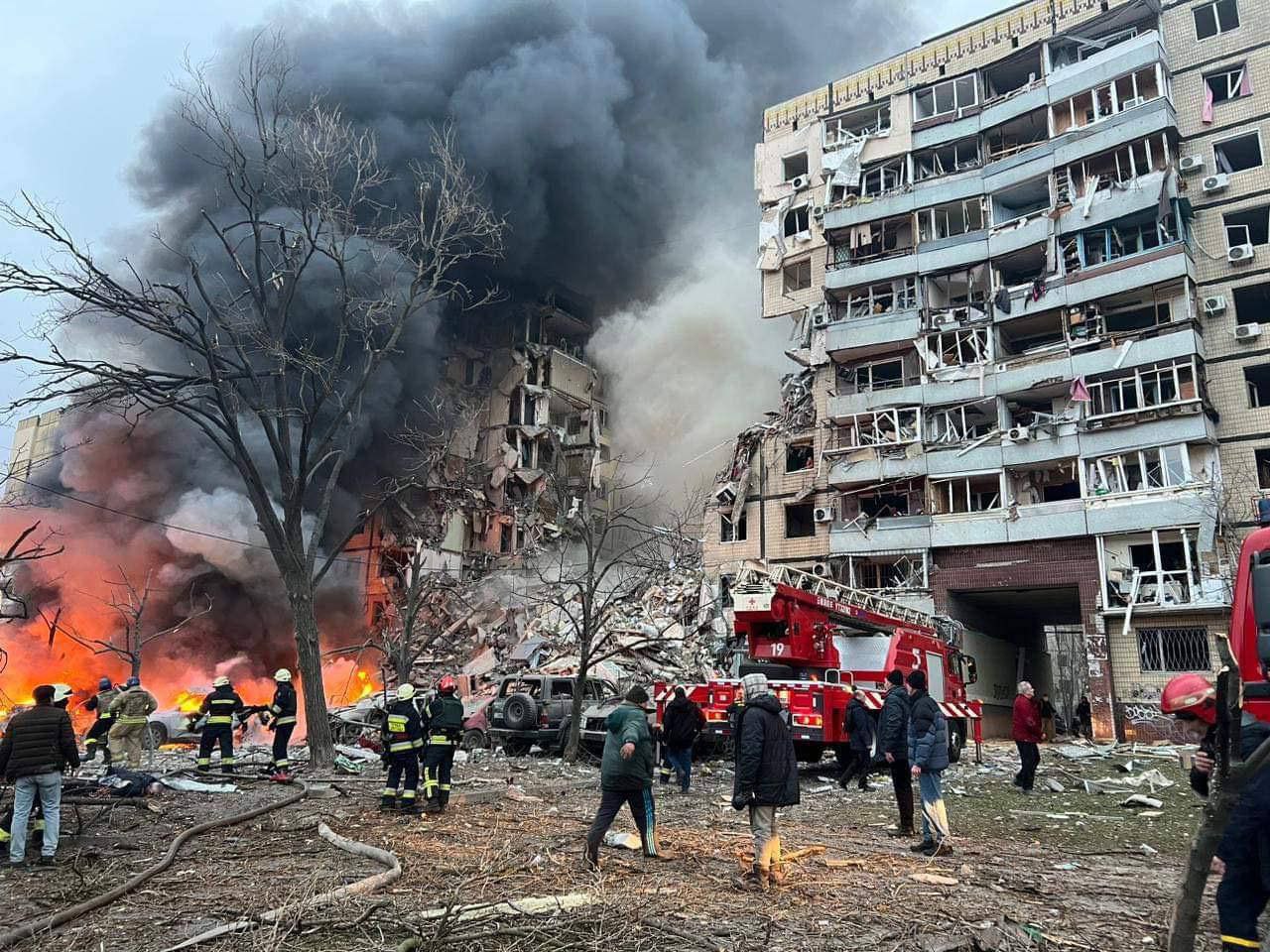
Russian strikes hit civilians in Zaporizhzhia and Dnipropetrovsk regions
On 3 May between about 16:49 and 18:02 UTC, Russian attacks struck civilian areas in Ukraine’s Zaporizhzhia and Dnipropetrovsk regions, including near a gas station where a bus carrying nearly 40 children was parked. At least 15 people were reported injured across both incidents, including a two-year-old and a 10-year-old child.
Key Takeaways
- Russian strikes on 3 May 2026 hit a garage cooperative in Zaporizhzhia and an area near a gas station in Dnipropetrovsk region.
- Nine civilians were reported wounded in Zaporizhzhia, including a two-year-old child.
- Near Dnipropetrovsk, a strike landed close to a bus with nearly 40 children onboard; six people were injured, including a 10-year-old.
- The incidents occurred amid a broader Russian campaign of heavy drone strikes and localized offensives along the front.
- Targeting patterns continue to blur lines between military and civilian objects, reinforcing concerns about violations of international humanitarian law.
On 3 May 2026, Russian forces conducted strikes in southern and central Ukraine that resulted in significant civilian casualties, including children, according to regional authorities. Around 16:49 UTC, officials in Zaporizhzhia reported that enemy fire struck a garage cooperative in the city. Initial reports listed five wounded, but subsequent updates indicated that the number of injured had risen to nine, among them a two‑year‑old child.
Shortly afterward, at approximately 18:01–18:02 UTC, Ukrainian sources in the Dnipropetrovsk region reported that Russian forces struck an area near a gas station where a bus carrying nearly 40 children was parked. At least six people were said to be injured, including a 10‑year‑old boy. While the bus itself reportedly avoided a direct hit, the proximity of the strike to such a concentration of children significantly raised the potential for mass casualties.
These incidents are part of a wider pattern of Russian attacks that day. As noted by Ukrainian Air Force reporting around 16:33–16:38 UTC, Russia has launched an unprecedented volume of drones in recent days—over 1,000 attack UAVs in a 48‑hour window—creating a constant background of aerial threats. While some of these strikes are aimed at military or energy infrastructure, others clearly impact civilian neighborhoods, industrial zones, and transport hubs.
The specific choice of targets on 3 May—the Zaporizhzhia garage cooperative and the area adjacent to a gas station in Dnipropetrovsk—suggests either extremely poor targeting discrimination or deliberate intimidation of the civilian population. Garages and fuel stations are typically dual‑use environments: they may service military vehicles but are primarily civilian spaces. The presence of a bus full of children at the Dnipropetrovsk site underscores the risk posed when strikes occur in areas without clear separation between civilian and potential military objects.
Key actors in these incidents are the Russian military units executing long‑range strikes and Ukrainian regional authorities and emergency services responsible for casualty response and damage assessment. The broader operational context includes simultaneous Russian ground offensives in the Kostyantynivka and Slavyansk directions and ongoing Ukrainian deep strikes against Russian logistics and energy infrastructure.
From a legal and humanitarian perspective, these strikes raise serious concerns under international humanitarian law, which requires conflict parties to distinguish between civilian objects and military targets and to avoid disproportionate harm to civilians. Attacks near a known concentration of children—such as a bus at a gas station—are likely to draw additional scrutiny from international organizations and may further galvanize calls for expanded air‑defense support to Ukraine.
The humanitarian implications are immediate and multi‑layered. Beyond the injured individuals, such attacks exacerbate psychological trauma, disrupt schooling and transport, and undermine confidence in the safety of daily life in rear regions far from the front. Emergency medical systems face cumulative strain as they respond to both large‑scale drone campaigns and localized high‑impact incidents.
Outlook & Way Forward
In the short term, Ukraine will likely intensify efforts to disperse and protect civilian gatherings in areas seen as potential secondary targets—fuel stations, transport hubs, and public facilities—during high‑alert periods. Authorities may issue new guidance on school transport, bus routing, and shelter access, particularly in regions falling within the range of Russian drones and missiles.
Internationally, these incidents will fuel further advocacy for additional and more capable air‑defense systems, as well as funding for civilian protection measures such as hardened shelters and early‑warning systems. Donor states may cite such attacks to justify accelerating deliveries of interceptors, radars, and counter‑UAV technologies.
Strategically, continued civilian casualties from Russian strikes risk hardening Ukrainian public opinion against any concessions in negotiations and reinforcing Western political support for long‑term assistance. For Russia, persistent incidents involving children and non‑military facilities carry reputational costs and potential legal exposure, even if framed domestically as attacks on dual‑use or military‑adjacent infrastructure. The frequency and severity of such civilian‑impact strikes will be a key indicator of the conflict’s humanitarian trajectory over the coming months.
Sources
- OSINT