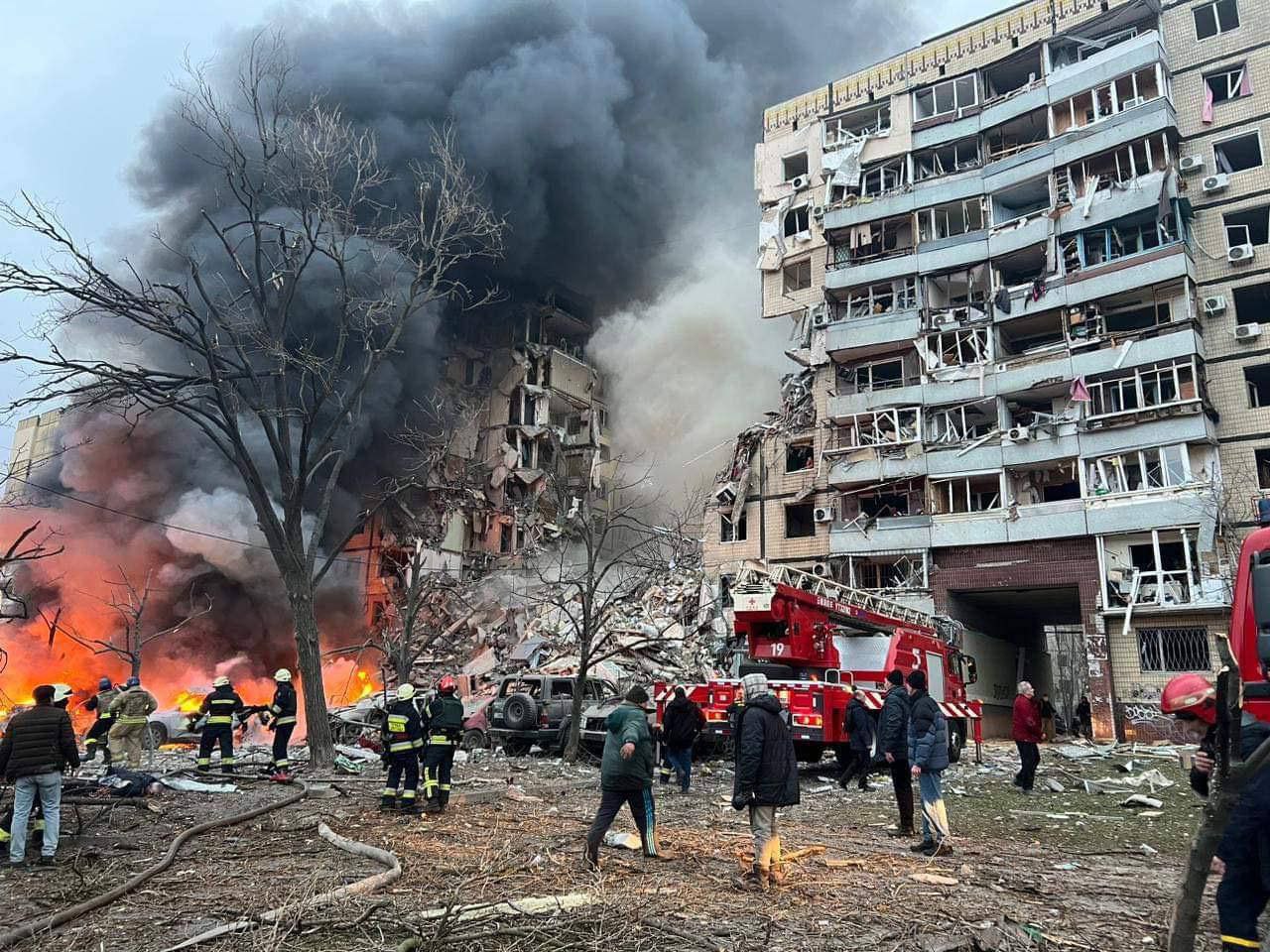
Russian Missile Barrage Hits Dnipro, Dormitory and Rail Hub Struck
On 3 May 2026, around 12:48–13:03 UTC, Russian forces launched at least four Iskander-K cruise missiles at the Ukrainian city of Dnipro. Three missiles impacted civilian and infrastructure targets, including a university dormitory and likely the central railway station, injuring multiple people.
Key Takeaways
- Around midday on 3 May 2026, Russia launched four Iskander-K cruise missiles at Dnipro; three struck targets and one was intercepted.
- Impacted sites reportedly included Dnipro’s main railway station and Dormitory No. 1 of Dnipropetrovsk National University.
- Initial reports suggested no casualties, later updated to at least two injured in the dormitory strike.
- The attack underscores Russia’s continuing campaign against urban centers and transport infrastructure deep in Ukraine’s rear.
On 3 May 2026, between approximately 12:48 and 13:03 UTC, Russian forces carried out a concentrated missile strike on the central Ukrainian city of Dnipro. Ukrainian authorities reported that four Iskander-K cruise missiles were launched; three penetrated air defenses and hit multiple targets in the city, while one was successfully shot down by Ukrainian air-defense units.
Local alerts first warned of incoming missile attacks earlier in the day, followed by confirmations that a series of explosions had occurred within the city limits. Subsequent reporting identified two key impact points: the area of Dnipro’s main railway station and Dormitory No. 1 of the Dnipropetrovsk National University. Early statements from regional officials indicated that a dormitory had been hit “without casualties,” but this was later revised to at least two injured individuals as emergency services completed initial triage and search operations.
Dnipro has long served as a strategic logistical hub for Ukrainian military and humanitarian operations, linking the front lines in eastern and southern Ukraine with the rest of the country via rail and road networks. By targeting both a major rail junction and a university dormitory, the strike appears aimed at degrading transport capacity and instilling psychological pressure on civilian populations and students. Whether any military command or logistics elements were present at the dormitory is not confirmed, but the pattern of strikes against residential infrastructure aligns with previous phases of Russia’s campaign.
Key actors in this development include the Russian missile forces operating Iskander-K systems, capable of low-flying, terrain-hugging cruise missile attacks at significant range, and Ukraine’s integrated air-defense network, which continues to face saturation and evasion tactics. Ukrainian regional authorities in Dnipropetrovsk Oblast played a central role in disseminating warnings, confirming damage, and updating casualty figures.
This attack matters strategically for several reasons. Operationally, it demonstrates that Russia maintains the capacity and political will to allocate high-value precision munitions against civilian-rich environments and rear-area infrastructure, complicating Ukraine’s efforts to normalize life away from front lines. The potential damage to the railway station could temporarily disrupt troop movements, the flow of ammunition and equipment, and the evacuation of civilians.
Psychologically, repeated strikes on urban centers deepen war fatigue among the Ukrainian population and may prompt increased internal displacement from cities perceived as high-risk. For students and academic institutions, attacks on educational facilities erode a sense of safety and may cause further brain drain if scholars and students seek relocation abroad. Internationally, such incidents reinforce Western perceptions of Russia’s disregard for the distinction between civilian and military targets, potentially strengthening support for continued air-defense aid to Ukraine.
Regionally, the use of Iskander-K missiles against central Ukraine also sends a deterrent message to neighboring states that host logistical support pipelines to Ukraine. It underscores Russia’s readiness to employ advanced systems regularly, not only in high-profile retaliation scenarios.
Outlook & Way Forward
In the coming days, Ukrainian authorities are likely to focus on rapid repair of rail infrastructure and temporary relocation of students from the damaged dormitory. Expect intensified calls from Kyiv for additional Western air-defense systems, especially medium- and long-range interceptors capable of countering cruise missiles at stand-off distances. Dnipro and other major hubs may further expand shelter capacity and refine alert protocols, aiming to reduce casualties in future barrages.
For Russia, this strike fits into an ongoing strategy of periodic salvos against energy, transport, and urban targets designed to stretch Ukrainian air-defense coverage. More such attacks can be expected, potentially synchronized with front-line offensives to exploit any resulting disruption in logistics. The choice of Iskander-K suggests Moscow retains sufficient stocks or is willing to prioritize these against symbolic and infrastructure targets.
International partners will watch how quickly rail services in Dnipro resume and whether independent assessments confirm the absence of military targets at the dormitory. Any documented civilian casualties or damage to purely civilian facilities could feature prominently in war-crimes documentation efforts. Strategically, the incident reinforces the centrality of long-range air defense and early warning to Ukraine’s capacity to sustain its defensive posture over the long term.
Sources
- OSINT