Russia Launches 163-Drone Barrage Across Ukraine Overnight
Russia Launches 163-Drone Barrage Across Ukraine Overnight
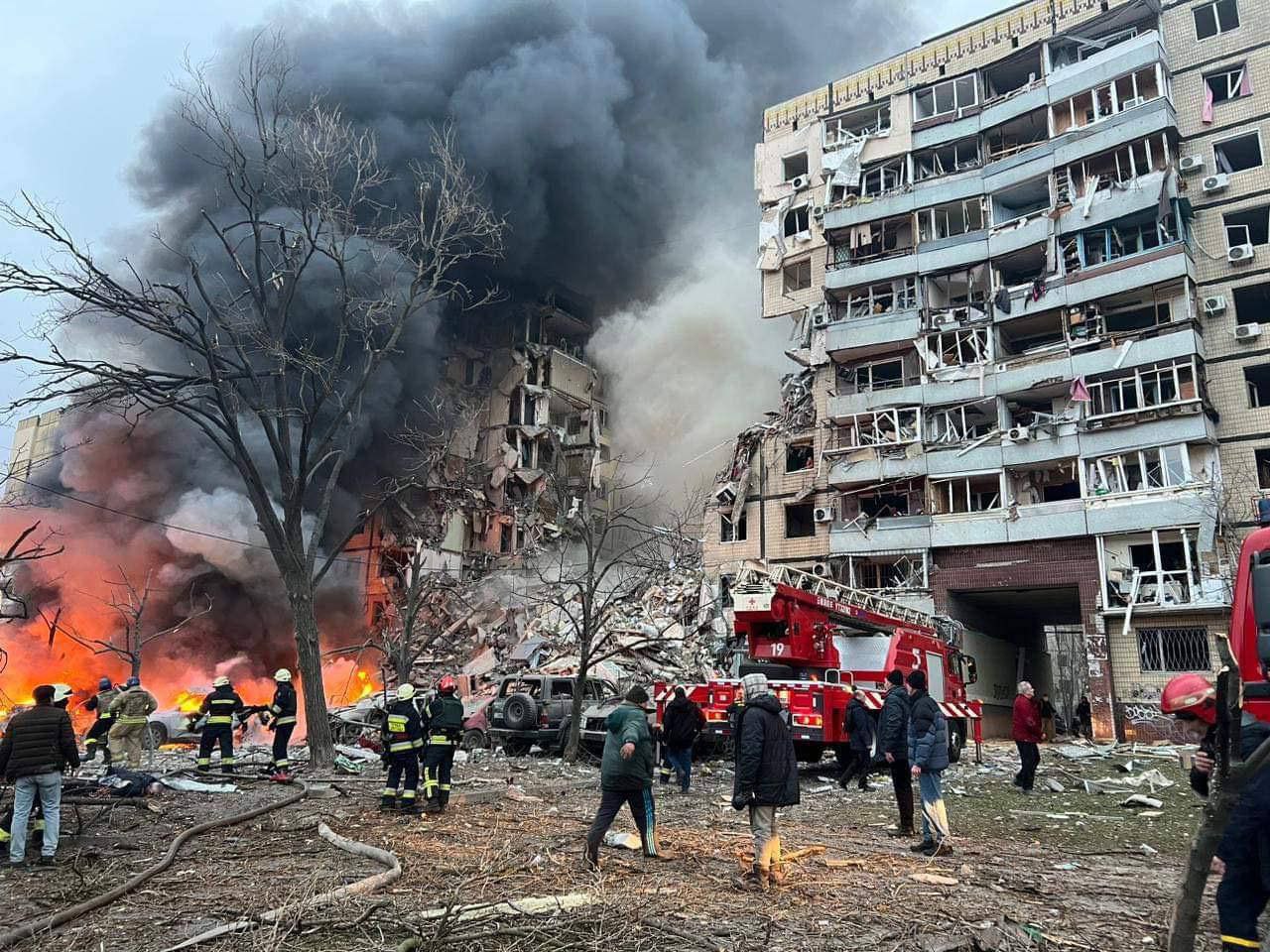
In the early hours of 2 May 2026, Russia launched 163 drones, including around 100 Shahed-type systems, against targets across Ukraine, killing at least two civilians and injuring several others. Ukrainian air defenses reported downing or suppressing 142 drones by 08:00 UTC, but strikes still hit multiple regions.
Key Takeaways
- Around 163 Russian drones, including ~100 Shaheds, attacked Ukraine overnight into 2 May 2026.
- Ukrainian forces claim 142 drones were downed or suppressed, but at least 17 hits were recorded across 12 locations.
- Two civilians were killed and seven wounded when a minibus was struck in Kherson; damage also reported in Kharkiv, Dnipropetrovsk, Odesa, Zaporizhzhia, and Mykolaiv.
- The large-scale UAV assault underscores Russia’s continued emphasis on drone saturation tactics against Ukrainian infrastructure and population centers.
In the overnight period leading into the morning of 2 May 2026, Russian forces conducted one of their larger recent unmanned aerial vehicle (UAV) assaults against Ukraine, launching 163 drones, including about 100 Shahed-type loitering munitions. By 08:00 UTC, Ukrainian air defense authorities reported that 142 of the drones had been shot down or otherwise suppressed, but at least 17 drones successfully struck targets in 12 different locations, with debris falling in at least two additional sites. The attacks killed two civilians and injured seven others when a minibus was hit in Kherson, and damage was reported across multiple key regions, including Kharkiv, Dnipropetrovsk, Odesa, Zaporizhzhia, and Mykolaiv.
The scale and geographic spread of this overnight strike package reflect Russia’s sustained reliance on UAVs to pressure Ukraine’s air defenses, disrupt logistics, and inflict psychological and physical damage on civilian areas. Previous patterns suggest these barrages typically combine Shahed-type loitering munitions, often supplied via or through Iran, with domestically produced variants. The composition indicated in Ukrainian reporting—roughly 100 Shaheds out of 163 total—fits that model of mixed-origin capability designed to overwhelm defensive systems by saturating radar coverage and missile interceptor stocks.
In Kherson, the most acute humanitarian impact emerged when a drone struck a minibus, killing two civilians and injuring seven. Elsewhere, regional authorities in Kharkiv, Dnipropetrovsk, Odesa, Zaporizhzhia, and Mykolaiv cited damage to infrastructure and urban areas, though detailed assessments were still underway in the morning of 2 May. The fact that debris also caused damage at secondary locations underscores the inherent risk posed even by successful interceptions when conducted over densely populated or industrial zones.
The key actors in this escalation are Russia’s long-range strike forces, which have increasingly integrated drones, and Ukraine’s multi-layered air defense network, combining legacy Soviet systems, Western-supplied SAMs, and mobile anti-drone units. Ukrainian reporting of 142 drones downed or suppressed suggests a high interception rate, but the absolute number of drones launched highlights a strategic challenge: Russia can still generate sufficient mass to inflict some damage, even against a competent and heavily supported air defense architecture.
This latest barrage arrives amid additional signs of Russian intent to intensify its aerial campaign. Ukrainian sources on 2 May reiterated concerns that Russia plans to deploy up to 16,000 guided glide bombs (KABs) per month against Ukrainian positions and infrastructure, indicating an intent to blend UAV, missile, and precision-guided bomb tactics into a sustained pressure campaign. Taken together, these developments point to a Russian strategy focused on grinding attrition, both of Ukrainian air defenses and of civilian resilience.
Regionally, the overnight strikes contribute to a climate of insecurity stretching beyond Ukraine’s borders. Romania’s scramble of F-16 fighters after a Russian drone briefly entered its airspace near Chilia, also reported on 2 May, shows how spillover risks are rising for NATO members bordering Ukraine. Even though the drone turned back toward Ukrainian territory, the incident highlights the potential for miscalculation or accidental escalation.
Globally, the continued use of large-scale drone attacks reinforces demand for air defense systems, radar upgrades, and counter-UAV technologies. Western capitals will be closely analyzing Ukrainian interception data to gauge how effectively previously supplied systems—such as Patriots, IRIS-T, NASAMS, and mobile anti-drone assets—are performing under sustained saturation conditions, and where additional support or adaptation may be needed.
Outlook & Way Forward
In the near term, Ukraine is likely to request further air defense munitions and systems, particularly shorter-range interceptors and electronic warfare platforms better suited to countering mass drone attacks at lower cost per engagement. The focus will be on improving the affordability and sustainability of interception, given that using high-end SAMs against relatively inexpensive drones imposes a long-term burden on Ukrainian logistics and Western stockpiles.
For Russia, these strikes offer a way to continue inflicting incremental damage and psychological stress even in the absence of major breakthroughs on the ground. Moscow is likely to maintain or increase the tempo of such barrages, potentially coordinating them with missile strikes or ground offensives to maximize disruptive effect. Watch indicators include changes in drone launch frequency, evolving flight routes, and any new evidence of domestic Russian production scaling.
Strategically, the pattern of large drone waves, combined with growing use of glide bombs, suggests the air war over Ukraine is entering a phase where volume, endurance, and industrial capacity may matter as much as individual system performance. Monitoring Western decisions on additional air defense aid, Ukraine’s ability to disperse and harden critical infrastructure, and NATO responses to cross-border incidents such as the Romania airspace breach will be critical to assessing escalation risk and the broader trajectory of the conflict’s aerial dimension.
Sources
- OSINT