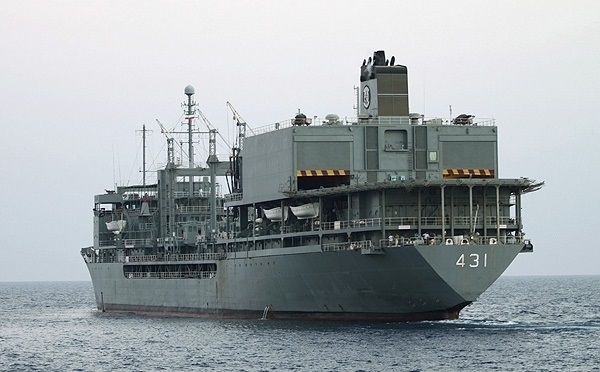
Ukraine Strike on Iranian Ship in Caspian Sea Risks New Front With Tehran
An Iranian sailor was killed in a Ukrainian strike on an Iranian ship in the Caspian Sea, according to Tehran, which condemned the attack and warned it would not hesitate to defend its interests. The incident drags Iran closer to the kinetic edge of the Ukraine war and raises the stakes for any Iranian role in supplying Russia.
Iran says one of its sailors was killed when a Ukrainian strike hit an Iranian ship in the Caspian Sea, a rare lethal incident far from the front lines that threatens to sharpen tensions between Kyiv and Tehran over Iran’s support for Russia.
The Iranian Foreign Ministry issued a statement condemning what it called a Ukrainian strike on a “merchant ship” in the Caspian, saying one Iranian sailor was killed. Tehran framed the attack as a violation of international law and declared that it would not hesitate to defend its interests in line with the principles of self-defense. Iranian commentators noted that Ukrainian forces have previously attacked Iranian vessels, but described this as the first time Iran has formally addressed such an incident in this way. Ukraine had not publicly commented on the specific strike by early 26 July.
For the crew and families of those on board, the cost is already personal and irreversible. A sailor killed in what Iran labels a merchant vessel incident brings the human reality of Kyiv’s campaign against Iranian-linked logistics closer to ordinary Iranian households, not just to drone operators and defense officials in Tehran. It also raises anxiety among mariners working on Iranian-flagged ships in the Caspian and beyond, who now have to factor in the possibility that they, too, could become collateral in a confrontation largely shaped elsewhere.
Operationally, the Caspian is a crucial but often under-discussed theatre. It is a controlled inland sea bordered by Russia, Iran and several post-Soviet states, and a route along which military and dual-use cargo can move with less scrutiny than on open oceans. Reports in recent months have pointed to its role in moving equipment and supplies between Iran and Russia. A Ukrainian decision to strike a vessel there — if confirmed — would signal Kyiv’s determination to disrupt those flows even within a basin that Moscow and Tehran may have considered relatively insulated from direct attack.
Diplomatically, Iran’s sharp language suggests it is preparing the ground to respond more openly, whether through its own military moves, stepped-up weapons transfers to Russia, or legal and political pressure in international forums. By invoking self-defense under international law, Tehran is signaling that it sees the incident not merely as a nuisance but as a potential casus for calibrated retaliation.
For Ukraine and its partners, the incident complicates an already dense web of adversaries and suppliers. Iran is a key source of drones and other systems that Russia has used extensively against Ukrainian cities and infrastructure. Hitting Iranian-associated logistics is one way to raise the cost of that support. But a misjudged strike on a ship that Tehran casts as purely civilian could strengthen hardliners inside Iran who argue for deeper, more visible military backing for Moscow, including more advanced systems.
The core insight is that the Ukraine war is no longer bounded by geography; when suppliers become combat enablers, their ships, factories and data centers can be pulled into the conflict zone, with their citizens bearing the consequences.
Signals to watch now include any clarification from Kyiv about the nature of the targeted ship, potential Iranian moves to escort or arm more of its vessels in the Caspian and elsewhere, shifts in the tempo or visibility of Iranian arms transfers to Russia, and whether other Caspian littoral states react to a precedent that turns their shared inland sea into a more contested military space.
Sources
- OSINT