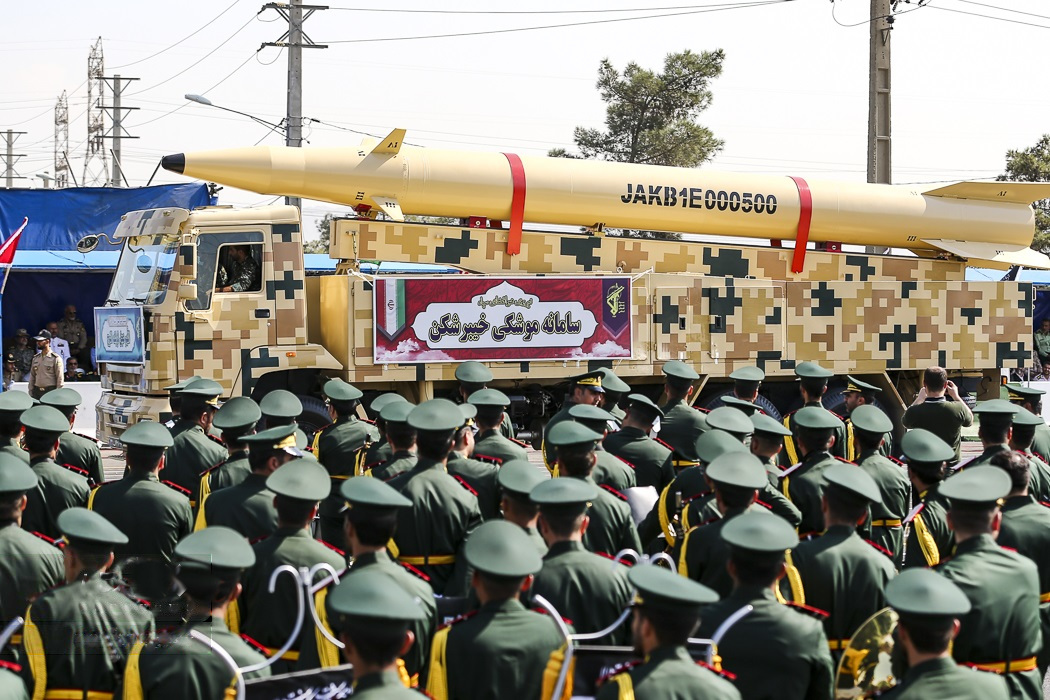
Iran’s Kheibar Shekan Missile Tactics Put U.S. Bases and Gulf Air Defenses Under New Pressure
Iran is increasingly firing Kheibar Shekan ballistic missiles in complex salvos that mix speeds, flight paths, and drones, U.S. officials say, forcing American and Gulf air defenses to work harder for each interception. Most projectiles are still being shot down, but the fact that some are getting through is putting bases, crews, and planners on notice that Iran’s long‑range playbook is changing.
Iran’s latest generation of battlefield math is no longer just about range. By increasingly pairing its Kheibar Shekan ballistic missiles with varied trajectories and drone swarms, Tehran is testing the point at which U.S. and allied air defenses in the Middle East start to look saturated rather than dominant.
According to U.S. officials, Iran has been using the solid‑fuel Kheibar Shekan in a growing number of coordinated attacks that combine different flight paths, speeds, and unmanned aerial vehicles in the same strike packages. Those officials say air defense systems have intercepted most of the missiles and drones, but acknowledge that some Kheibar Shekans have penetrated the defensive shields, causing damage and underlining the missile’s growing operational effectiveness.
The picture that emerges is not of an unstoppable weapon, but of a learning adversary. U.S. officers describe a pattern in which Iranian planners appear to be probing radar coverage and engagement timelines by staggering launches and forcing defenders to prioritize targets in real time. That complicates life for the crews operating Patriot, THAAD, Aegis, and other systems defending U.S. forces, Gulf infrastructure, and commercial assets across the region.
For service members sleeping on bases within range, the difference is practical, not abstract: more frequent alerts, more complex engagements, and a rising chance that one missile in a mixed salvo might slip past. For Gulf governments and energy operators, each successful penetration raises questions about the resilience of export terminals, refineries, and desalination plants that keep economies and populations running.
Strategically, Iran’s use of the Kheibar Shekan marks another turn in the long contest between offensive missiles and defensive shields that has shaped Gulf security for decades. A missile that can fly farther, maneuver in its terminal phase, and arrive as part of a larger, mixed swarm gives Tehran more ways to threaten U.S. bases, Israeli targets, and regional partners without crossing into outright conventional war. It also reinforces Iran’s message that any military confrontation would carry costs for U.S. deployments and regional infrastructure.
The shift matters beyond the immediate region. Missile and drone attacks tied to Iran or its partners have already forced adjustments in shipping patterns, insurance costs, and deployment decisions from the Red Sea to the eastern Mediterranean. As Kheibar Shekan salvos become more sophisticated, governments from Europe to Asia must assume that key energy and trade routes could be periodically disrupted by strikes that no air defense can reliably reduce to zero.
What Iran is demonstrating is that you do not need to defeat U.S. air defenses outright to change the risk calculus—forcing them to fight harder, more often, is enough to make commanders and politicians think twice about escalation. Each intercept still burns through expensive interceptor stocks, maintenance hours, and crew stamina, while each leak‑through adds weight to Tehran’s deterrent narrative.
The next signals to watch will be whether the tempo of Kheibar Shekan launches accelerates, whether Iran exports the system or its tactics to allied groups, and how U.S. planners respond—through new interception concepts, hardened infrastructure, or efforts to disrupt the missile chain before launch. Any visible adaptation on either side will shape how much room Washington and its partners believe they still have to operate under Iran’s evolving missile shadow.
Sources
- OSINT