Iran Claims U.S.-Backed Plot to Break Up Country as President Frames Missile Fight as ‘All-Out War’
Iran’s new president Masoud Pezeshkian says the country faces an ‘all-out war’ that goes beyond missile exchanges, vowing to defend Iran ‘until our last breath’ even as he defers final authority to the Supreme Leader. At the same time, Foreign Minister Abbas Araghchi is alleging past U.S.-linked efforts to dismember Iran, signaling a leadership that sees the current confrontation as existential, not limited to tit-for-tat strikes.
Iran’s leadership is telling its own public—and its adversaries—that the current clash with the United States is about more than missiles. In remarks on 20 July, President Masoud Pezeshkian described the confrontation as an “all-out war” extending beyond the visible exchange of strikes, while Foreign Minister Abbas Araghchi alleged that U.S.-linked figures had previously plotted to break the country apart.
Pezeshkian said Iran was facing a conflict that went beyond missile exchanges and pledged to defend the nation and the interests of its people “until our last breath.” At the same time, he emphasized that ultimate decision-making authority rests with Supreme Leader Ayatollah Ali Khamenei, underscoring the constitutional reality that Iran’s elected government operates within boundaries set by unelected clerical power.
Araghchi, speaking separately, claimed that plans had been made for the disintegration of Iran, including alleged discussions involving former U.S. President Donald Trump and leaders in Iraq’s Kurdistan Region. He asserted that he had warned Iraq’s prime minister that any threat emanating from Kurdish territory would provoke an Iranian response. In another claim, he accused exiled royal figure Reza Pahlavi of agreeing, during a trip to Israel, to a partition scenario in which he would be installed as shah in a central rump state. None of these specific allegations have been independently corroborated.
These statements come days after Iran carried out multiple waves of missile launches under what it labeled Operation "Nasr 2," targeting U.S.-linked bases across the region, and amid reports of continued U.S. strikes on Iranian facilities. Iranian state media have showcased launches of Khaybar Shekan, Fateh-110, Zolfaghar and other ballistic missiles aimed at American targets, while insisting that Iran is acting in legitimate defense against aggression.
For ordinary Iranians, this rhetoric carries both reassurance and foreboding. On one hand, vows to defend the homeland tap into a deep sense of national pride that cuts across political divides. On the other, framing the situation as an all-encompassing struggle and invoking alleged plots to carve up the country can heighten anxiety about where the line between calibrated retaliation and wider war might lie.
Strategically, the leadership’s language serves several purposes. By casting the confrontation as existential, Tehran seeks to deter further U.S. pressure by signaling that it is prepared to absorb costs and escalate if it believes the integrity of the state is at stake. At the same time, emphasizing Khamenei’s ultimate authority allows Pezeshkian to project loyalty to the system even as he navigates between calls for engagement abroad and hardline expectations at home.
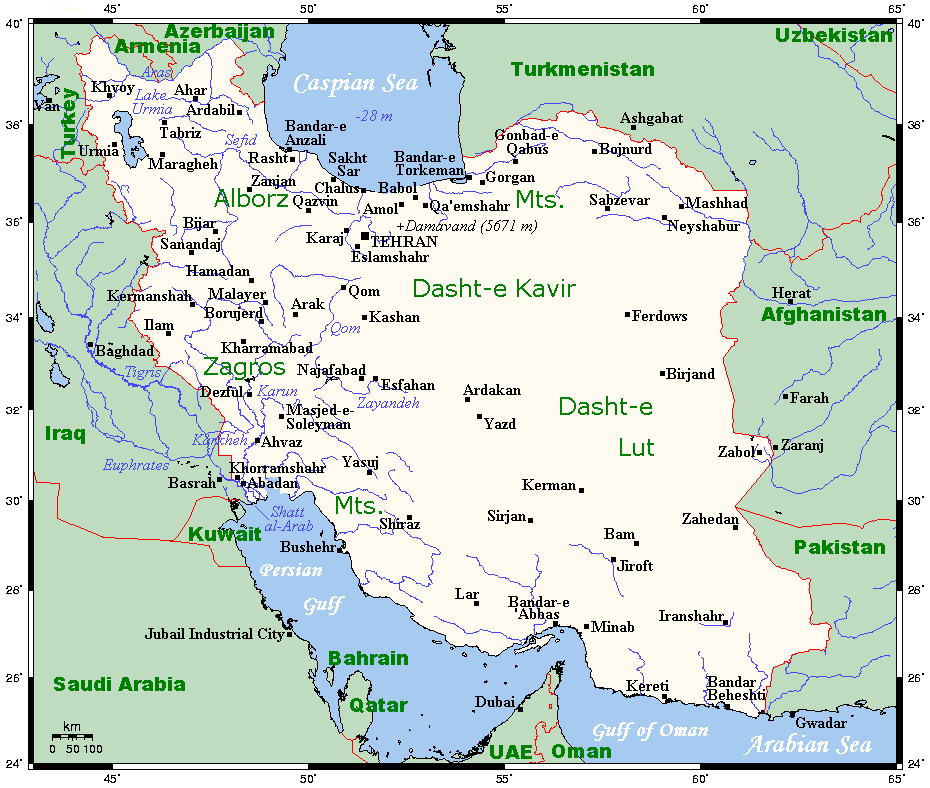
The foreign minister’s focus on alleged disintegration schemes plays into a long-standing Iranian narrative that external powers aim to exploit ethnic and regional fault lines—from Kurdish areas to the oil-rich southwest—to weaken or break the country. In policy terms, that framing can justify aggressive moves beyond Iran’s borders, including missile strikes and proxy operations, as preemptive defense against perceived partition plans.
The core insight in this moment is that for Iran’s leaders, missile launches are only one front in a much broader contest over sovereignty, regime survival and regional influence—and they want both their own population and adversaries to understand the stakes in those terms.
Key developments to watch will include any shifts in Pezeshkian’s public tone as military escalation continues; concrete evidence, if any, that Iran is adjusting its posture in Kurdish areas or along other internal fault lines mentioned by Araghchi; and how these existential narratives feed into Tehran’s decisions on whether to pursue talks with Washington framed, as officials have put it, around Iran’s “national interests.”
Sources
- OSINT