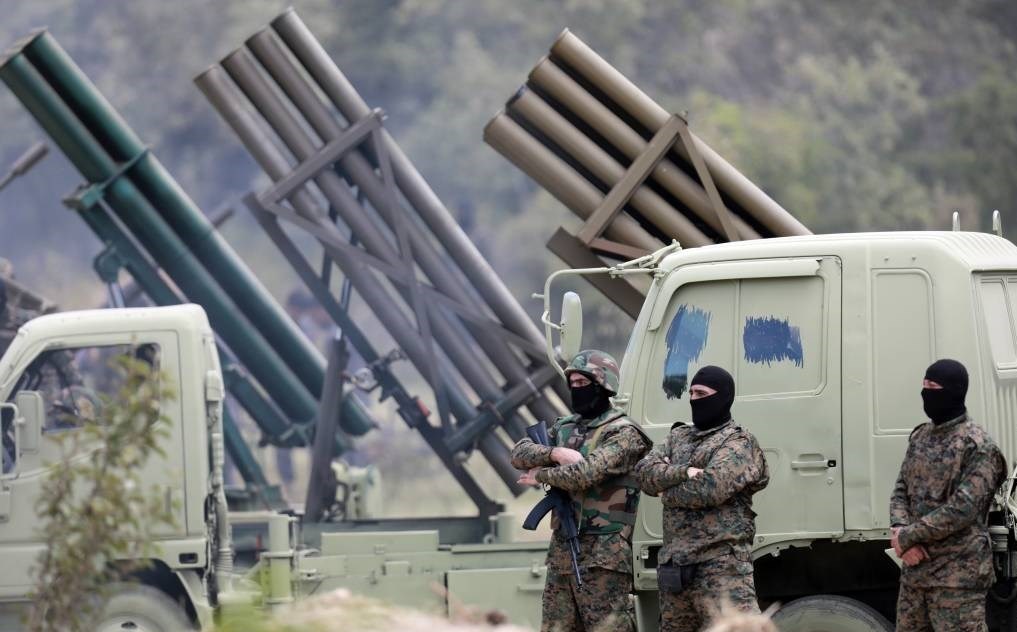
Reports: Israel Pounds Tyre as Hezbollah ATGM Hits Merkava in Southern Lebanon
Severity: WARNING
Detected: 2026-06-09T06:17:34.510Z
Summary
Israeli jets and artillery are hitting multiple targets around Tyre on Tuesday morning as Hezbollah releases footage of an anti‑tank guided missile strike on an Israeli Merkava tank near Beaufort Castle. The exchanges show both sides edging into more exposed, symbolically charged terrain just as Washington claims a short‑term Iran–Israel strike pause, raising the odds that a local clash derails nuclear diplomacy and jolts energy markets.
Details
Israeli forces and Hezbollah traded high‑intensity blows in southern Lebanon early Tuesday, with Israel conducting new airstrikes around the coastal city of Tyre while Hezbollah published video of an anti‑tank guided missile (ATGM) strike on an Israeli Merkava tank near the Beaufort Castle area. The actions, reported between 05:34 and 06:18 UTC, highlight how quickly the northern front can sharpen even as U.S. leaders talk up a tentative lull between Iran and Israel.
According to Israeli and Lebanese reporting, the Israeli Air Force launched a new wave of strikes on Tyre at roughly 05:34 UTC, followed by confirmed IDF strikes around the village of al‑Abbasiya near Tyre and reported hits in Deir Qanoun Ras al‑Ain around 06:03 UTC. Almost simultaneously, Hezbollah released footage of a precision ATGM strike on a Merkava tank operating near the historic Beaufort Castle, a dominant terrain feature in southern Lebanon that overlooks the Israeli border. These are claimed and battlefield‑side reports; casualty figures and equipment losses are not yet independently verified.
For civilians in and around Tyre—a major urban and economic hub in south Lebanon—the renewed airstrikes increase immediate risk to housing, small industry, and local transport links. Any sustained campaign there would likely trigger further internal displacement in a country already gripped by economic crisis. On the Israeli side, video of a Merkava—a symbol of Israeli ground power—being hit will reverberate domestically, reinforcing perceptions of vulnerability along the northern border and putting families of reservists and residents of border communities under renewed psychological pressure.
Militarily, Hezbollah’s ability to target Israeli armor near such a key elevation confirms it maintains functional reconnaissance and ATGM cells within engagement range of front‑line Israeli positions. For the IDF, striking repeatedly around Tyre and adjacent villages points to an effort to degrade launch sites, command nodes, and logistics supporting cross‑border fire—not just pinprick retaliation. Targeting a broader set of locations around Tyre also increases the chance of inadvertently hitting sensitive assets or foreign personnel, which could pull in external actors.
From a markets perspective, the timing is delicate. U.S. President Trump has publicly claimed Iran and Israel have agreed to a short pause in strikes while Washington pursues a long‑term nuclear agreement with Tehran. Hezbollah’s escalatory signaling and the IDF’s expanded target set in southern Lebanon both increase the chance that Iran, as Hezbollah’s primary backer, is drawn deeper into the confrontation despite any notional pause. Traders will watch for signs that Israel is preparing for wider ground operations in the north or that Iran will answer the killing of its air‑defense personnel in prior strikes with more direct involvement. Either move could quickly add a risk premium of several dollars to Brent and WTI and lift gold, while hitting Israeli equities and raising already elevated Lebanese sovereign risk.
Over the next 24–48 hours, key indicators will be: whether Israel formally acknowledges the Merkava loss and adjusts its posture along the border; any expansion of strikes further north toward the Bekaa Valley or deeper into Lebanese infrastructure; Hezbollah’s rate of cross‑border attacks, especially into more densely populated Israeli areas; and Iranian rhetoric or reported deployments in response. A misstep that causes mass casualties in Tyre or on the Israeli side would raise international pressure for de‑escalation but also risk triggering a much broader confrontation that directly feeds through to Eastern Mediterranean shipping, insurance costs, and global energy pricing.
MARKET IMPACT ASSESSMENT: Heightened Israel–Hezbollah exchanges near southern Lebanese population centers will keep a geopolitical risk premium in Brent and WTI, sustain safe‑haven interest in gold and the dollar, and could weigh on Israeli assets and Lebanese eurobonds. Any signal that Israel is preparing for a larger ground operation or that Iran will retaliate more directly could add several dollars to crude benchmarks.
Sources
- OSINT