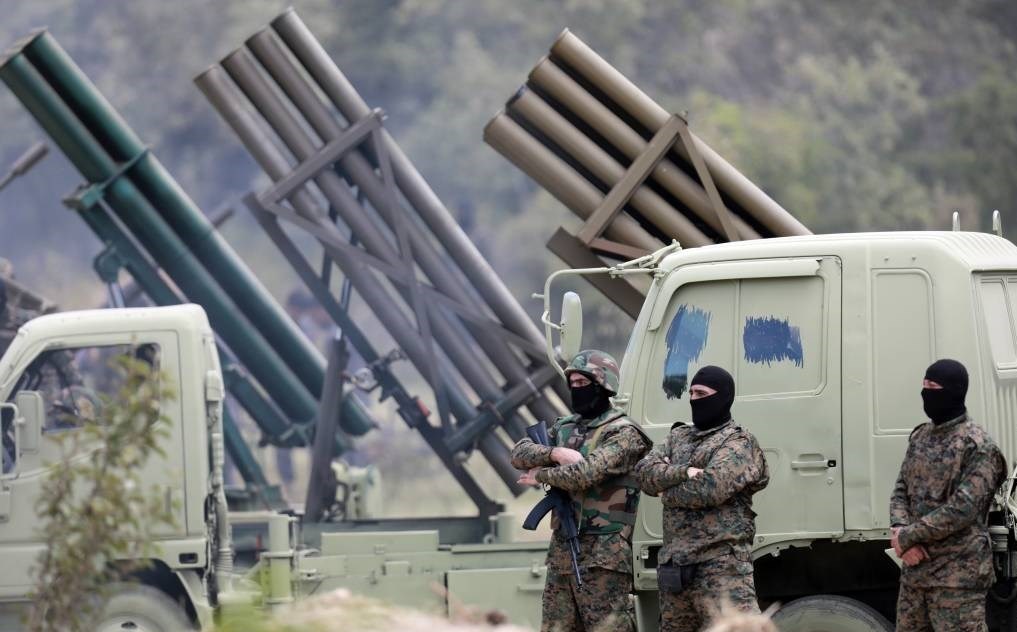
Reports: Hezbollah Rocket and Drone Barrage Hits Northern Israel as IDF Pounds Lebanon
Severity: WARNING
Detected: 2026-06-04T18:23:04.422Z
Summary
Hezbollah has resumed rocket and drone attacks on multiple northern Israeli towns while Israel’s air force strikes targets across southern Lebanon and the Bekaa as of around 18:00 UTC. The synchronized escalation reopens the risk of a broader northern front at a moment when Israel is still heavily engaged in Gaza and the U.S. is tightening a naval blockade on Iran, raising questions for governments, shippers, and energy markets about how far this exchange will run.
Details
Hezbollah forces have resumed rocket and drone strikes into northern Israel, targeting Kiryat Shmona, Nahariyya, Shlomi and other communities near the Lebanese border, according to Middle East OSINT channels at 18:02 UTC. Almost simultaneously, reporting from the same information stream and regional observers notes that the Israel Defense Forces (IDF) conducted dozens of fighter-jet airstrikes today in southern Lebanon and the Bekaa region, with a strike in the Masaken area of Tyre reported roughly 30 minutes before 18:01 UTC.
These are not isolated incidents but a coordinated uptick in cross-border fire at a time when diplomats are still talking about ceasefire frameworks for Lebanon and Gaza. The northern Israeli towns mentioned are frontline communities that have already suffered prolonged evacuations and intermittent rocket fire; new drone activity adds complexity to Israel’s air-defense picture. On the Lebanese side, airstrikes in Tyre and the Bekaa indicate the IDF is willing to hit deeper logistics and command nodes, not just immediate launch areas along the Blue Line.
For civilians, this escalation keeps tens of thousands of residents on both sides of the border in a state of displacement and uncertainty, and raises the probability of additional infrastructure damage in northern Israel and southern Lebanon. Humanitarian agencies operating in Lebanon, already strained by the economic collapse and refugee burden, will face fresh access and security constraints in Tyre and the Bekaa if sorties and retaliatory fire intensify.
Militarily, the renewed Hezbollah barrages suggest that neither side is treating Lebanon as a frozen or contained front. Expanded use of drones against Israeli territory points to iterative improvements in Hezbollah’s reconnaissance-strike complex and pressure on Israeli air defenses that are also tasked with countering rockets from Gaza and potential threats from Yemen or Iraq. For Israel, striking widely across southern Lebanon and the Bekaa increases the risk of collateral damage and miscalculation that could drag Beirut and possibly Tehran more directly into decision cycles. It also stretches IDF force management as the Gaza campaign continues and as U.S.–Iran tensions rise following the tightening of the U.S. naval blockade on Iran’s oil exports.
Market-wise, traders will read this as an incremental increase in Middle East geopolitical risk, especially in the context of reported turmoil around the Strait of Hormuz and the broader Iran-Israel shadow conflict. While the Israel–Lebanon theater is geographically distant from major oil shipping lanes, any perception of a shift toward full-scale Israel–Hezbollah war tends to widen risk premia on Brent and support refined product margins due to potential regional spillover. Aviation insurers, shipping underwriters, and energy companies with assets or logistics exposure in the eastern Mediterranean will be reassessing no-fly and no-sail zones, potentially increasing war-risk insurance pricing.
In the next 24–48 hours, key indicators to watch include: whether Hezbollah sustains or intensifies rocket and drone volumes beyond symbolic salvos; any Israeli moves to expand ground forces or call up additional reservists tied explicitly to the northern front; strikes on higher-value targets such as critical infrastructure in Haifa Bay or deep inside Lebanon; and statements from Washington, Paris, and Tehran that either signal de-escalation efforts or harden red lines. A shift from episodic strikes to declared operational campaigns by either side would meaningfully raise the likelihood of a broader regional confrontation and a sharper reaction in energy and defense markets.
MARKET IMPACT ASSESSMENT: Renewed Hezbollah–Israel exchanges are mildly bullish for oil and refined products via higher Middle East risk premia and insurance costs, and could support safe-haven flows into gold and USD. Defense names with exposure to Israel and air/missile defense systems may see upside on expectations of sustained high-tempo operations.
Sources
- OSINT