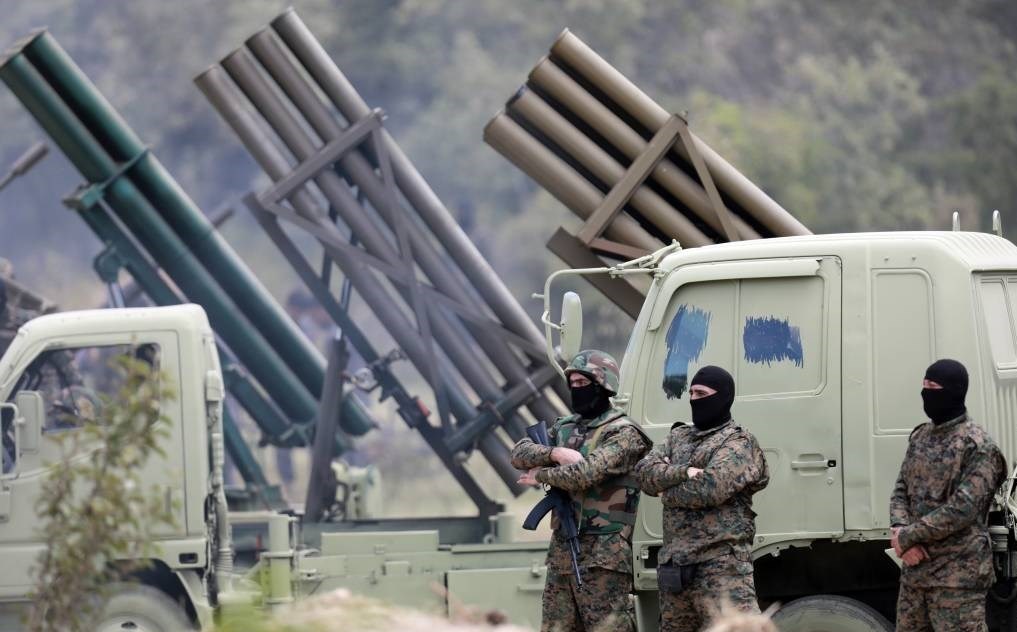
Hezbollah Vows to Keep Bombarding Israel as U.S. Sources Tout Imminent Lebanon Ceasefire
Severity: WARNING
Detected: 2026-06-02T19:11:36.654Z
Summary
Around 18:29 UTC, a senior Hezbollah official told Kurdish media the group will not halt rocket fire on Israel and rejected proposals to spare its Beirut stronghold in exchange for calm in northern Israel. Minutes earlier, U.S. diplomatic sources quoted by Lebanon’s Al‑Jadeed predicted a nationwide Lebanon ceasefire ‘in the coming days’ without an Israeli pullout from the south. The clash between battlefield rhetoric and diplomatic signaling will shape whether the northern Israel front quiets or drifts toward wider war, with direct implications for Eastern Mediterranean risk, energy flows, and regional credit.
Details
A senior Hezbollah political official said on Tuesday that the group will not stop its bombardment of Israel, even as American diplomatic sources, cited by Lebanon’s Al‑Jadeed at 18:33 UTC, forecast a nationwide ceasefire in Lebanon within days.
Mahmoud Qammati, deputy head of Hezbollah’s Senior Political Council, told Kurdistan24 around 18:29 UTC that Hezbollah has informed ‘all relevant parties’ it categorically rejects any formula that trades its Dahiyeh stronghold in Beirut for security in northern Israel. In other words, Hezbollah will not accept a deal that shields its core urban base from Israeli strikes in exchange for halting rocket and missile attacks across the border.
By contrast, Al‑Jadeed, quoting unnamed American diplomatic sources, reported that ‘in the coming days, a ceasefire will be reached throughout Lebanon’ without an Israeli withdrawal from southern Lebanon and without a halt to ongoing Israeli ground activity against Hezbollah infrastructure in southern villages. The reported plan envisions a freeze on cross‑border fire that could open the way to more formal negotiations over force deployments and security arrangements.
For civilians in northern Israel and southern Lebanon, this divergence is existential. Residents on both sides remain displaced from border communities, schools and businesses operate under constant interruption, and agricultural and industrial output in the frontier belt has been repeatedly halted. A genuine ceasefire would enable gradual returns, reconstruction planning, and some normalization of cross‑border commercial flows through Lebanese ports and Israeli northern road and rail links.
Militarily, Hezbollah’s refusal to commit publicly to de‑escalation signals that it wants to retain deterrent leverage while Gaza and broader regional dynamics remain unsettled. Continued bombardment keeps pressure on Israel’s northern command, tying down air defense assets and ground forces along the Lebanese border and complicating any Israeli effort to reset its force posture. A U.S.‑brokered ceasefire that does not require an IDF pullout, however, would be read in Israel as a strategic win—preserving a forward security presence while forcing Hezbollah to holster its rockets, at least temporarily.
For markets, the path chosen matters. A credible, enforced ceasefire across Lebanon would lower the perceived probability of a broader Israel–Iran or Israel–Hezbollah war that could directly threaten Eastern Mediterranean gas platforms, shipping lanes, or critical infrastructure. That would tend to ease geopolitical risk premia in Brent and European gas, support Israeli sovereign bonds and equities, and reduce strain on Lebanese banks and Eurobonds already trading at distressed levels. Insurers and reinsurers exposed to the region would face clearer loss parameters and could begin recalibrating war‑risk coverage in the Levant.
If Hezbollah instead backs its hard line with sustained or increased fire, investors will re‑price the risk that talks fail and that Israel eventually pursues a larger campaign in southern Lebanon. That would raise pressure on global energy benchmarks, strengthen safe‑haven flows into the dollar, Treasuries, and gold, and weigh on tourism, airlines, and consumer sectors linked to Israel, Cyprus, and nearby Mediterranean states.
Over the next 24–48 hours, watch for: (1) any formal announcement or text of a Lebanon‑wide ceasefire; (2) measurable changes in rocket and missile launch rates along the border; (3) Israeli statements on whether ground operations in southern Lebanon will continue under any deal; and (4) signals from Tehran about support for or resistance to a freeze. Trading desks should monitor Eastern Med shipping traffic, Israeli and Lebanese CDS, and front‑month Brent for signs that markets are choosing between a shaky calm and another cycle of escalation.
MARKET IMPACT ASSESSMENT: If a durable ceasefire along the Israel–Lebanon front materializes, risk premia on Israeli and Lebanese assets could ease, supporting Israeli equities and shekel, reducing tail‑risk premiums embedded in Mediterranean shipping and regional insurers, and modestly dampening the geopolitical component in Brent. If Hezbollah instead sustains or escalates fire despite ceasefire diplomacy, markets may reprice higher regional war risk, pressuring Eastern Med tourism, airlines, and potentially lifting oil and defense stocks.
Sources
- OSINT