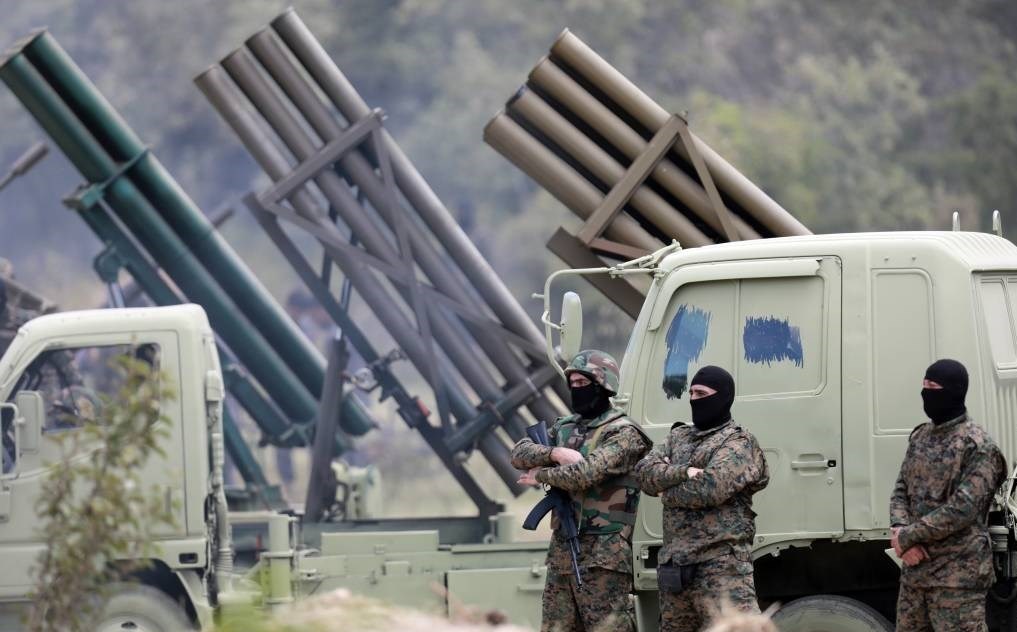
Reports: Israel Threatens Beirut Dahieh Strikes if Hezbollah Hits Israeli Cities
Severity: WARNING
Detected: 2026-06-01T11:11:30.125Z
Summary
Israel’s prime minister and defense minister have publicly warned that any Hezbollah attacks on Israeli cities will trigger strikes on Dahieh, the group’s political and logistical heart in Beirut. This sharpens the red lines on the Israel–Lebanon front and increases the probability that urban areas in the Lebanese capital become active targets, with direct consequences for civilians, political stability, and investor risk across the Levant.
Details
Around 11:01 UTC on 1 June 2026, Israeli leadership announced what they called a “new-old equation”: if Israeli cities are attacked, Israel will strike Dahieh, Hezbollah’s main stronghold in Beirut. Prime Minister Benjamin Netanyahu stated that there will be no situation in which Hezbollah attacks Israeli cities and “the terror headquarters in Dahieh remain off limits.” Defense Minister Israel Katz echoed that the same rule now applies to Dahieh as to northern Israel.
This is not routine rhetoric. Dahieh is a densely populated, predominantly Shia suburb that functions as Hezbollah’s political, security and media hub. Publicly declaring Dahieh a direct retaliatory target elevates it from a periodically struck node to an explicitly named centerpiece of Israel’s deterrence doctrine. The timing — during ongoing exchanges with Hezbollah and amid warnings about Beirut more broadly — reinforces that Israel is preparing the domestic and international narrative for much heavier strikes inside the Lebanese capital if the northern front escalates.
For residents of Beirut and southern Lebanon, the stakes are immediate: any successful large-scale Hezbollah rocket or drone attack on Israeli urban centers now carries a clear linkage to airstrikes in one of the city’s most crowded neighborhoods. This threatens mass displacement, civilian casualties, and damage to critical urban services. Lebanese authorities face a dilemma between pressuring Hezbollah to limit fire and risking further political fracture if they are seen as constraining the group.
Militarily, the statement signals that Israel is willing to move from targeting primarily border-area launch cells and infrastructure into sustained strikes on command, control and logistics assets entrenched in Dahieh’s urban fabric. That could force Hezbollah to disperse or harden its Beirut-based infrastructure and potentially accelerate its own escalation options, including deeper rocket salvos into Israel or attempts at precision strikes on strategic infrastructure.
For markets, the renewed explicit targeting of Beirut’s core Hezbollah district raises the perceived probability of a wider Israel–Lebanon conflict. While not yet a closure-level threat to shipping lanes, any slide toward full-scale war would raise insurance costs and operational risk for Eastern Mediterranean ports, pipelines, and energy projects, including in Israel, Cyprus, and Lebanon’s offshore zones. Risk assets with exposure to the region — Israeli and Lebanese sovereigns, regional banks, and infrastructure plays — could see volatility. Safe-haven flows may provide incremental support to gold and U.S. Treasuries, while energy traders may incrementally price in a broader Middle East disruption premium, particularly if Iran-linked actors view escalation in Lebanon as a trigger for action elsewhere.
Over the next 24–48 hours, key indicators to watch include: any Hezbollah salvos targeting major Israeli cities rather than border communities; early Israeli air activity patterns over Beirut and its southern suburbs; formal Lebanese government statements either distancing from or backing Hezbollah’s posture; and any parallel messaging from Iran or the IRGC that frames Dahieh as a red line. A rapid move from rhetoric to strikes in or around Beirut would materially increase both humanitarian risk and regional market volatility.
MARKET IMPACT ASSESSMENT: Elevates Middle East conflict risk premium, particularly for energy and Eastern Med shipping; modest upside pressure on oil, gold, defense equities, and regional CDS spreads if rhetoric moves into action.
Sources
- OSINT