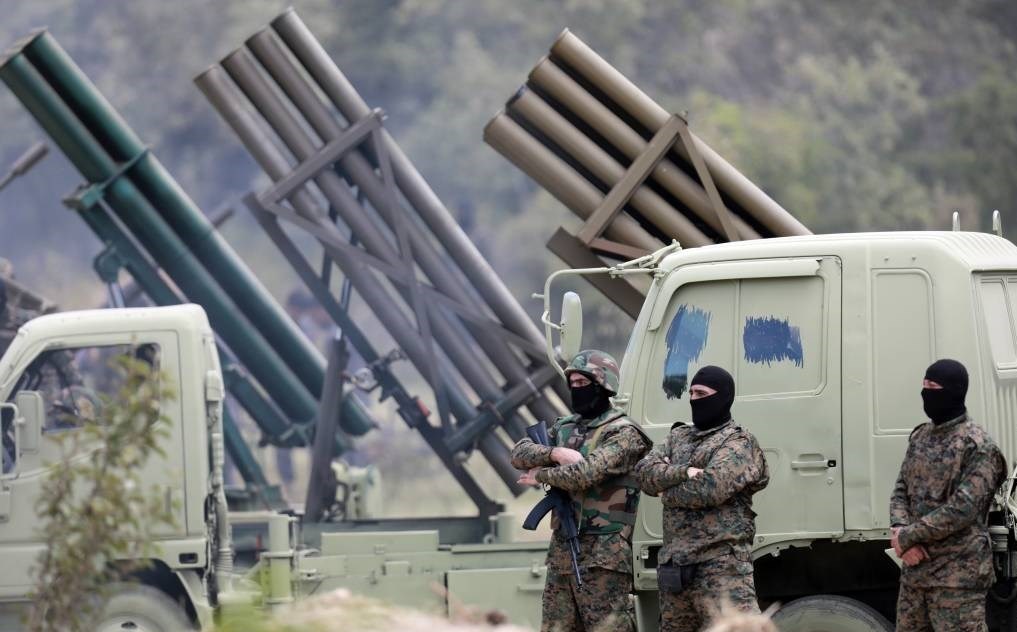
Reports: Hezbollah Drone Hits IDF Base as Gaza Port Strike Kills Civilians
Severity: WARNING
Detected: 2026-05-31T17:11:30.924Z
Summary
Hezbollah reportedly used an explosive drone to hit an IDF base in Beit Hillel around 17:02 UTC, injuring several Israeli soldiers, while an Israeli attack on Gaza City’s western port about an hour earlier killed one person and wounded at least 18. The paired incidents signal a grinding escalation across Israel’s northern and Gaza fronts just as France forces an emergency UN Security Council session on Lebanon, raising political and market risk of a broader confrontation.
Details
Around 17:02 UTC on 31 May, multiple reports indicate Hezbollah launched an explosive drone that struck an Israel Defense Forces (IDF) base in Beit Hillel in northern Israel, injuring several soldiers. In a related timeframe, an Israeli helicopter strike hit a café at Gaza City’s western port roughly an hour before 17:03 UTC, killing one person and wounding at least 18, with beachgoers fleeing the area. These events are unfolding as France has requested, and the UN has confirmed for tomorrow, an emergency Security Council session on Lebanon.
Confirmed details remain partially fragmented but consistent across open sources: localized accounts and regional monitoring channels report a Hezbollah one‑way attack UAV (variously described as Sayyad/Murad‑5 type) impacting an IDF installation at Beit Hillel, close to the Lebanese border. Casualty counts are limited to “several” wounded Israeli soldiers, with no fatalities confirmed yet. In Gaza, local sources report that an Israeli attack helicopter engaged a café at the port area of Gaza City, causing one confirmed fatality and at least 18 wounded civilians. Visual evidence has not yet been fully authenticated, but the pattern matches prior IDF rotary‑wing strikes in coastal Gaza.
Human stakes are immediate. In Gaza, the port and adjacent beach are one of the few remaining civilian gathering points in a heavily damaged urban environment; striking a café there amplifies the toll on already displaced and service‑deprived residents and complicates humanitarian movements via small craft. On Israel’s north, Hezbollah’s ability to wound multiple IDF personnel inside a base using a kamikaze drone reinforces a sense of vulnerability among communities and reservists already facing periodic evacuations and economic disruption, especially in agriculture and cross‑border trade.
Militarily, the Beit Hillel hit confirms Hezbollah’s continued use of precision one‑way UAVs against hardened military targets, not just observation posts or border infrastructure. Successful penetrations against bases increase pressure on the IDF to expand defensive deployments and consider deeper or more persistent strikes into southern Lebanon, raising the risk of miscalculation with Lebanese state forces and their backers, particularly Iran. The Gaza port strike reflects an Israeli willingness to prosecute targets within civilian leisure areas, likely on the basis of suspected militant activity, which in turn fuels militant recruitment and hardens Hamas and allied factions against de‑escalation.
For markets, these developments add incremental risk rather than a step‑change shock. Energy traders will read a sustained Hezbollah–Israel drone and missile exchange as a medium‑term threat vector for Eastern Mediterranean gas infrastructure, especially offshore platforms and onshore processing in both Israel and, potentially, Lebanon. While no assets or shipping lanes have been directly threatened today, insurers and shipping operators will continue to re‑price exposure to Israeli ports and nearby routes, supporting a modest geopolitical premium in crude and regional refined product flows. Gold may see additional safe‑haven bids on accumulated Middle East risk, while regional equities, particularly in Israel, could face pressure if the northern front intensifies and reserve call‑ups expand.
In the next 24–48 hours, watch for (1) the scale and nature of Israel’s response against Hezbollah targets in southern Lebanon, especially any strikes near major Lebanese infrastructure or along the coastal corridor; (2) whether Hezbollah escalates from drone attacks on bases to attempts against Israeli critical infrastructure or denser civilian centers; (3) the tone and concrete outcomes of tomorrow’s UN Security Council emergency session on Lebanon — particularly any language on cross‑border rules of engagement or constraints on Israeli operations; and (4) any indication that the Gaza port area will be treated by the IDF as a recurring target set, which would further complicate humanitarian logistics and raise civilian casualty rates.
MARKET IMPACT ASSESSMENT: Sustained high tension on Israel’s northern front and fresh civilian casualties in Gaza support geopolitical risk premia in oil and gold and modest safe-haven bids in USD and CHF; limited immediate impact but raises tail risk of a wider Lebanon war that could threaten Eastern Med gas and regional shipping confidence.
Sources
- OSINT