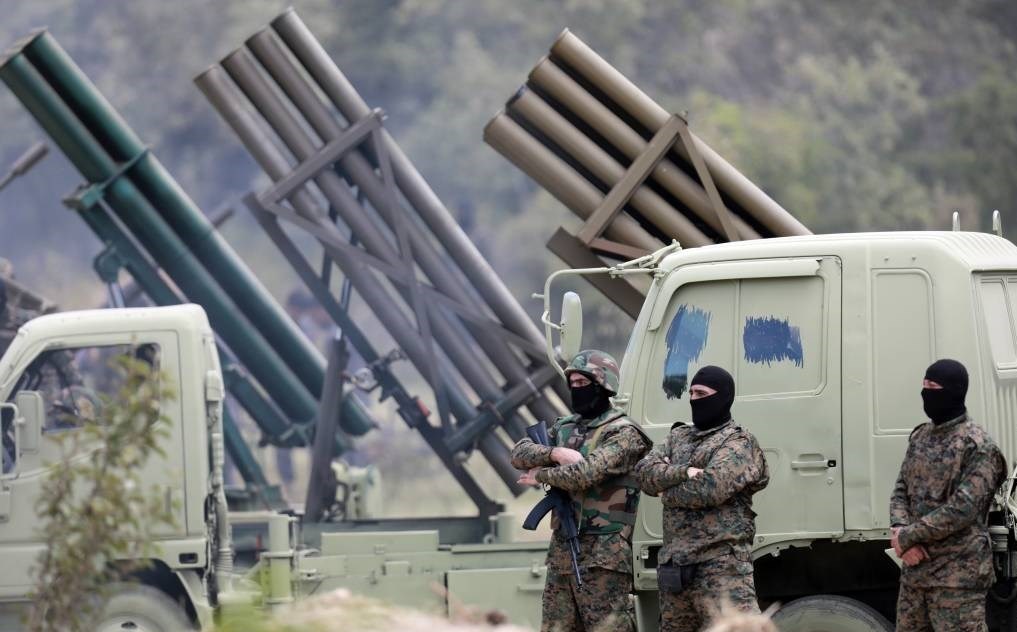
Hezbollah Rockets Hit Safed Area After IDF Ground Push Beyond Litani, Sirens Return
Severity: WARNING
Detected: 2026-05-30T13:41:04.124Z
Summary
Hezbollah rocket fire toward Safed around 13:19–13:32 UTC has shattered a six‑week lull in air raid sirens in the northern Israeli city, following IDF disclosures that it was preparing for such retaliation after pushing ground forces north of the Litani River. The exchange hardens the northern front of the Israel–Hezbollah conflict, raises the likelihood of sustained Israeli air operations in Lebanon, and heightens risk premia on regional assets and energy.
Details
Hezbollah and Israel have sharply escalated their confrontation on the northern front this hour, with rockets launched toward Safed in northern Israel shortly after the IDF publicly signaled it was bracing for such attacks.
Between 13:18 and 13:32 UTC on 30 May, multiple open‑source reports describe a rapid sequence of events: the IDF stated it was preparing for the possibility that Hezbollah would launch rockets into northern Israel in response to recent Israeli ground incursions north of the Litani River in southern Lebanon. Minutes later, at 13:19 UTC, observers reported Iron Dome launches and interception attempts, followed by multiple interceptions near Safed by 13:20 UTC. By 13:23–13:24 UTC, additional posts referenced one interception over Safed and intensified Israeli fighter jet activity over southern and eastern Lebanon, reportedly to target the launch site. At 13:24 UTC, there were reports of a rocket impact near Safed, and by 13:31–13:32 UTC, Israeli Army Radio was cited saying air raid sirens sounded in Safed for the first time in about six weeks.
These reports, while still emerging and partially anecdotal, are mutually reinforcing and consistent with known Hezbollah–Israel engagement patterns. The core facts with medium‑high confidence: Hezbollah conducted a salvo of rockets toward Safed; Israel activated Iron Dome, with at least some interceptions observed; at least one projectile may have impacted near the city; Israeli jets are now operating over southern and eastern Lebanon. There is no immediate confirmation of casualties, but the activation of sirens in a major northern city after an extended quiet period is operationally and psychologically significant.
For civilians in northern Israel, this marks a renewed threat to urban centers that had seen relative respite, potentially driving fresh internal displacement and pressuring authorities to reconsider school, business, and tourism activity in the area. On the Lebanese side, residents of southern and eastern regions face intensified Israeli airstrikes and repeated evacuation orders; report 23 already notes new evacuation alerts in southern Lebanon following earlier overnight exchanges.
Militarily, the timing is critical. Israel’s decision to push ground elements beyond the Litani—traditionally described as a buffer line under UN resolutions—signals an effort to physically degrade Hezbollah’s launch capacity closer to the border. Hezbollah’s riposte against Safed, rather than limited fire at border communities, suggests willingness to contest that push by threatening deeper Israeli territory. This dynamic risks locking both sides into a cycle of tit‑for‑tat where Israel increases cross‑border raids and airstrikes while Hezbollah extends the range, volume, or sophistication of its attacks.
For markets, any hardening of the Israel–Hezbollah front amplifies geopolitical risk across the Eastern Mediterranean. While this flare‑up is still localized and far from core oil production zones, investors will reassess tail risks: spillover involving Iran, drag on negotiations around Gaza or Lebanon, and potential pressure on US and European diplomacy. Crude and refined products may see incremental support from higher risk premia; gold and safe‑haven FX could catch bids on renewed conflict headlines; Israeli sovereign and corporate paper, the shekel, and regional equities may face pressure if sirens in northern cities become frequent again.
Over the next 24–48 hours, watch for: (1) whether Hezbollah increases the range or intensity of rocket fire beyond Safed, especially toward larger Israeli population centers; (2) the depth and visibility of Israeli airstrikes in southern and eastern Lebanon, including any targeting of high‑value Hezbollah assets; (3) civilian casualty reports on either side, which could drive political demands for escalation; and (4) any US, French, or UN diplomatic moves, particularly threats of sanctions or warnings to Iran, that could either cap or accelerate the confrontation.
MARKET IMPACT ASSESSMENT: Headline risk for oil and Eastern Med gas: renewed rocket fire into northern Israel and likely Israeli airstrikes over southern/eastern Lebanon marginally raise the probability of broader regional escalation, supportive for crude and gold as safe havens while weighing on Israeli assets and regional equities.
Sources
- OSINT