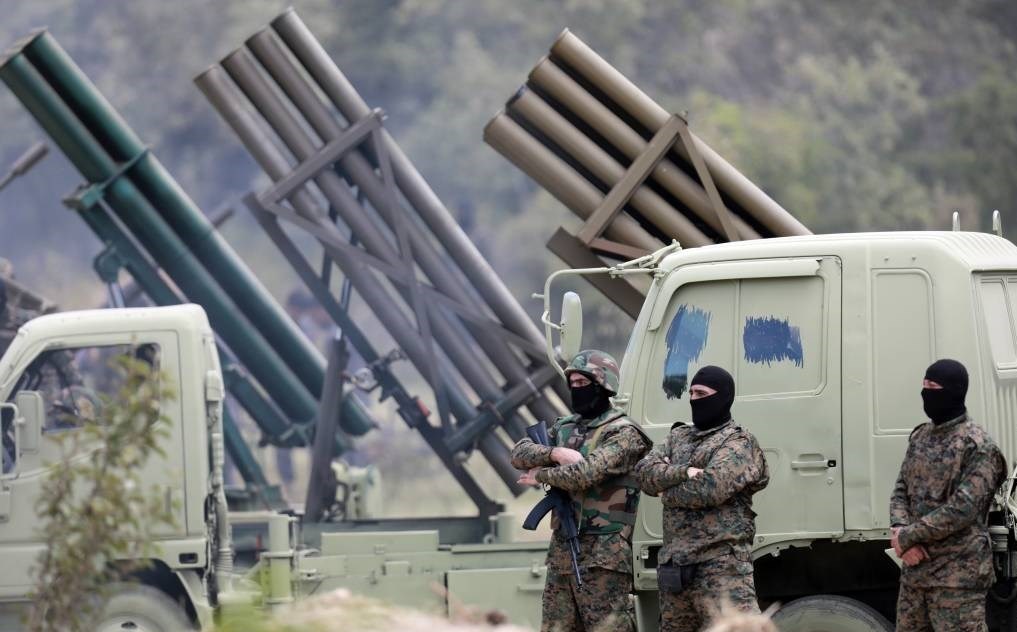
Hezbollah FPV Drones Hit More Iron Domes, IDF Assets in North
Severity: WARNING
Detected: 2026-05-29T03:14:43.647Z
Summary
Around 03:02 UTC, Hezbollah released new footage showing multiple FPV drone strikes on Israeli military targets along the Israel–Lebanon border, including two additional Iron Dome launchers near Margaliot, vehicles, an IDF excavator, a tented position, and a communications center. This confirms a sustained precision-drone campaign degrading Israeli air-defense and border infrastructure despite ongoing IDF operations in southern Lebanon, incrementally raising escalation and regional risk premia.
Details
Between approximately 03:00–03:02 UTC on 29 May 2026, Hezbollah media channels released a package of videos documenting First-Person-View (FPV) drone strikes against several Israeli Defense Forces (IDF) targets along the Israel–Lebanon frontier.
1. What happened – confirmed details
The footage reportedly shows:
- FPV drone strikes on two additional Iron Dome launchers near Margaliot, northern Israel (Report 11). Visual confirmation brings the total number of Iron Dome launchers hit by Hezbollah FPVs to six.
- Drone strikes on two Israeli vehicles, including a Humvee, near Naqoura on the Israel–Lebanon border, with at least one vehicle seen burning post-strike (Report 10).
- A strike on an IDF excavator operating in the city of Khiam, southern Lebanon (Report 8).
- A strike on a tent set up for Israeli soldiers near the border; initial assessment suggests it was unoccupied at time of impact (Report 9).
- A strike on an IDF communications center on the Israel–Lebanon border (Report 12).
Timing refers to the release of footage, not necessarily the exact time of the underlying strikes, but it confirms multiple successful Hezbollah FPV engagements over a recent period.
2. Actors and chain of command
The attacker is Hezbollah, operating from southern Lebanon under its centralized military command, historically closely coordinated with Iran’s Islamic Revolutionary Guard Corps–Quds Force. The targets are IDF assets under Northern Command responsible for Israel’s northern front and air-defense network. Iron Dome batteries fall under the Israeli Air Defense Command, while the border communications center and vehicles support local ground forces. While no senior commanders are reported hit, the assets are tactically significant.
3. Immediate military and security implications
- Air-defense degradation: Strikes on Iron Dome launchers are cumulatively important. A tally of six visually confirmed launchers damaged or destroyed suggests Hezbollah’s FPV program can repeatedly find and hit high-value air-defense units, potentially requiring Israel to disperse, harden, and better conceal launchers, and to deploy more point defense and EW.
- Operational tempo: The attacks on vehicles, engineering equipment, and a communications node point to a broader Hezbollah target set: mobility, logistics, and C2. This supports a strategy of attrition and harassment designed to raise the cost of Israeli operations in southern Lebanon and complicate any broader ground push.
- Escalation risk: While still below the threshold of strategic missile salvos or deep strikes, the persistence and sophistication of Hezbollah’s border attacks increases the chance of Israel expanding strikes deeper into Lebanon or targeting more sensitive infrastructure, raising regional miscalculation risk, especially given Iran’s backing.
4. Market and economic impact
- Energy: The Israel–Lebanon–Syria corridor is not a major direct oil/gas export route, but it sits in the broader Eastern Mediterranean theater. Continued successful Hezbollah strikes on Israeli high-value military assets will modestly widen the geopolitical risk premium embedded in Brent and WTI. Traders will watch for any sign of: (a) strikes on offshore energy infrastructure, or (b) Israeli attacks on Lebanese or Syrian infrastructure that could draw in Iran more overtly.
- Safe havens and FX: Persistent low-level escalation supports mild bids in gold and the U.S. dollar, particularly if headlines frame this as erosion of Israeli air-defense dominance. Regional EM assets (Israeli shekel, Lebanese pound—already distressed) may see incremental pressure on risk-off days.
- Defense sector: Demonstrated vulnerability of Iron Dome and similar systems to cheap FPV swarms underscores global demand for counter-drone technologies, sensors, and hard-kill/soft-kill solutions, supportive for Western and Israeli defense-equity sentiment.
5. Likely 24–48 hour developments
- Expect IDF retaliatory air and artillery strikes on suspected Hezbollah launch sites, storage areas, and command nodes in southern Lebanon, with Israeli authorities likely to downplay the operational impact on Iron Dome while emphasizing Hezbollah casualties.
- Hezbollah will likely publicize further FPV footage to sustain psychological and informational pressure and demonstrate continued operational freedom despite Israeli advances.
- Markets will monitor for any crossing of red lines: attacks causing mass Israeli civilian casualties, deep strikes on major Israeli cities from Lebanon, or Israeli strikes closer to Beirut or on high-value Lebanese infrastructure. Any such move would justify a higher-tier alert and greater oil and safe-haven reaction.
At this stage, the development is an incremental but notable degradation of Israeli tactical defenses and confirmation of Hezbollah’s maturing FPV capability, warranting a WARNING-level alert for both security planners and risk-sensitive market participants.
MARKET IMPACT ASSESSMENT: Hezbollah’s demonstrated ability to repeatedly target Iron Dome units and IDF assets marginally increases perceived escalation risk along the Israel–Lebanon front, modestly supportive for oil, defense equities, and safe havens (gold, USD). The large-scale FARC dissident clashes could foreshadow instability in a key coca-producing area, with limited but non-zero implications for Colombian risk premia and Andean sovereign spreads; direct impact on global commodities is low.
Sources
- OSINT