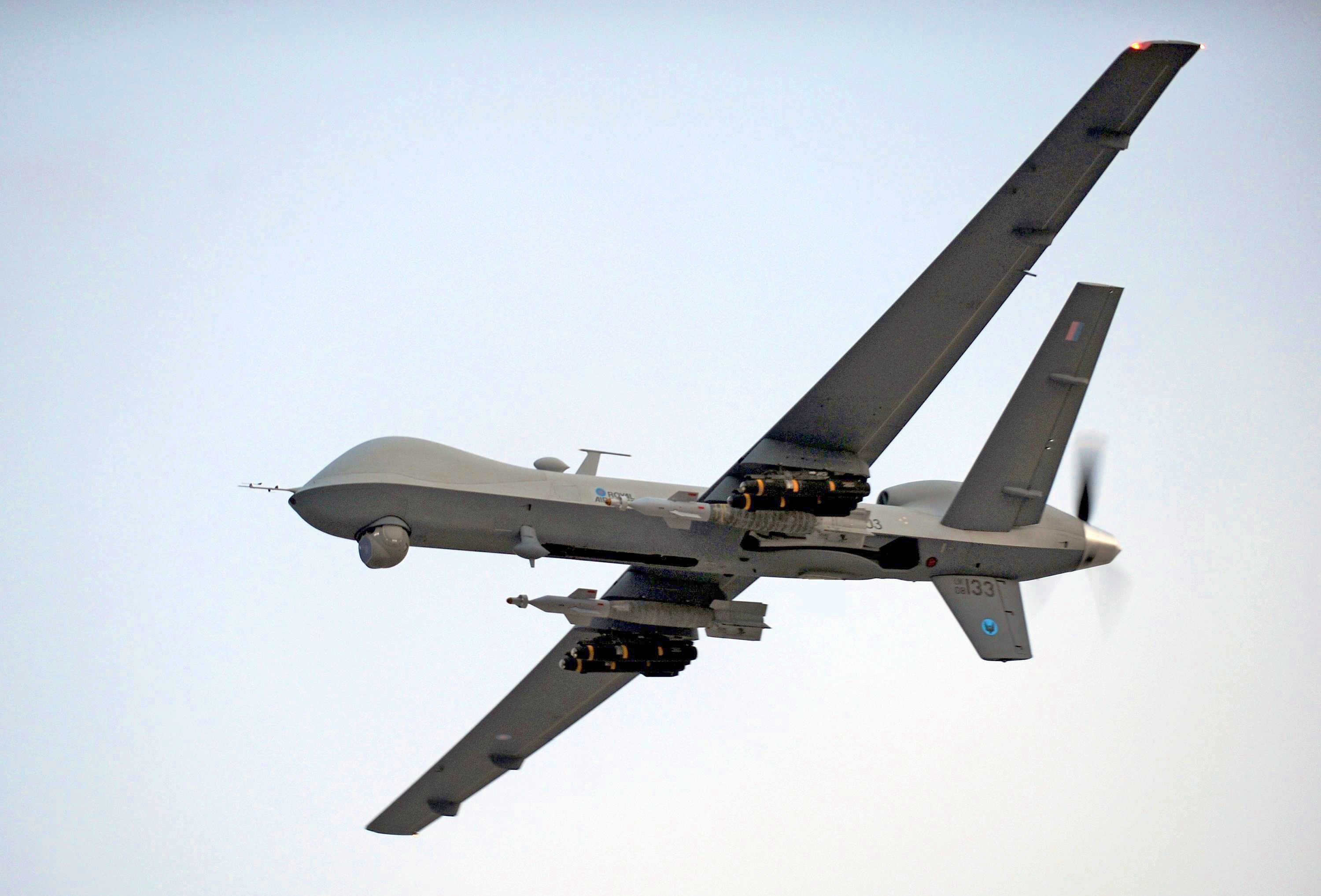
Armenia Publicly Shows Chinese CH-4 Combat Drones in Yerevan
Severity: WARNING
Detected: 2026-05-25T09:19:29.774Z
Summary
At approximately 09:02 UTC on 25 May, Chinese-made CH-4 Rainbow combat drones were observed in Armenian military parade rehearsals in Yerevan, confirming previously unverified reports of their presence at Gyumri airbase. This marks the first public display of Chinese strike UAVs in Armenia, signaling a new external supplier shaping the South Caucasus airpower balance and China’s deeper entry into a contested arms market.
Details
- What happened and confirmed details
At around 09:02 UTC on 25 May 2026, open-source imagery from parade rehearsals in Yerevan showed Chinese-made CH-4 Rainbow combat drones moving with Armenian military equipment ahead of the May 28 First Republic Day parade. This is the first public confirmation that Armenia has acquired or is operating the CH-4 system. Previous reports had mentioned CH-4 airframes seen at Gyumri airbase, but these were unconfirmed. Armenia has not officially announced the acquisition, indicating a deliberate choice to reveal the capability via a national military parade rather than policy statement.
- Who is involved and chain of command
The CH-4 is produced by China Aerospace Science and Technology Corporation (CASC), with export versions sold to multiple Middle Eastern and African states. Armenia’s end user would be the Armenian Armed Forces, under the command of the Armenian Ministry of Defence and the civilian government in Yerevan. On the supplier side, this implies at minimum a state-sanctioned Chinese export licence, as these are controlled items. It also suggests a relative loosening of Armenia’s traditional dependence on Russian-supplied airpower and a tilt toward more diversified or non-Russian suppliers, likely brokered over the last 12–24 months as Yerevan reassessed its security posture after setbacks in Nagorno-Karabakh.
- Immediate military/security implications
The CH-4 is a MALE (medium-altitude, long-endurance) armed UAV broadly analogous in mission profile to early-model U.S. MQ-9 Reapers, capable of ISR and precision strike with guided munitions. For Armenia, this significantly enhances persistent surveillance and strike options against both conventional forces and critical infrastructure within regional ranges.
In the South Caucasus context:
- It partially offsets Azerbaijan’s established advantage in Israeli and Turkish-supplied drones, though the CH-4 is generally seen as less capable than top-tier Western systems.
- It indicates Armenia is no longer relying exclusively on Russia for advanced aerial systems, complicating Moscow’s leverage over Yerevan and adding a Chinese defense-industrial footprint into a volatile theater between Russia, Turkey and Iran.
- It may trigger Azeri and possibly Turkish recalibration of air-defense postures, including more active counter-UAV planning.
This development also adds to a broader pattern of Chinese UAV exports entering live or recently active conflict zones, reinforcing China’s role as a go-to supplier where Western systems are restricted.
- Market and economic impact
Near-term global macro impact is limited, but several sectoral and regional implications are notable:
- Defense and aerospace: The event underscores China’s growing share of the UAV export market. It is modestly positive for Chinese defense OEMs and for global demand for counter-UAV systems, benefiting Western and Russian air-defense and radar firms.
- Energy: The South Caucasus is a transit corridor for Caspian oil and gas to Europe (e.g., BTC, SCP, TANAP/TAP). Any medium-term rise in Armenia–Azerbaijan tensions driven by new capabilities marginally increases geopolitical risk premia on regional assets, but today’s development alone is insufficient to reprice major benchmarks.
- Currencies and risk sentiment: The move reinforces global perceptions of a more multipolar arms ecosystem and incremental erosion of Russian monopoly in its near abroad. This marginally supports safe-haven assets over the very long term but is not likely to move FX or equity indices intraday.
- Likely next 24–48 hour developments
Expect:
- Armenian domestic media and parade coverage to further document the CH-4, potentially revealing numbers and configurations.
- Limited or no immediate official comment from Yerevan, keeping ambiguity over operational status and basing, but foreign and regional defense analysts will treat this as de facto confirmation of an operational fleet.
- Heightened interest in Baku and Ankara regarding Armenia’s new strike capabilities, possibly followed by rhetorical responses, procurement signals, or air-defense exercises.
- Increased Western and Russian analytical scrutiny of China’s expanding arms role in the Caucasus; this may feed into broader diplomatic conversations around regional security formats.
Unless followed by new deployments near contact lines, live-fire incidents, or linked arms packages (e.g., integrated air-defense systems), this remains a Tier 2, war-relevant but not war-starting development with modest, mostly sector-specific market implications.
MARKET IMPACT ASSESSMENT: Armenia’s CH-4 appearance reinforces China’s expanding defense export role, modestly supportive for Chinese defense equities and highlighting further fragmentation of arms supply chains; it also complicates Russia-Turkey-Iran dynamics in the Caucasus but has limited immediate macro impact. Clarification on Russian Oreshnik IRBM use reinforces escalation risk in Ukraine, marginally bullish for defense stocks and safe havens (gold, USD) and supportive of a modest geopolitical risk premium in energy, but without new physical infrastructure damage or sanctions there is no immediate large move expected.
Sources
- OSINT