Oil Stays Above $105 As Israel-Hezbollah, Iran Strike Risks Build
Severity: WARNING
Detected: 2026-05-16T09:24:48.315Z
Summary
Between 08:05 and 09:04 UTC on 16 May 2026, Israel launched new waves of strikes on Hezbollah infrastructure in southern Lebanon, while reports indicate the US and Israel are preparing to resume attacks on Iran as early as next week. At the same time, global oil prices remain elevated above $105 (WTI) and $109 (Brent), and Russia executed a massive overnight drone barrage against Ukraine. The combination sustains a high geopolitical risk premium for energy and keeps the war in Ukraine and the Middle East on escalatory trajectories.
Details
- What happened and confirmed details
• At 08:21–08:22 UTC (Report 8), Ukrainian-linked sources citing the New York Times stated that the US and Israel are preparing to resume strikes on Iran “already next week.” This follows earlier US–Israeli operations against Iranian nuclear and military infrastructure and aligns with prior alerts about renewed strike planning.
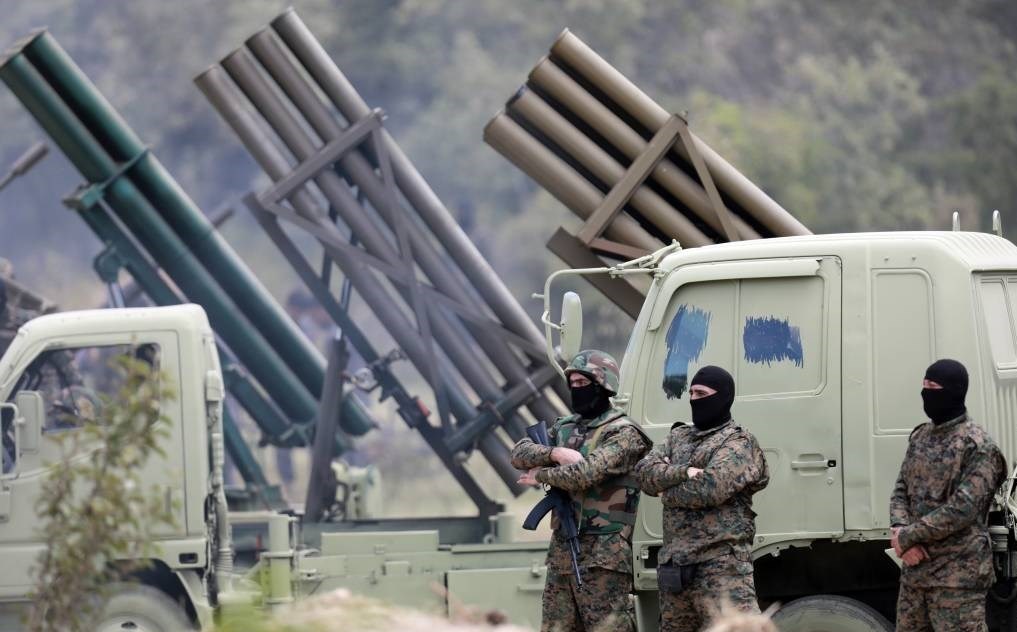
• At 08:21–08:23 UTC (Reports 12 and 14), the Israel Defense Forces announced they had begun an attack on Hezbollah infrastructure in multiple areas of southern Lebanon. Parallel reporting notes a new wave of Israeli Air Force strikes on towns and villages across the region, consistent with a significant but still conventional escalation along the Israel–Hezbollah front. This continues but intensifies an already active campaign rather than opening a wholly new front.
• At 08:58 UTC (Report 2), market data showed WTI at $105.42 and Brent at $109.26 per barrel, with the note that global markets closed with oil “through the roof.” This confirms that geopolitical risk is firmly embedded in prices, following recent Iran–Israel clashes and now ongoing strikes in Lebanon.
• At 08:37 UTC (Report 11), Ukraine reported that Russian forces launched 294 drones overnight into 16 May, with 269 downed or suppressed. Multiple types (Shahed, Gerbera, Italmas, Parodiya) were launched from Russia and occupied Crimea; hits were recorded at 15 locations and debris at 9 more. This is an unusually large single-night drone operation and indicates sustained Russian pressure on Ukrainian infrastructure and air defenses.
• At 08:42 and 08:21 UTC (Reports 17 and 22/24), President Trump confirmed that Abu Bilal al‑Minuki (also spelled al‑Munakhi), ISIS’s second-in-command, was killed in a joint US–Nigerian operation in Nigeria. He described the mission as “flawlessly executed” and thanked Nigeria for cooperation. This is a high-value counterterrorism success but localized in direct impact.
- Actors and chains of command
• Middle East: The Israel Defense Forces and Israeli Air Force are executing strikes under guidance from the Israeli war cabinet and Prime Minister. Hezbollah forces in southern Lebanon are the primary target; responses will be coordinated by Hezbollah’s senior command, likely with input from Tehran.
• Iran front: US–Israeli planning for renewed strikes implies coordination between US Central Command, the Israeli defense establishment, and national leaderships in Washington and Jerusalem/Tel Aviv. Any operation against Iranian nuclear or missile assets will be tightly controlled at the head-of-state and defense-minister level.
• Ukraine: Russian drone forces controlled by the Russian military high command and associated aerospace and GRU elements continue high-volume saturation strikes. Ukrainian air defense forces, under Kyiv’s General Staff, demonstrated high interception rates but at ongoing cost in munitions and stress on systems.
• Counter-ISIS: The joint US–Nigerian operation indicates close intelligence and special operations coordination, likely involving US Special Operations Command Africa and Nigerian security forces, authorized at presidential level in both capitals.
- Immediate military and security implications
• Israel–Hezbollah: Expanding strikes on Hezbollah infrastructure raise the risk of a broader cross-border conflict, including heavier rocket/missile salvos into northern Israel and potential strikes deeper into Lebanese territory. If Hezbollah perceives the campaign as degrading key capabilities, it may escalate with larger barrages or anti-ship/precision-guided weapons.
• Iran: Public reporting that US and Israel are preparing to resume attacks next week increases pressure on Tehran to harden sites, reposition assets, and possibly pre-empt or retaliate via proxies. It also raises the odds of further strikes on Iranian nuclear, missile, or command-and-control facilities, with potential cyber components.
• Ukraine: The scale of the Russian drone barrage underscores Moscow’s production and stockpile capacity for cheap attack drones and its focus on attritional pressure. Even with high interception rates, some hits on logistics, energy, or defense industry nodes are likely, sustaining Ukraine’s infrastructure vulnerability and Western aid requirements.
• ISIS: The elimination of ISIS’s deputy leader in Africa may temporarily disrupt operational planning and external operations, particularly in West and Central Africa. However, group resilience and succession mechanisms mean the long-term effect will depend on follow-on targeting.
- Market and economic impact
• Oil and energy: WTI at ~$105 and Brent at ~$109 confirms an elevated war premium. Renewed Israeli strikes on Hezbollah and prospective US–Israeli strikes on Iran reinforce concerns about disruptions to Middle East supply, including Iranian exports and shipping through the Strait of Hormuz. While no new chokepoint closure or major infrastructure damage is reported in this batch, traders will maintain or expand long positions in crude and refined products.
• Currencies and safe havens: Persistent geopolitical tension supports the US dollar and safe-haven flows into gold and high-grade sovereign debt. EM currencies with oil import dependence or Middle East trade exposure face pressure; energy exporters may benefit.
• Equities: Global equities, particularly in Europe and emerging markets, face headwinds from high energy costs and conflict risk. Defense and cybersecurity sectors benefit from sustained demand expectations, while airlines, shipping, and energy-intensive manufacturing remain vulnerable.
• Ukraine risk: The large drone attack underlines ongoing risk to Ukrainian grain and energy export infrastructure, though no specific new port or terminal disruption is highlighted beyond previously reported strikes. Markets will monitor for confirmation of damage to ports, gas facilities, or rail hubs.
- Likely next 24–48 hours
• Israel–Hezbollah: Expect further Israeli strikes and possible Hezbollah rocket retaliation. Watch for reports of strikes on new target categories (e.g., high-value command sites in Beirut or critical Lebanese infrastructure) or Israeli ground incursions beyond current patterns, which would raise the alert to FLASH.
• Iran: Intelligence and open-source indications of US–Israeli air and cyber preparation should continue. Public political messaging from Tehran, Washington, and Jerusalem will signal red lines. Satellite imagery and NOTAMs/airspace advisories could provide early warning of imminent operations.
• Oil markets: Price volatility is likely to remain elevated. Any confirmed damage to Iranian export facilities, Gulf shipping, or Israeli/Lebanese offshore infrastructure could trigger another leg up in crude prices.
• Ukraine: Russia may follow the large drone wave with mixed missile salvos to exploit gaps in Ukrainian air defenses. Western partners may respond with additional air defense commitments. Any confirmed large-scale damage to Ukrainian gas or port infrastructure would have incremental impact on European energy markets.
• Counterterrorism: ISIS and aligned groups in Africa may attempt retaliatory attacks or propaganda to demonstrate resilience. However, this is unlikely to move global markets unless a major international target is hit.
Overall, the confluence of high energy prices, intensifying Israel–Hezbollah clashes, and looming US–Israeli action against Iran sustains a high-alert environment for both policymakers and markets, justifying a Tier 2 WARNING.
MARKET IMPACT ASSESSMENT: Oil remains above $105 WTI / $109 Brent, reflecting sustained Middle East risk and recent/future Iran-Israel tensions plus Israel–Hezbollah escalation. The huge Russian drone attack underscores ongoing risk to Ukrainian energy/export nodes but no immediate new disruption was reported. The ISIS deputy leader’s death slightly lowers near-term terror risk but is marginal for markets. Overall, risk assets likely stay under pressure, with support for energy, defense, and safe havens (gold, USD), and vulnerability in EM FX and shipping-exposed equities.
Sources
- OSINT