US Tankers Mass Over Gulf as Ukraine Announces Ceasefire Move
Severity: FLASH
Detected: 2026-05-04T21:31:47.764Z
Summary
Around 20:52–21:00 UTC, six US Air Force tanker/transport aircraft concentrated over the Arabian/Persian Gulf as Iran–UAE strikes and airspace disruptions continue, signaling potential large-scale air operations. Separately, at ~20:20 UTC President Zelenskyy announced a unilateral Ukrainian ceasefire from 00:00 on the night of 5–6 May, conditional on reciprocal action, marking the first concrete step toward pause in major hostilities in months. The twin developments simultaneously raise near-term Gulf conflict risk and open a window for de‑escalation in Ukraine, with significant implications for energy, FX, and European risk assets.
Details
- What happened and confirmed details
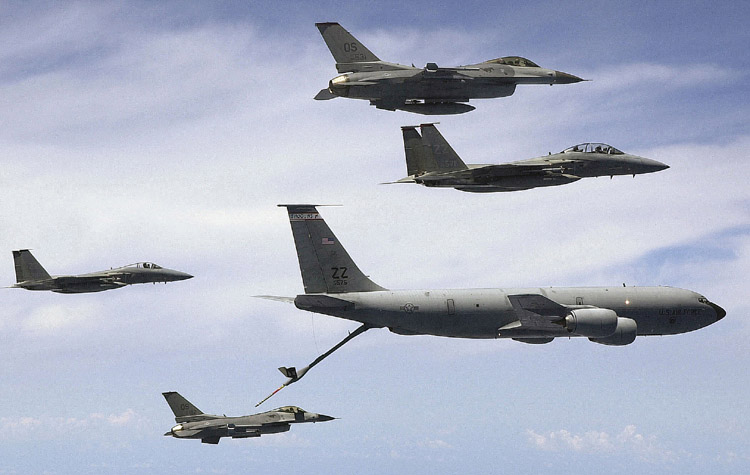
(1) Gulf theater – US tanker surge: At 20:52 UTC on 4 May 2026, reporting indicated six US Air Force aircraft massing over the Arabian/Persian Gulf: three KC‑135R Stratotankers, two KC‑135A (likely KC‑135R/KC‑46 mislabeling) and one C‑17A Globemaster en route to Dubai. The report explicitly notes this posture is not routine and emphasizes the role of tankers in extending the range and persistence of strike aircraft. This comes within an hour of prior reports (already under alert) of missile alerts in the UAE, a strike on an oil zone in Fujairah, fires on vessels off the coast, and urgent airspace closures with airlines diverting.
Taken together, this suggests the US is positioning to either (a) support defensive combat air patrols and missile intercept operations over the Gulf and UAE, or (b) enable longer-range strike packages, potentially in or around Iranian airspace, amid rising discussion that Iran could close its airspace and launch large-scale missiles by the end of the week.
(2) Ukraine theater – unilateral ceasefire declaration: At 20:20 UTC Zelenskyy stated there has been no official ceasefire proposal to Ukraine despite Russian social media claims. Crucially, he announced a Ukrainian ceasefire from 00:00 during the night of 5–6 May, with Ukraine to act "reciprocally" from that time, implying Kyiv will halt offensive and possibly most defensive fires if Russia complies. This is a specific, time-bound initiative for a mutual pause around upcoming commemorative dates.
Other reports in the feed (Ukraine air alerts, attacks on Dnipro private houses and infrastructure, a drone strike on a gas station, and a separate security incident near the White House) are serious but do not meet the threshold for new Tier‑1/2 alerts given ongoing hostilities and an existing alert for the White House gunfire incident.
- Who is involved and chain of command
Gulf: The aircraft involved are US Air Force assets, almost certainly under US Central Command (CENTCOM) and the US Air Forces Central (AFCENT) command structure. The C‑17A routing to Dubai points to logistical positioning, while multiple KC‑135 tankers likely support US and allied fighters operating from regional bases (Qatar, UAE, possibly carrier-based assets). Opposing actors are Iran and the UAE amid ongoing missile and drone exchanges and attacks on oil infrastructure and shipping.
Ukraine: The ceasefire move is announced directly by President Volodymyr Zelenskyy, the Ukrainian commander‑in‑chief. Implementation would involve Ukraine’s General Staff and operational commands on all active fronts. Any reciprocal action would need a decision by Russia’s political and military leadership (Putin, Gerasimov, Southern/Western Military District commands).
- Immediate military/security implications (next 24–48 hours)
Gulf:
- The tanker massing indicates preparation for sustained air sorties, which could include: • Elevated defensive CAP and air-to-air refueling for missile interception over the Gulf and UAE. • Potential offensive strikes on Iranian missile launch sites, UAV bases, or naval assets if red lines are crossed (e.g., closure of the Strait of Hormuz or sustained attacks on tankers and refineries).
- Airspace is already experiencing closures and diversions. Odds quoted of a 43% chance that Iran closes its airspace by week’s end, while speculative, reflect market perception of escalating conflict risk.
- Increased risk of miscalculation between US and Iranian forces, especially if strikes approach Iranian territory, raising the probability of direct US–Iran kinetic engagement.
Ukraine:
- If Russia reciprocates, fighting intensity could drop markedly around 5–6 May, reducing immediate civilian and military casualties and slowing ammunition expenditure.
- If Russia does not reciprocate, Ukraine’s "reciprocal" language gives Kyiv latitude to maintain defensive fire and respond; in that scenario, the announcement may become primarily a messaging and diplomatic maneuver rather than a substantive halt.
- Russia could exploit any pause to reposition or rest units; Ukraine will weigh this against the political gains of being seen as the side initiating a ceasefire.
- Market and economic impact
Gulf crisis:
- Crude oil: Bullish in the near term. Concentrated US tanker presence plus ongoing attacks on Fujairah’s oil zone and nearby vessels support a risk premium in both Brent and Dubai grades. Any hint of US–Iran strikes or Iranian airspace closure will push prices higher and raise volatility.
- Shipping: Elevated insurance premia and possible rerouting away from Fujairah and nearby anchorages. Lloyd’s and P&I clubs likely to reassess risk ratings for UAE and Oman waters if attacks continue.
- FX and rates: Flight to safety into USD, CHF, JPY; EM FX with Gulf exposure or high oil import bills (e.g., TRY, INR) may come under pressure. US Treasuries could see safe-haven bids.
Ukraine ceasefire signal:
- European gas and power: A credible, sustained ceasefire would be structurally positive, but immediate pricing impact will be muted until there is confirmation that Russia reciprocates and firing actually slows. Medium-term, it supports EU industrial and equity sentiment.
- European equities: If markets believe this is a first step toward broader talks, expect outperformance in Eastern European financials, construction, and infrastructure names; defense sector might consolidate after recent rallies.
- Gold: Conflicting signals — Ukraine de‑escalation is mildly bearish for gold, but Gulf tension is bullish; net effect is likely continued support for elevated gold prices but with greater intraday volatility.
- Likely next 24–48 hour developments
Gulf:
- Expanded US air operations over the Gulf, with additional tanker and ISR (intelligence, surveillance, reconnaissance) platforms possibly visible on flight trackers.
- Further clarification from US and Gulf states on airspace restrictions and potential maritime security measures.
- Iran’s leadership will decide whether to proceed toward formal airspace closure and a large missile launch, or to leverage the visible US presence as a deterrent signal.
Ukraine:
- Russian official response to Zelenskyy’s ceasefire initiative, likely framed around Victory Day narratives.
- OSINT and official reporting on whether artillery, missile, and drone activity meaningfully decreases after 00:00 5–6 May.
- Western capitals will gauge whether this pause can be extended into localized or thematic ceasefires (e.g., around critical infrastructure) or used as a platform for renewed talks.
Net assessment: The Gulf theatre is on an upward escalation trajectory with direct US military posturing, while the Ukrainian front may be entering a tentative de‑escalation window. Markets will likely price in elevated Middle East risk premia even as they begin to reassess medium-term European war risk if the ceasefire holds.
MARKET IMPACT ASSESSMENT: Heightened risk premia for crude and shipping from Gulf air and missile escalation; flight-to-safety flows into USD, CHF, JPY, and gold likely. If a durable Ukraine ceasefire holds, medium-term bullish for European assets and gas-sensitive industries, but immediate focus is on Iran–UAE/US dynamic and potential airspace closure.
Sources
- OSINT