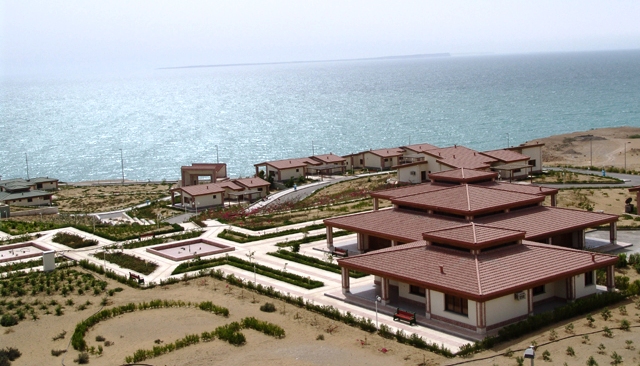
US Strike Knocks Out Chabahar Port Tower as Imagery Confirms Heavy Damage at Al-Udeid
Severity: WARNING
Detected: 2026-07-17T15:14:34.871Z
Summary
US forces say they have destroyed the control tower at Iran’s Chabahar port, while new satellite imagery shows extensive damage at Qatar’s Al‑Udeid Airbase from Iranian strikes. The moves deepen operational disruption along key Gulf and Arabian Sea hubs and harden the perception that Iran–US confrontation is now targeting the basing and coordination nodes that underpin global energy and shipping security.
Details
U.S. military officials reported at roughly 14:54 UTC that a strike has destroyed the control tower at Iran’s Chabahar port, sharply limiting the Islamic Revolutionary Guard Corps’ ability to coordinate attacks on civilian ship crews from that facility. Minutes later, at 15:02 UTC, new Sentinel‑2 satellite imagery indicated extensive damage at Al‑Udeid Airbase in Qatar, corroborating earlier accounts that Iranian strikes had hit one of Washington’s most critical air hubs in the Gulf.
Chabahar, located on Iran’s southeastern coast with direct access to the Arabian Sea and Indian Ocean, has been both a commercial port and a strategic outlet for Iran. The U.S. statement specifically frames the tower’s destruction as a blow to IRGC coordination against civilian shipping, implying a deliberate effort to degrade Iran’s capacity to harass, board, or strike merchant vessels and crews. The timing falls within an intensive U.S. campaign of precision strikes on Iranian logistics and infrastructure in Hormozgan and surrounding regions. Meanwhile, the new Al‑Udeid imagery — filed at 15:02 UTC — shows damage patterns significant enough to be flagged as “extensive,” suggesting multiple impact points or hits on critical support structures at the base. Al‑Udeid hosts thousands of U.S. and coalition personnel and is central to air operations across the Middle East.
For civilian mariners, port workers, and airline and logistics staff, these are not abstract moves. A degraded Chabahar means higher risk and potential delays for regional shipping routes and any operators still using Iranian ports, while also increasing the likelihood that Iran shifts to more covert or asymmetric methods against crews in and near the Strait of Hormuz. In Qatar, damage at Al‑Udeid will affect flight operations, rotations, and potentially evacuation, ISR, and refueling missions that support everything from maritime patrols to air cover for Gulf states. Insurers, crewing firms, and logistics managers will have to reassess exposure to both Iranian littoral operations and the resilience of U.S. basing in the region.
Militarily, the strike on Chabahar’s control tower signals that the U.S. is willing to push beyond purely military bases and hit dual‑use infrastructure when it judges it central to IRGC operations. That raises the stakes for Iran’s remaining coastal nodes and could push Tehran to disperse command-and-control to more hardened or clandestine sites, complicating future targeting and increasing the chance of misidentification of civilian facilities. The confirmed damage at Al‑Udeid, on the other hand, is a clear indicator that Iran can and will hit major U.S. air hubs in the Gulf, potentially forcing Washington to adjust sortie rates, redistribute aircraft, and invest quickly in base hardening and redundancy.
For markets, this combination hardens the perception that both sides are now trading blows against the infrastructure that undergirds regional force projection and maritime security. That typically supports a sustained risk premium on Brent and Dubai crude benchmarks, Gulf shipping insurance, and regional sovereign bonds. LNG cargoes out of Qatar will attract closer scrutiny, even if operations remain uninterrupted, as investors re‑price the vulnerability of on‑shore support facilities. Gold and U.S. Treasuries are likely to see incremental bid as hedges against a widening conflict.
Over the next 24–48 hours, watch for: (1) any Iranian retaliation focused on U.S. or allied shipping, especially in or near the Strait of Hormuz and Gulf of Oman; (2) evidence of operational disruption at Al‑Udeid — changes in flight patterns, temporary relocation of aircraft, or emergency repair activity; (3) statements from Qatar and other GCC states, which will signal how far they are prepared to host U.S. operations under direct Iranian fire; and (4) any broadening of U.S. target sets from strictly military/coordination nodes to energy or port infrastructure, which would markedly escalate both military risk and market impact.
MARKET IMPACT ASSESSMENT: Oil and LNG markets face upward pressure from confirmed damage at Al-Udeid and the hit on Chabahar’s control tower, which both raise perceived risk to Gulf and Arabian Sea basing and shipping security. Pakistan’s extended security guarantee to Saudi Arabia tightens the conflict’s linkage to core oil producers, supporting a risk premium in Brent and Middle East sovereign CDS. A major quake near Puerto Madero, Mexico, may disrupt local ports, pipelines, and manufacturing, adding event risk for MXN, Pemex-linked assets, and some US supply chains. Gold and US Treasuries likely see safe-haven inflows on the combination of Middle East escalation and a large natural disaster.
Sources
- OSINT