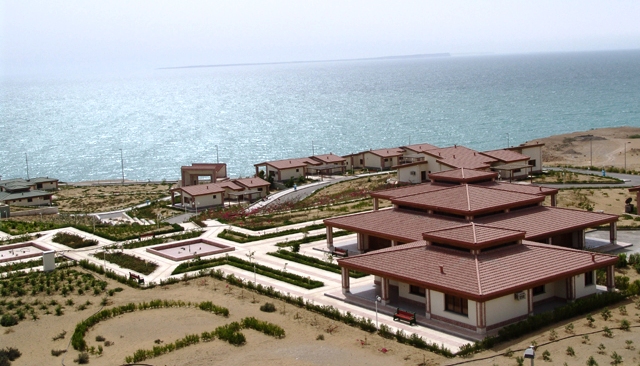
Reports: Heavy U.S. Strikes Hit Iran’s Chabahar, Collapse Port Marine Control Tower
Severity: WARNING
Detected: 2026-07-17T02:06:04.163Z
Summary
A new U.S. strike wave against Iran late 17 July UTC has reportedly leveled the maritime traffic control tower at Chabahar Port and hit multiple coastal surveillance and air-defense sites. The action intensifies a direct U.S.-Iran confrontation and targets infrastructure critical to Iran’s eyes on the Arabian Sea, raising fresh questions for energy flows, insurance, and regional military calculus.
Details
U.S. Central Command has executed another large strike package against Iran, with OSINT reports at 01:48–02:05 UTC on 17 July indicating heavy U.S. attacks on the southeastern port of Chabahar and related coastal infrastructure. Local and conflict-monitoring accounts report that the port’s Maritime Traffic Control Tower has collapsed after repeated U.S. airstrikes, while CENTCOM says its latest wave of operations hit Iranian coastal surveillance installations, air defense sites, military logistics infrastructure, and maritime capabilities. This is the sixth consecutive night of major U.S. strikes on Iran, but it is the clearest hit yet on infrastructure directly tied to Iran’s ability to manage and monitor shipping.
Confirmed details: At 02:05 UTC, feeds tracking the conflict reported “heavy US strikes hit Chabahar, Iran,” corroborating earlier reporting at 01:48 UTC that the Maritime Traffic Control Tower at Chabahar Port had collapsed following a series of repeated U.S. airstrikes over recent weeks. CENTCOM at 02:04 UTC released footage of its “latest wave of strikes” and characterized the targets as coastal surveillance, air defenses, logistics, and maritime capabilities, without naming locations. OSINT attribution of the tower’s collapse to U.S. strikes is consistent with that target set but has not been independently confirmed by U.S. officials. Iran’s official response and damage assessments are not yet visible. Confidence is moderate-to-high that Chabahar was struck; structural collapse of the tower is based on visual and local reporting.
Human and industry stakes are immediate at the port level. Chabahar, on Iran’s Gulf of Oman coast, is a key node for regional trade and India-backed connectivity projects into Afghanistan and Central Asia, and it serves as a commercial and potential dual-use facility. The destruction of the maritime traffic control tower degrades the port’s ability to safely manage vessel movements, increasing collision and grounding risk and likely forcing slowdowns, rerouting, or temporary pauses for some commercial operators. Port workers, local communities, and crews on inbound/outbound vessels now face a more hazardous operating environment. Any perception that port approaches are under fire or poorly controlled will trigger more conservative risk postures by shipowners, charterers, and P&I clubs.
Militarily, hitting coastal surveillance and maritime control infrastructure at Chabahar is a pointed attempt to blind and constrain Iran’s ability to track naval and commercial traffic in the Arabian Sea and approaches to the Strait of Hormuz. That could make it harder for Iran to target U.S. or allied vessels but also incentivize Tehran to disperse sensors, lean more on mobile and covert systems, and potentially retaliate asymmetrically at sea. Coupled with prior nights’ strikes on air defense and logistics sites and fresh Iranian radio traffic hinting that the “next Iranian launch may not be from West or Center Iran,” the campaign appears to be shifting toward systematically degrading Iran’s coastal kill chain. This raises the risk that Iran responds through missile, drone, or naval harassment operations from less-expected axes, including from the east or deep inland, broadening the battlespace.
For markets, the immediate effect is a renewed upward tug on geopolitical risk premia across energy, defense, and havens. While Chabahar is not itself a Hormuz chokepoint, any hit on Iranian maritime infrastructure so close to key shipping lanes will be read as a signal that fixed coastal assets are on the target list. Tanker operators and insurers will reassess war-risk pricing for calls at Iranian or adjacent ports and for transits along Iran’s coast on the Gulf of Oman. Crude and products markets are likely to price a higher probability of supply interruptions, with Brent and Dubai benchmarks particularly sensitive. Gold should find additional support as the U.S.-Iran confrontation moves further into declared, repeated strikes on high-visibility infrastructure. Regional equities, especially in the Gulf, may see short-term volatility in energy, shipping, and tourism names.
Over the next 24–48 hours, watch for: (1) Iranian military or proxy retaliation, especially against U.S. or allied naval assets, commercial shipping, or Gulf infrastructure; (2) any explicit Iranian declaration that ports or shipping lanes are unsafe, or any de facto disruptions such as unexplained halts or congestion at Chabahar and neighboring facilities; (3) satellite and AIS data confirming traffic slowdowns, diversions, or no-go decisions by major shipping lines; (4) statements from India, which has strategic stakes in Chabahar’s development and may now face pressure to recalibrate its posture toward both Washington and Tehran; and (5) shifts in U.S. targeting patterns—if future strikes continue to prioritize port-adjacent surveillance and logistics, the campaign may be entering a sustained phase focused on Iran’s maritime reach rather than purely missile and air-defense assets.
MARKET IMPACT ASSESSMENT: Heightened risk premia for crude and product tankers using the Arabian Sea and Gulf routes; bullish for oil and refined products, supportive for gold and defense names; adds downside pressure to regional FX and raises tail risk for broader EM if shipping is materially disrupted.
Sources
- OSINT