Iran Claims 85-Target Barrage on U.S. Bases in Kuwait, Bahrain as Gulf Defenses Engage
Severity: FLASH
Detected: 2026-07-08T04:26:52.800Z
Summary
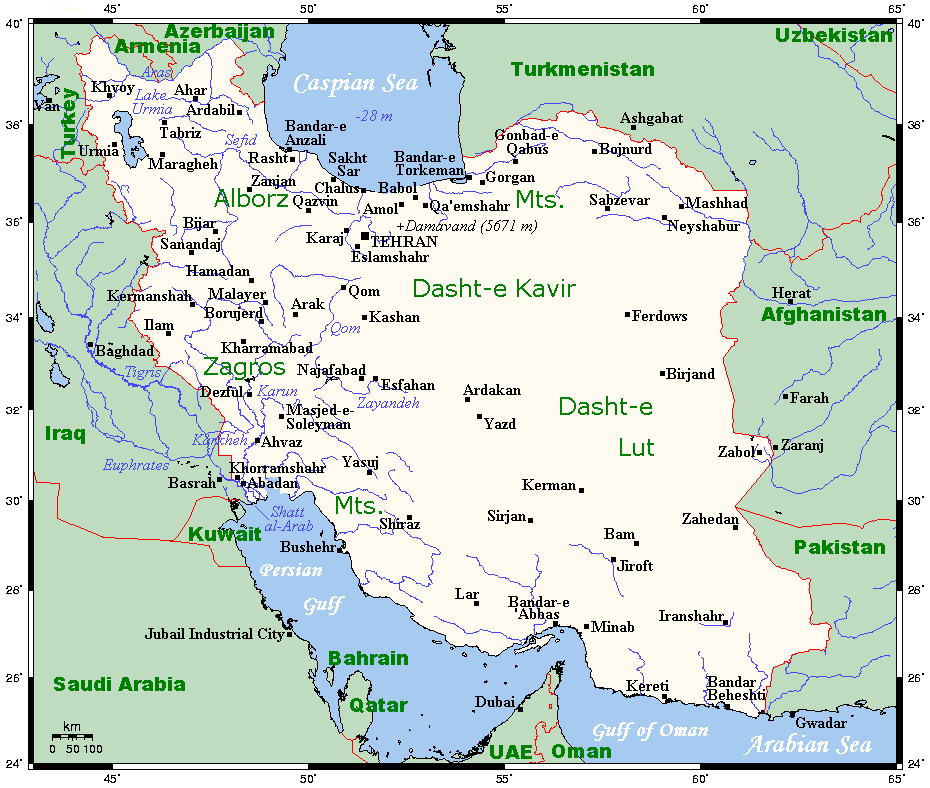
Iran’s Revolutionary Guard says it struck 85 U.S. military sites in Bahrain and Kuwait around 03:10–03:50 UTC, with explosions reported near Ali Al Salem Air Base and over Bahrain as Kuwaiti sirens sounded. The attacks deepen an openly kinetic U.S.–Iran confrontation in the Gulf, putting U.S. basing, Fifth Fleet operations, and regional energy flows under direct threat.
Details
Iran and the United States have moved into a dangerous, openly kinetic phase in the Gulf overnight, with Iran’s Islamic Revolutionary Guard Corps (IRGC) claiming a coordinated missile and drone barrage against U.S. forces in Kuwait and Bahrain while regional air defenses scramble. The strikes, centered between roughly 03:08 and 03:50 UTC on 8 July, raise the risk of sustained combat around core U.S. air and naval hubs that anchor both regional deterrence and global oil exports.
Confirmed details and timing
– At 03:49 UTC, an IRGC statement (Report 23) claimed it had launched a coordinated missile and drone attack on 85 U.S. military targets: the U.S. Fifth Fleet in Bahrain, Ali Al Salem Air Base in Kuwait, and facilities at Salman Port. The IRGC also claimed to have shot down a U.S. MQ‑9 Reaper.
– Supporting battlefield reporting between 03:06 and 03:19 UTC shows repeated explosions and interception attempts over Kuwait and Bahrain: reports of interceptions over Kuwait (Reports 18, 19), explosions in Bahrain (Reports 12, 13, 17), and a “massive explosion” near the Ali Al Salem(i) base in Kuwait at 03:09–03:15 UTC (Reports 15, 3, 33). Kuwait activated nationwide warning sirens at 03:12 UTC (Report 24).
– At 03:06 UTC, a separate report noted Iran had launched four ballistic missiles toward Bahrain, with three intercepted (Report 6). At 03:14 UTC, another wave of ballistic missiles was reported launched from Iran toward Kuwait and Bahrain (Report 14).
– By 03:20 UTC, the United Arab Emirates reported its air defenses engaging to intercept incoming fire after U.S. airstrikes on Iran (Report 20), implying that the engagement envelope is spreading beyond Kuwait and Bahrain.
– An earlier IRGC claim said its air defenses shot down a U.S. MQ‑9 over Khormuj in southern Iran during overnight U.S. strikes (Report 18), lining up with prior alerts of U.S. attacks on ~80 Iranian targets along the southern coast (Report 21).
This picture is still built largely from Iranian claims and battlefield OSINT rather than official U.S. confirmation, but the independent reporting of explosions, sirens, and live air-defense activity across three Gulf states strongly indicates a real, large-scale exchange of fire.
Human and industry stakes
U.S. personnel, coalition troops, and thousands of civilian contractors on and around Ali Al Salem Air Base and Fifth Fleet facilities are now under direct fire. Bahraini and Kuwaiti civilian populations are sheltering under nationwide sirens and interception activity in dense urban areas, with obvious risk of debris and misfires in populated districts and near critical infrastructure.
For the energy and shipping industries, the targets sit on the backbone of Gulf security: Ali Al Salem is a key logistics and airpower hub; Bahrain hosts the U.S. Fifth Fleet, which secures sea lanes through the Strait of Hormuz and the wider Arabian Gulf. Any degradation of U.S. operational capability there, or risk-averse posture by regional states, could constrain escort operations, extend transit times, and push insurance premiums sharply higher for tankers and LNG carriers.
Military and security implications
Militarily, Iran is signaling it is prepared to directly strike U.S. basing in the Gulf, not just proxies or shipping, in apparent retaliation for overnight U.S. strikes on some 80 IRGC-linked targets along Iran’s southern coast. The use of ballistic missiles against Kuwait and Bahrain, and the claimed 85-target scope, marks a large, coordinated salvo, not a token response.
Active air defense engagement in the UAE suggests Iranian or allied projectiles may be transiting broader Gulf airspace, widening the set of states directly involved in the defensive fight. The claimed downing of a U.S. MQ‑9 over southern Iran highlights that U.S. ISR platforms are operating very close to Iranian territory and are now being engaged, increasing the chance of an incident that forces Washington into even more visible retaliation.
If even part of the IRGC’s 85-target claim is accurate, the U.S. will face pressure from domestic and allied audiences to respond with further strikes on Iranian launch infrastructure, command nodes, or even naval assets in or near the Strait of Hormuz. Tehran, in turn, has already framed its moves as a response to a “ceasefire breach,” giving it political cover to escalate again.
Market and economic pressure
The immediate market risk is to crude and refined products. With missile trajectories over or near major export hubs and U.S. basing that underwrites sea-lane security, traders will price higher odds of temporary port slowdowns, a scaling back of shipping traffic in parts of the northern Gulf, and a wider Hormuz disruption if the exchange continues. Freight and war-risk insurance for tankers loading in Kuwait, Saudi Arabia’s Eastern Province, Bahrain, and Qatar are likely to move sharply.
Safe-haven assets—gold, the dollar, and U.S. Treasuries—are at risk of a knee‑jerk bid, while Gulf equity markets, airlines, and tourism-linked names could face selling on perceived security deterioration. Defense contractors and missile-defense suppliers may see renewed upside as U.S. and Gulf states reassess munitions stocks and air-defense coverage.
What to watch next (24–48 hours)
– Damage assessment at Ali Al Salem and Bahraini bases: Confirmation of hits or significant damage to runways, fuel storage, C2 nodes, or port facilities would sharpen market and security concerns.
– U.S. response posture: Statements from the White House, Pentagon, and CENTCOM on casualties, base status, and planned responses will set the trajectory—limited tit‑for‑tat vs. broader campaign against Iranian launch and naval assets.
– Regional alignment: Watch whether Saudi Arabia, UAE, and Qatar allow expanded U.S. use of their bases, and whether they request additional Patriot/THAAD or naval cover. UAE air-defense activity may presage a more active role.
– Shipping and insurance behavior: Any notices from major tanker operators, P&I clubs, or port authorities about route changes, loading delays, or premium surcharges will be an early indicator of real supply-chain disruption.
– Iranian messaging: Additional IRGC statements about further waves, red lines (e.g., Hormuz closure threats), or claimed hits on energy infrastructure will shape risk calculations.
This is now a live, multi-theater U.S.–Iran exchange centered on the Gulf’s military and logistical core, with clear spillover risk into energy markets and global shipping. Further significant moves—either escalation or a surprising ceasefire move—could reprice risk across commodities and regional assets within hours.
MARKET IMPACT ASSESSMENT: High immediate upside risk for crude and refined products, flight-to-quality bid in gold and U.S. Treasuries, pressure on Gulf and broader EM FX, and volatility across defense, aviation, and shipping equities as markets price potential disruption in Gulf energy exports and risk of wider regional war.
Sources
- OSINT