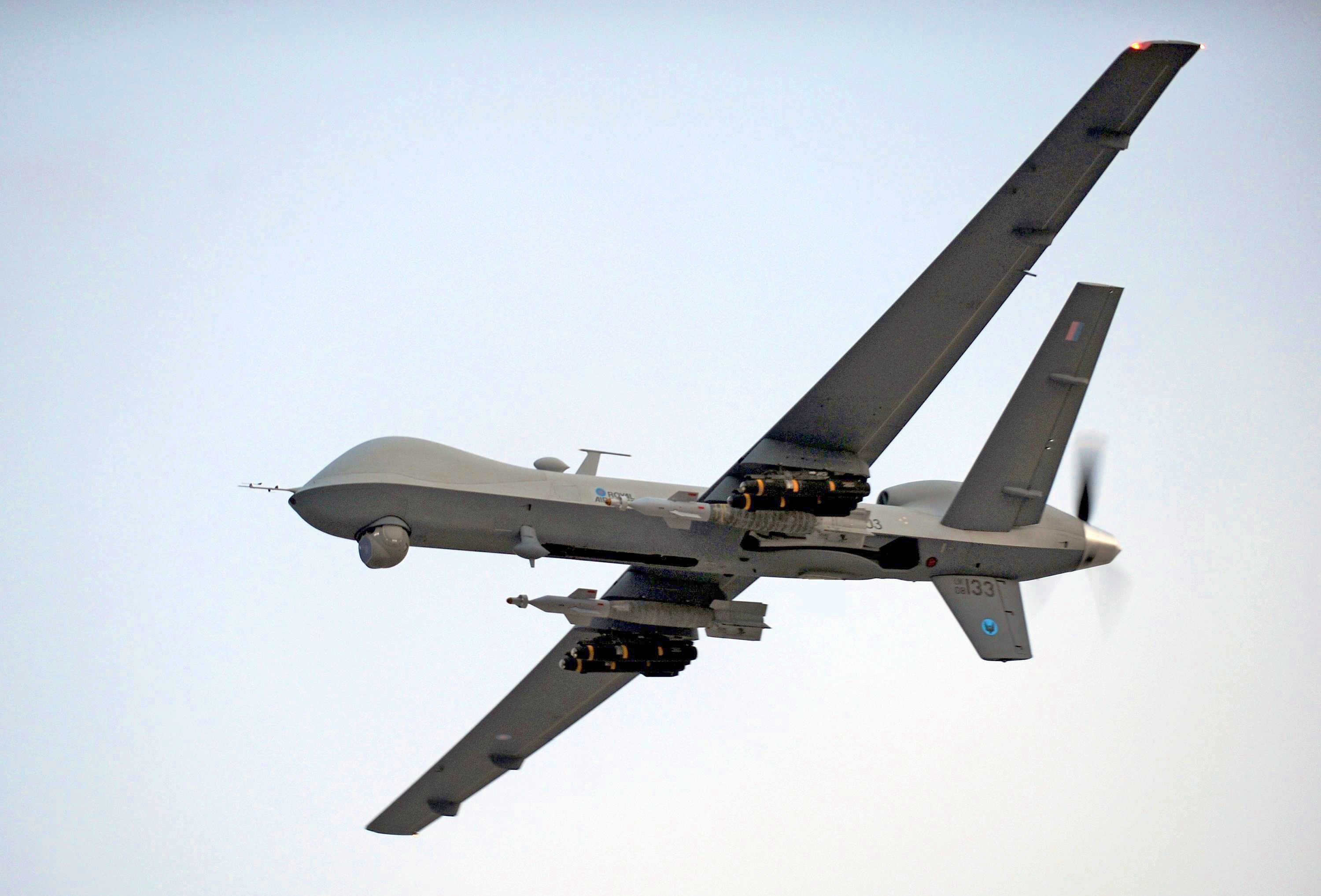
Ukraine Clears First Export of 2,000 Combat Drones to US Army, Deepening War Supply Ties
Severity: WARNING
Detected: 2026-07-04T14:29:13.250Z
Summary
At 13:13 UTC, Interfax-Ukraine reported that Kyiv’s export control agency has, for the first time, cleared the export of fully assembled Ukrainian combat drone systems, authorizing F-Drones to ship 2,000 F10 strike UAVs to the US Army. The move tightens Ukraine’s integration into US and NATO supply chains, signals Washington’s long-term bet on Ukrainian drone know‑how, and accelerates global proliferation of inexpensive strike-capable systems that can pressure both battlefields and defense budgets.
Details
Ukraine has quietly crossed a strategic threshold in its drone war and defense industrial policy. At around 13:13 UTC on 4 July, Interfax-Ukraine reported that the State Service of Export Control approved the country’s first export of complete combat drone systems, authorizing domestic firm F-Drones to supply 2,000 F10 strike UAV systems to the US Army. The company states this is the first time Ukraine has formally exported fully assembled combat UAVs, rather than just technology, parts, or subcomponents.
If confirmed, this is more than a commercial sale: it effectively plugs Ukraine’s wartime drone ecosystem directly into US military procurement. For Kyiv, it monetizes hard-won battlefield innovation and locks in Western dependence on Ukrainian know-how. For Washington, it offers a low-cost, combat-tested strike drone platform at scale, while signaling that US planning assumes a prolonged global demand for loitering munitions and small strike UAVs.
The immediate human and industry stakes are concrete. Ukrainian engineers and factories gain a clearer revenue stream, potentially stabilizing jobs in a war-shocked economy and incentivizing further R&D in autonomous and semi-autonomous systems. On the US side, soldiers and planners will be fielding systems designed in a live-fire environment against Russian air defenses and electronic warfare, with implications for training, doctrine, and how quickly attritable drones replace or supplement artillery, manned aircraft, and legacy missiles. Civilian airspace regulators, insurers, and logistics operators will face additional pressure as dual-use UAV technologies spread more widely and cheaply.
Militarily, this development accelerates a shift already visible in Ukraine, Gaza, the Red Sea and the Sahel: small, cheap strike drones are eroding the monopoly of large states on precision attack. With a 2,000‑unit order, the US Army can experiment at scale with swarming tactics, massed loitering munitions, and networked fires. Lessons learned will feed back into NATO doctrine and likely into further orders from Ukraine and other partners, compressing the innovation cycle. Russia, China, Iran and other drone powers will read this as a signal that the US is willing to outsource parts of its drone stack to a frontline state, and may respond by accelerating their own production and export to clients in Africa, the Middle East and Latin America.
For markets, the transaction validates the investment thesis around attritable drones and low-cost precision strike. US and European defense equities tied to UAVs, sensors, secure communications, and electronic warfare are likely to benefit as budgets tilt toward drone swarms and counter‑UAS systems rather than only high-end fighters or tanks. Ukrainian defense manufacturers gain proof that they can meet Western export control and quality standards, a precondition for broader postwar integration into EU and NATO supply chains. That could attract venture and private equity capital into Ukraine’s military-tech sector even before the war ends.
Indirectly, greater availability of inexpensive strike drones worldwide raises physical and insurance risk for critical infrastructure, from refineries and LNG terminals to ports and offshore platforms. Underwriters will have to re‑price coverage if more non‑state or proxy actors acquire similar systems, raising operating costs in already exposed theaters like the Black Sea and the Gulf.
Over the next 24–48 hours, watch for: (1) confirmation and additional detail from US Department of Defense or Congress, including contract value, delivery timelines and intended use cases; (2) Russian and Chinese political or media reactions that could frame this as escalatory or as a precedent for arming their own partners with more advanced drones; (3) signals from other NATO members or Asian allies looking to source Ukrainian combat UAVs; and (4) initial market response in listed drone, sensor, and counter‑UAS firms, as well as any commentary from major defense primes on incorporating Ukrainian designs into their portfolios.
MARKET IMPACT ASSESSMENT: Ukraine’s export of 2,000 combat UAVs to the US Army supports medium-term demand for defense, electronics, and AI-enabled systems, bullish for selected US and Ukrainian defense contractors and components suppliers, and it embeds Ukraine more deeply into NATO-linked supply chains. A thwarted AI-driven cyberattack on the UAE’s financial sector will heighten perceived cyber risk for Gulf financials and infrastructure, incrementally supportive for cybersecurity equities and could marginally widen CDS or funding spreads if follow-on incidents occur. No immediate direct impact on oil flows is reported, but any sign of systemic cyber vulnerability in the Gulf will be watched closely by energy markets.
Sources
- OSINT