Putin Orders Kharkiv–Sumy ‘Security Zone’ as Russia Claims Kostiantynivka Breakthrough
Severity: WARNING
Detected: 2026-07-03T21:17:10.026Z
Summary
Around 21:00 UTC, Russian state channels reported President Vladimir Putin has ordered a new ‘security zone’ inside Ukraine’s Kharkiv and Sumy regions and claimed the capture of Kostiantynivka, a key node in the Sloviansk–Kramatorsk defensive belt. Ukrainian officials simultaneously reported a lethal strike on central Sumy, pointing to a coordinated push to expand Russia’s buffer and degrade Ukraine’s urban resilience, with direct consequences for civilians, NATO’s eastern posture, and European risk assets.
Details
Russian and Ukrainian channels in the 20:50–21:05 UTC window report a tightly linked sequence of moves that materially shifts the Ukraine conflict’s trajectory in the northeast.
First, Russian-language reporting amplified by Sputnik (Reports 26, 27, 29, 72, 73) says President Vladimir Putin has ordered the creation of a ‘zona de seguridad’ — a security zone — in Ukraine’s Kharkiv and Sumy regions. Putin explicitly ties the zone’s depth to the intensity of Ukrainian strikes on Russian civilian infrastructure, stating that “the more strikes the enemy attempts to carry out against civilian facilities in Russia, the larger the security zone we will have to create in the adjacent territory” (Report 35, 72). The Kremlin also asserts that Luhansk is now fully “liberated”.
In parallel, Russia’s Ministry of Defense and top commanders briefed Putin that Russian troops are “advancing on all fronts” and have “liberated 133 settlements since the start of 2026” (Reports 27, 29). Crucially, Moscow claims the capture of Kostiantynivka (Konstantinovka) (Reports 26, 73), which Putin and the MoD describe as a key stronghold in the large Sloviansk–Kramatorsk defensive hub. If confirmed, this represents the breach of one of Ukraine’s most important fortified belts in Donbas, following recent Russian advances already noted by prior alerts.
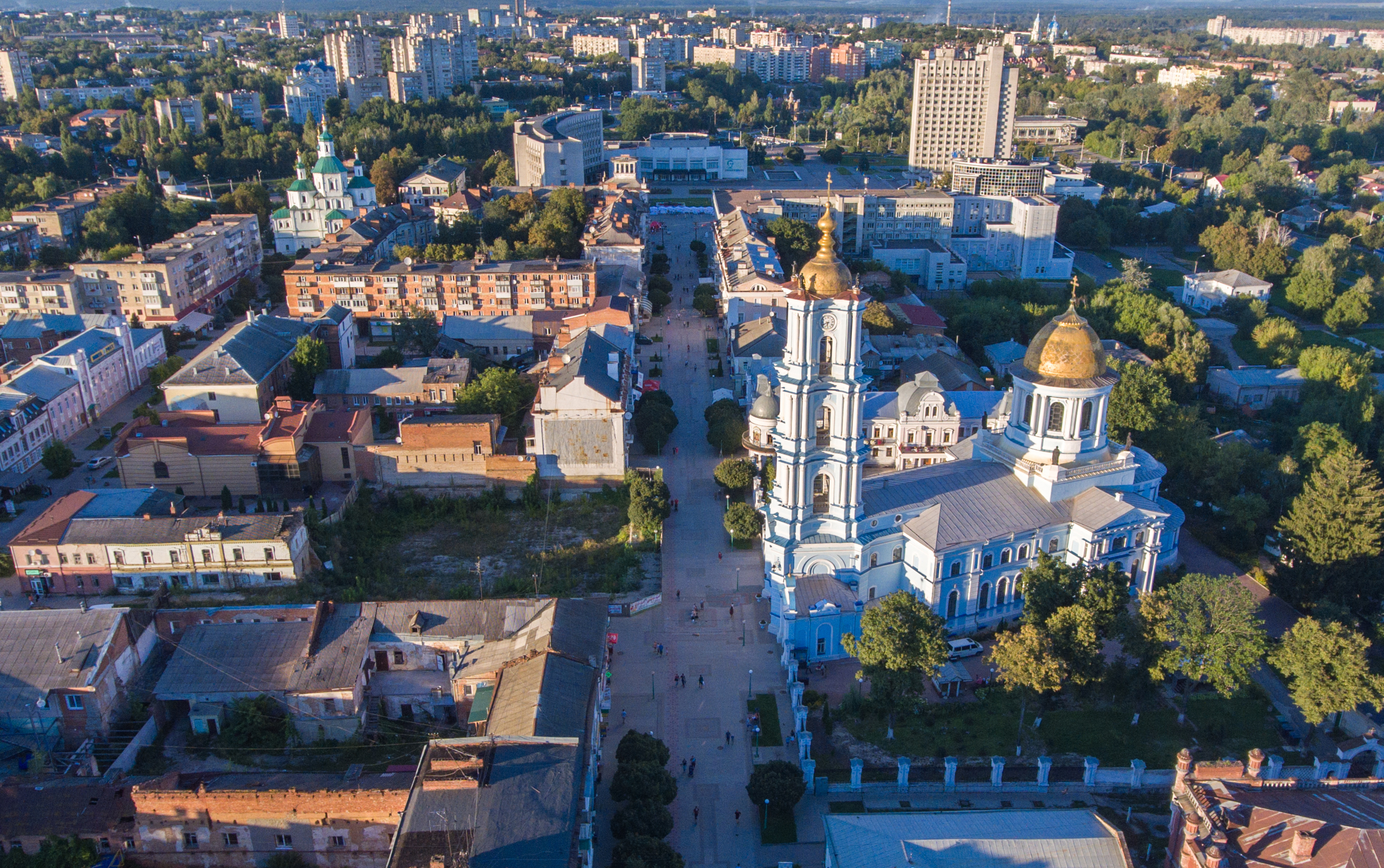
At almost the same time, Ukrainian regional authorities report a heavy strike on Sumy city. The Sumy regional military administration (OVA) states that six guided aerial bombs (KABs) were dropped on the city, with at least three impacting the center, hitting an apartment block, a shop, and a road where “there were many people” (Report 13). Initial counts put deaths at three, then updated to four killed and about 20 wounded, roughly half of them in serious condition, including children. A separate report (5) references a Russian Grad rocket strike on a crowded area in Sumy with “dozens of victims,” but that language appears more descriptive than an official casualty update; nonetheless, it points to ongoing, intense fire on urban areas.
Human and industry stakes are immediate. In Sumy, residential neighborhoods and commercial premises took direct hits at around 20:20 UTC, forcing emergency services to triage multiple critical injuries, including a 13‑year‑old girl. Repeated attacks on civilian centers in the northeast raise the likelihood of new internal displacement toward central and western Ukraine and potentially into the EU, straining already stretched municipal services and donor fatigue. For firms with operations, logistics nodes, or IT back‑offices in Kharkiv, Sumy, and the broader northeast corridor, the risk profile worsens: more frequent air raids, degraded power and road infrastructure, and higher insurance and security costs.
Militarily, Putin’s public order for a “security zone” formalizes what had been an incremental Russian push in the Kharkiv axis into an explicit strategic objective: occupying or rendering unusable swaths of Ukrainian territory along the border to suppress cross‑border strikes. That signals intent to hold and potentially deepen Russian presence beyond existing lines, increasing the chance of a protracted positional war across a wider frontage. The claimed capture of Kostiantynivka, if independently verified, would erode Ukraine’s layered defenses protecting Sloviansk and Kramatorsk — the last major urban bastion in Donbas — and could force Kyiv into difficult decisions on mobilization, resource allocation, and potential tactical withdrawals.
For markets, this package of developments does not yet shut any energy corridor, but it hardens expectations of a longer, more attritional war. European natural gas and power markets face renewed geopolitical risk premium as traders reassess the probability of Russian retaliation in the energy domain if the West responds with tighter sanctions or new weapons packages. Defense equities, especially in Europe and North America, stand to benefit from higher perceived demand for air defense, artillery, and ISR. Eastern European currencies and sovereign spreads may see incremental pressure on heightened security concerns and refugee‑support costs. Gold could see moderate safe‑haven inflows, while broader global equities are unlikely to react sharply absent a direct impact on energy flows.
In the next 24–48 hours, critical watchpoints include: independent geospatial confirmation of Russian control over Kostiantynivka; any visible Russian ground movement indicating the shape and depth of the new ‘security zone’ in Kharkiv and Sumy; changes in NATO and EU rhetoric or concrete decisions on air defense, long‑range weapons, or sanctions; and updated casualty and displacement data from Sumy. A significant Ukrainian counterstrike on Russian territory or high‑value assets, or a Russian follow‑on push toward Sloviansk–Kramatorsk, would further raise both military and market stakes.
MARKET IMPACT ASSESSMENT: Heightened Russia‑Ukraine escalation risk supports higher risk premia in European natural gas and power, marginal safe‑haven bid for gold and core sovereigns, and modest pressure on European equities and FX of front‑line states. No immediate hard disruption to oil or gas physical flows yet, but increased probability of sanctions tightening and defense‑spending trades.
Sources
- OSINT