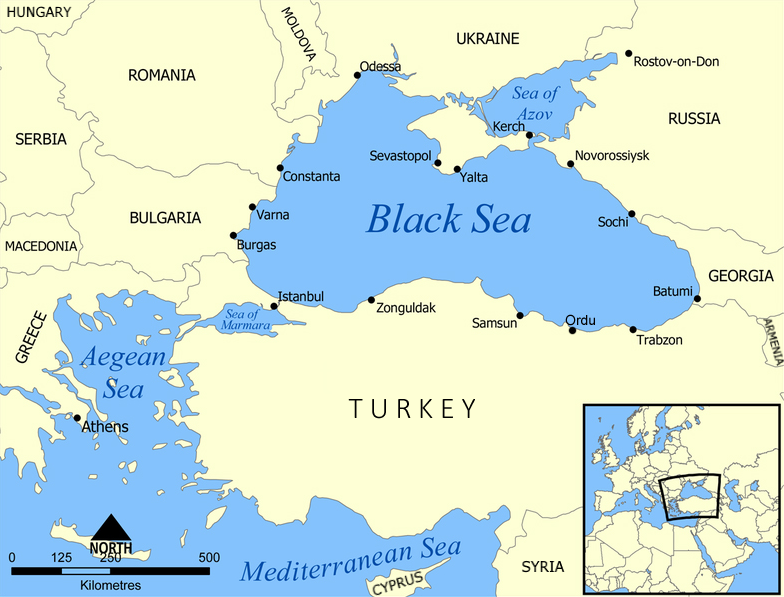
Reports: Russian Strikes Hit Foreign-Flag Ships in Black Sea, Killing Civilian Sailor
Severity: WARNING
Detected: 2026-06-19T06:10:15.194Z
Summary
Ukraine’s foreign minister says Russian forces attacked at least two civilian merchant vessels in the Black Sea around 06:00 UTC, killing a sailor on a Panama-flagged ship and injuring crew on another under St. Kitts and Nevis flag. A deliberate move against foreign-flag shipping would raise the risk profile of the Black Sea corridor, forcing insurers, grain traders, and energy shippers to reassess exposure.
Details
Russian forces have attacked civilian merchant vessels operating in the Black Sea, killing at least one foreign sailor and injuring several others, according to a statement by Ukrainian Foreign Minister Dmytro Kuleba carried on Ukrainian Telegram channels at approximately 06:09 UTC. Kuleba reported that a sailor was killed and two wounded on a Panama-flagged vessel, and that a second strike hit a ship sailing under the flag of Saint Kitts and Nevis, lightly wounding three more crew.
If confirmed, these would be direct attacks on foreign-flag commercial shipping in international waters of a major export basin, not on Ukrainian naval assets or port infrastructure. This is a significant escalation in Russia’s willingness to impose physical risk on neutral or third-country shipping operating near the war zone. The reports are currently single-sourced from Ukrainian officials and local channels, but the level of detail on flags and casualty numbers suggests operational reporting rather than generalized rhetoric. No independent imagery or Western government confirmation has yet been seen in the open-source feed.
The immediate human cost is borne by multinational crews whose vessels typically service grain, fertilizer, and oil product flows through the western Black Sea. Shipowners, charterers, and insurers with exposure to Black Sea routes — particularly those calling at Ukrainian or nearby ports — now face a higher probability that crews and hulls could be targeted or incidentally struck. For governments whose flags are involved, including Panama and Saint Kitts and Nevis, this raises diplomatic stakes: they will be pressed by shipowners and unions to demand protection or accountability.
Militarily, deliberate or reckless strikes on civilian shipping would expand the conflict’s operational envelope at sea and challenge existing de facto understandings about what is off-limits. Ukraine has used drones and missiles to push Russian navy units eastward; Russia responding by menacing or attacking merchant traffic would be a counter-lever designed to deter traffic to Ukrainian ports and exert economic pressure on Kyiv and its partners. NATO navies do not escort vessels inside the core warzone, but they monitor traffic; any sustained pattern of attacks could trigger calls in Western capitals for enhanced maritime surveillance, defensive measures, or additional sanctions.
For markets, the key variable is whether this is perceived as a one-off incident or the start of a sustained campaign against commercial shipping. A sustained threat would increase war-risk insurance premia for the Black Sea, potentially make some routes uninsurable, and push some operators to divert vessels or demand higher freight rates. Grain and oilseed markets could see renewed volatility if traders anticipate export disruptions or higher logistics costs from Ukraine and neighboring ports. Energy markets may also price in higher transport and security costs for Black Sea crude and product flows, particularly from smaller ports or non-Russian exporters. Safe-haven assets such as gold and the U.S. dollar could attract incremental flows on any sign that shipping attacks are targeting foreign-flag vessels as a class.
Over the next 24–48 hours, watch for: (1) confirmation or denial from Russian authorities and independent maritime tracking sources; (2) statements from Panama, Saint Kitts and Nevis, and the International Maritime Organization; (3) any moves by major P&I clubs and war-risk insurers to change premiums or exclusions for the region; (4) routing changes or halts announced by large shipping lines or grain traders. A pattern of additional incidents, or evidence that ships are being warned off Ukrainian-linked routes, would turn this from a localized tragedy into a systemic shock to Black Sea commerce.
MARKET IMPACT ASSESSMENT: Elevated risk premiums for Black Sea and possibly wider European shipping; upside pressure on wheat, corn, and oil freight rates; potential support for safe havens (gold, USD) if insurers restrict coverage or shippers reroute.
Sources
- OSINT