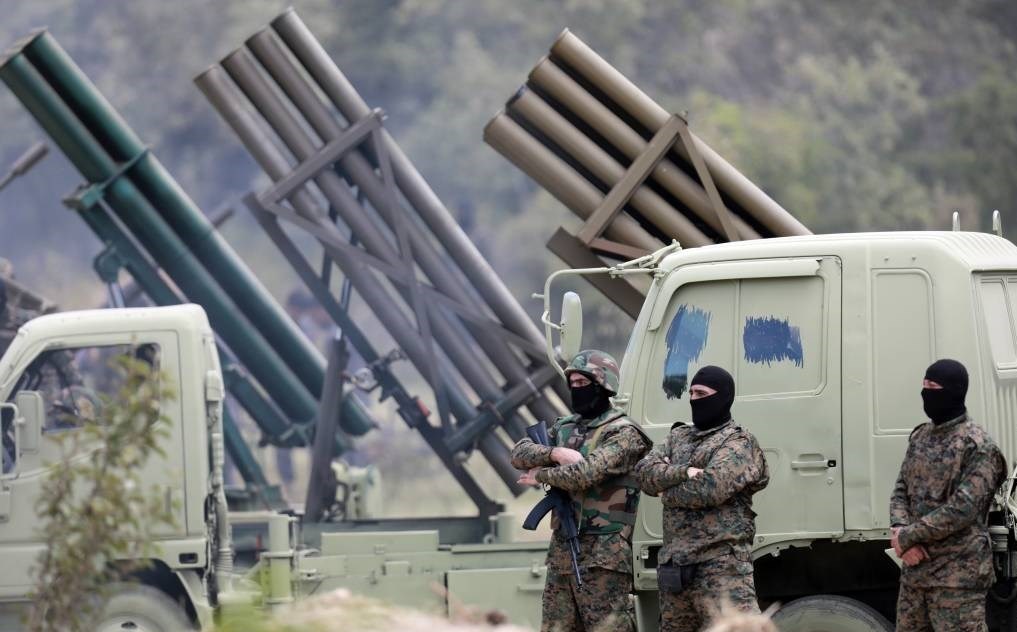
Reports: Hezbollah Missiles Hit Advancing Israeli Forces as Ground Clashes Widen
Severity: WARNING
Detected: 2026-06-19T00:20:12.098Z
Summary
Hezbollah is reported to have struck Israeli military vehicles and advancing troops near multiple villages in southern Lebanon around 00:00–00:02 UTC, using guided missiles and rockets as ground combat intensifies. The fighting tightens the de facto Lebanon front, heightening the risk of a wider Israel–Hezbollah war that could draw in Iran and the U.S. and reprice Middle East risk across energy, FX, and credit.
Details
Hezbollah and Israeli forces are engaged in some of their heaviest reported ground and missile exchanges in recent hours, with multiple OSINT accounts describing attacks on advancing Israeli units and vehicles in southern Lebanon late on 18 June and into 19 June UTC. Around 00:00–00:02 UTC, reports cite Hezbollah anti-tank guided missile (ATGM) strikes on an Israeli military vehicle in the Ali Al‑Taher/Kfar Tebnit area, alongside claims of rocket and guided‑missile salvos targeting Israeli troop concentrations advancing from Arnoun toward the Tabaja station area and from Zaffata toward nearby outskirts.
Open-source video and text posts suggest the use of Kornet‑E/Dehlavieh‑type ATGMs, which are manufactured in Russia and Iran, against Israeli armor or troop carriers. While casualty figures are not yet clear, the described pattern—ATGMs against moving vehicles and heavy cohetes and guided munitions fired at assembly areas—points to Hezbollah attempting to blunt and attrit an Israeli ground advance rather than conduct only symbolic cross‑border harassment. These reports are consistent with earlier indications of Israeli forces probing deeper into southern Lebanon and Hezbollah preparing layered defenses.
For civilians in southern Lebanon and northern Israel, this escalation raises the likelihood of rapid displacement, expanded evacuation zones, and more sustained disruption of power, health, and logistics infrastructure if artillery and airstrikes intensify in response. Local agriculture and cross‑border commercial flows—which underpin already fragile rural economies—are at risk if the fighting spreads toward key roads and towns. Insurance exposure for assets in northern Israel and southern Lebanon will rise if underwriters start to reprice war risk or carve out broader exclusions.
Militarily, wider use of long‑range ATGMs and heavier cohetes against maneuvering Israeli forces suggests Hezbollah is committing more of its anti‑armor capabilities and moving from sporadic fire to structured defensive engagements. If confirmed, this would signal Hezbollah’s intent to impose a higher cost on any Israeli push north of the border fence and could push the IDF toward heavier air and artillery use, with higher collateral damage risk. The involvement—direct or indirect—of Iranian‑produced systems will sharpen Tehran’s stake and could influence any parallel U.S.–Iran or regional diplomatic tracks.
Markets should treat this as a renewed upside risk to near‑dated oil and gas prices, primarily through a higher regional conflict premium rather than immediate physical disruption; any perception that fighting is edging toward key Lebanese or Israeli infrastructure, or risks spillover to Syria or the Eastern Mediterranean, would amplify that move. Gold and other safe‑haven assets are likely to find support, while Israeli equities, shekel assets, and regional high‑yield credit could face incremental pressure. Defense names supplying precision munitions, ISR, and active protection systems may gain on expectations of higher consumption and resupply.
In the next 24–48 hours, watch for: (1) verified IDF statements or mapping that confirm or deny ground advances toward the named areas and any significant IDF casualties; (2) evidence of Hezbollah escalating to deeper‑range missile attacks on major Israeli urban or infrastructure targets, which would be a clear threshold toward a broader war; (3) any Iranian or U.S. official commentary linking these clashes to wider regional red lines; and (4) signals from insurers, shipping lines, or energy majors about changes in risk assessments for Levant ports or offshore fields. A shift in any of these indicators would force markets and governments to reassess the probability of a full‑scale Israel–Hezbollah confrontation.
MARKET IMPACT ASSESSMENT: Near-term support for oil and gold on elevated regional war risk; pressure on Israeli assets and EMFX with Levant exposure; modest bid for defense equities.
Sources
- OSINT