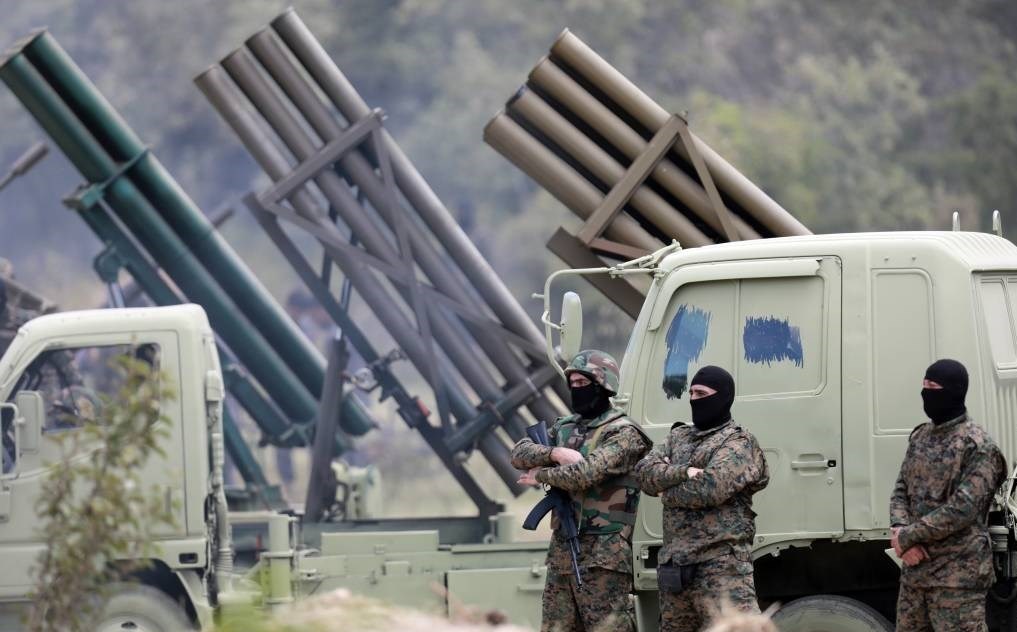
Hezbollah Gunman’s Border Raid Tests Israel’s Northern Defenses and Escalation Threshold
An armed Hezbollah fighter reached the Israel–Lebanon border area near northern communities and opened fire before being killed, prompting Israel to deploy elite Shayetet 13 commandos and aircraft in an ongoing sweep. For residents on both sides of the frontier, the episode turns the border from a line on a map into a lived vulnerability—and raises fresh questions about how close the war is to a wider northern conflagration.
For communities along Israel’s northern edge, the danger from Hezbollah is usually measured in rockets arcing over the horizon. On 9 June, it arrived in a different form: a lone gunman with a rifle and knife who reached the border fence near Misgav Am and Ramim Ridge, opened fire on Israeli troops, and forced one of Israel’s most secretive commando units into a manhunt on home soil.
According to the Israel Defense Forces (IDF) and multiple Israeli media outlets, gunfire was reported around midday local time in the Ramim Ridge area opposite southern Lebanon. The IDF says its soldiers returned fire and "neutralized a terrorist" with no casualties among Israeli forces. Israeli reports identify the assailant as a Hezbollah fighter who managed to reach close to the border fence near the Misgav Am community, with some accounts claiming he actually crossed into Israeli territory near the town of Margaliot before being killed. The IDF has not publicly confirmed a full cross‑border penetration and continues to search the area for a possible second infiltrator.
For residents of Misgav Am, Margaliot and surrounding kibbutzim—many of whom have already endured months of rocket fire and evacuations—the sight of helicopters, drones and special forces combing nearby fields is another reminder that the front line is now measured in meters from their homes. Even if no Israelis were physically harmed, the knowledge that an armed fighter could reach or cross the fence will land heavily in communities whose children are used to sirens, not small‑arms fire.
Militarily, the incident is significant because it challenges Israel’s layered defenses on a front that has been simmering since the Gaza war exploded into a wider confrontation with Hezbollah. The deployment of Shayetet 13, Israel’s elite naval commando unit usually reserved for high‑risk operations abroad, underscores how seriously the IDF treats any suggestion of a ground infiltration. At the same time, Hezbollah claimed several separate operations against Israeli forces in southern Lebanon on Tuesday, and Israel carried out fresh airstrikes near the Lebanese city of Tyre, adding to a cross‑border exchange that has already killed thousands in Lebanon and displaced tens of thousands in northern Israel.
Strategically, the stakes turn on whether this is treated as an isolated raid or as part of a shift in Hezbollah’s tactics. The group has largely relied on missiles, drones and anti‑tank fire rather than sending fighters across the fence—both to limit its own casualties and to avoid triggering a full‑scale Israeli ground response. If Hezbollah is now probing Israel’s border with small infiltration teams, that could force the IDF to divert more elite units to static defense and increase the chance of close‑quarters engagements that are harder to control or de‑escalate.
The incident also brushes up against a fragile set of "rules" that have informally governed this front: some in Israel argue that a physical crossing, not just rocket fire, could justify a major escalation toward Beirut’s southern suburbs. Commentators are already debating whether a fighter reaching the fence or briefly stepping across counts as such a crossing, and what response that would warrant when Israel is already deeply engaged on multiple fronts—including with Iran itself.
Key Takeaways
- Around midday on 9 June, a Hezbollah fighter armed with a rifle and knife reached the Israel–Lebanon border area near the Misgav Am community and Ramim Ridge and opened fire on IDF troops.
- Israeli forces shot and killed the assailant; no Israeli casualties have been reported.
- Israeli media differ on whether the fighter fully crossed into Israeli territory near Margaliot; the IDF has not confirmed a full penetration and is still searching the area for a possible second infiltrator.
- Israel deployed helicopters, drones and its Shayetet 13 special forces unit to the area, underlining the seriousness attached to possible ground infiltrations.
- The raid occurred amid ongoing Hezbollah rocket and missile attacks and fresh Israeli airstrikes in southern Lebanon, deepening fears of a broader northern war.
Outlook & Way Forward
In the coming days, Israel’s political and military leadership will decide whether to treat the episode as a warning shot or the start of a more dangerous phase. Heightened patrols, new fortifications and expanded evacuation zones along the northern border are all likely, as is pressure from local leaders to restore a sense of safety before displaced residents return.
For Hezbollah, the calculus is more complex. If its leadership authorized a ground raid, they will now weigh whether the propaganda value of showing fighters at or over the fence justifies the risk of provoking a larger Israeli response. Both sides have reasons to avoid a full‑scale northern war while the conflict with Iran rages and diplomacy over a potential US‑Iran deal remains fragile—but border incidents like this make miscalculation easier.
Regional mediators, including the United States and European governments already focused on de‑escalating Israel–Lebanon tensions, will see this as another data point that the current "managed" confrontation is fraying. If infiltrations or near‑infiltrations become more frequent, the question will not be whether the northern front explodes, but when—and how much of Lebanon and northern Israel is pulled into the blast radius.
Sources
- OSINT