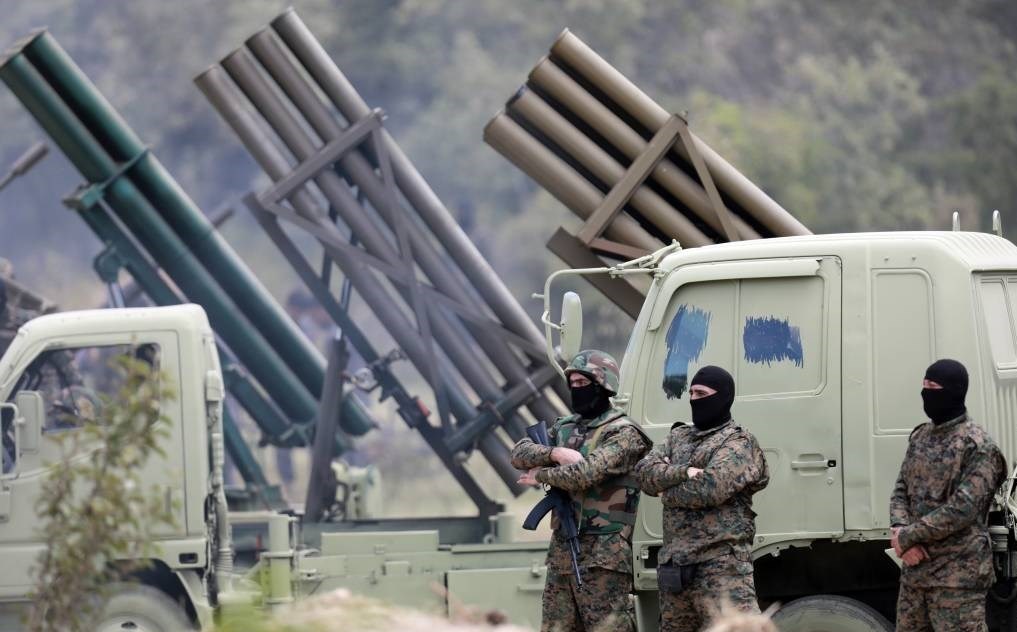
Hezbollah ATGM Strike on Israeli Merkava Near Beaufort Castle Signals Escalation Risk on Lebanon Front
Hezbollah has released footage it says shows an anti‑tank guided missile hitting an Israeli Merkava tank near Beaufort Castle in southern Lebanon, a historically symbolic ridge line overlooking northern Israel. The strike puts front‑line crews under fresh pressure and raises the risk that a grinding border conflict could tip into a broader war neither side openly claims to want.
A guided missile punching into one of Israel’s most iconic tanks on a historically contested hilltop is more than a battlefield vignette; it is a warning shot about how quickly the Lebanon front could slide into something far larger. Hezbollah’s latest video release is designed to make that risk harder to ignore in both Jerusalem and Beirut.
On 9 June, Hezbollah published footage purporting to show an anti‑tank guided missile (ATGM) striking an Israeli Merkava tank near Beaufort Castle in southern Lebanon. The location is loaded with history: a fortified ridge that commands views into northern Israel and has long been a symbol of control over the borderland. Israeli officials have not immediately provided a detailed account of the incident, and casualty figures and the extent of damage to the tank remain unconfirmed. The claim is part of a wider pattern of daily exchanges of fire along the Israel–Lebanon frontier.
For the soldiers inside that Merkava and their families, the video is chilling. Israel’s armored corps has long been trained to believe in the tank’s survivability; a successful ATGM hit is a reminder that no vehicle is invulnerable, particularly in the confined, observation‑rich terrain of southern Lebanon. On the Lebanese side, civilians living near firing positions around Beaufort Castle are again caught in the blast radius of strategy — their villages exposed to retaliatory artillery and airstrikes whenever Hezbollah uses nearby ground to target Israel.
The strike unfolds against a backdrop of expanding Israeli operations in southern Lebanon. Israeli fighter jets have carried out new waves of airstrikes in and around the city of Tyre, with confirmed attacks on the village of al‑Abbasiya and reported strikes in Deir Qanoun Ras al‑Ain. Together, these moves point to a border fight that is no longer confined to sporadic rocket fire but increasingly resembles a low‑intensity war, with each side probing the other’s defenses and political red lines.
Strategically, Hezbollah’s decision to showcase an ATGM hit on a Merkava near Beaufort serves several aims. It signals to Israel that any deeper ground incursion into southern Lebanon would be met with layered, lethal defenses. It reassures Hezbollah’s supporters that the group can still inflict pain on a technologically superior adversary. And it reminds regional and international actors that the Lebanon front is tied to broader confrontations involving Iran and Gaza — meaning any miscalculation here could ripple well beyond the ridge lines of the south.
For Israel’s military planners, the footage is a data point in a larger risk assessment. Each exposed tank, each filmed strike, increases domestic sensitivity to casualties and equipment losses in Lebanon. That, in turn, can shape the calculus over whether to launch a major operation to push Hezbollah back from the border, or to accept a grinding, attritional exchange of fire that leaves northern Israeli communities periodically evacuated and under intermittent rocket threat.
If this pattern of escalation continues, decision points are approaching for political leaders on both sides. Hezbollah must decide how far it is willing to push calibrated attacks before inviting a large Israeli response that could devastate Lebanese infrastructure. Israel must weigh whether ongoing ATGM and rocket attacks on its border units and towns are tolerable, or whether they cross a threshold that justifies a broader campaign.
Internationally, diplomatic pressure will focus on preventing the Lebanon front from igniting while other regional flashpoints — notably over Iran’s nuclear file and Gaza — remain unresolved. Yet as more videos of targeted strikes circulate, commanders on the ground face a more immediate reality: every patrol near the border now carries a higher perceived risk, and every decision to fire or hold back can either cool or inflame an already unstable line of contact.
Key Takeaways
- Hezbollah released footage claiming an ATGM strike on an Israeli Merkava tank near Beaufort Castle in southern Lebanon on 9 June.
- Casualty figures and the extent of damage are not yet independently confirmed, but the incident fits into a pattern of intensified exchanges along the Israel–Lebanon border.
- Israeli jets have carried out new strikes around Tyre, including al‑Abbasiya and reportedly Deir Qanoun Ras al‑Ain, signaling a widening target set.
- The engagement underscores the vulnerability of armored units in southern Lebanon’s terrain and increases risk for nearby civilians on both sides of the border.
- The incident heightens escalation risks on a front tied to broader regional confrontations involving Iran and Gaza.
Outlook & Way Forward
Absent a political arrangement to freeze or roll back cross‑border fire, the Lebanon front is drifting toward a more entrenched, high‑intensity standoff. Hezbollah is likely to continue selective, high‑visibility strikes — including against armor and outposts — to maintain pressure on Israel and demonstrate deterrent capability, while Israel will likely answer with airstrikes deeper into southern Lebanon.
The question is whether either leadership decides that the current level of attrition is more dangerous than a decisive military operation. External mediators, including European and U.S. envoys, may seek new de‑confliction mechanisms or updated understandings on force deployment near the border. Until then, each successful ATGM strike and each Israeli bombing run will add to a ledger of grievances that makes a sudden, wider war on the northern front more plausible, even if neither side publicly calls for it.
Sources
- OSINT