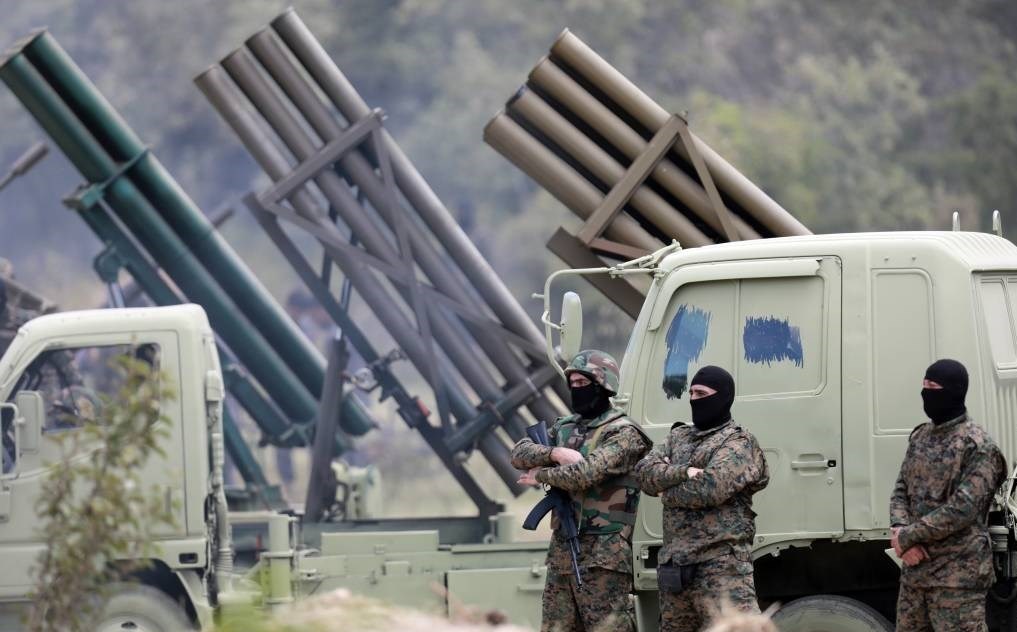
Hezbollah’s Qassem Urges Overthrow of Lebanese Government
In a speech on 24 May 2026 delivered ahead of Liberation and Resistance Day, Hezbollah Secretary‑General Naim Qassem called on Lebanese citizens to take to the streets to topple the government. His remarks around 17:17–17:21 UTC coincided with red‑alert sirens sounding in northern Israel amid ongoing border tensions.
Key Takeaways
- Hezbollah Secretary‑General Naim Qassem publicly urged Lebanese people on 24 May to take to the streets and overthrow the current government.
- Qassem framed the call as part of resisting an alleged “American‑Israeli project” and criticized Beirut for failing to enforce a ceasefire with Israel.
- Red‑alert sirens sounded several times in northern Israel during his speech, underscoring heightened cross‑border tensions.
- The rhetoric raises the risk of domestic political destabilization in Lebanon alongside continued confrontation on the Israeli‑Lebanese border.
On 24 May 2026, Hezbollah Secretary‑General Naim Qassem issued one of the movement’s sharpest public challenges to Lebanon’s political order in recent years, explicitly endorsing street mobilization to bring down the sitting government. Speaking in the evening—reports of his remarks surfaced between 17:17 and 17:21 UTC—during an event marking the upcoming Liberation and Resistance Day, Qassem declared that “it is the people’s right to take to the streets and topple the government” as part of confronting what he described as an “American‑Israeli project that aims at our institutions.”
The speech, delivered on the eve of commemorations for the 26th anniversary of Israel’s 2000 withdrawal from southern Lebanon, combined celebration of past resistance with a pointed indictment of Lebanon’s current leadership. Qassem accused the government of failing to enforce a ceasefire with Israel, noting that more than 15 months after its formal adoption, Israeli attacks in the south allegedly continue while the state remains “incapable of implementing” the truce. He warned that if the government is unable or unwilling to act, “others” would take responsibility, implying that Hezbollah reserves the right to escalate.
During Qassem’s address, red‑alert sirens reportedly sounded several times in northern Israel, indicating either rocket or drone launches and adding an immediate sense of confrontation to his words. While the precise operational link between events on the ground and his speech is unclear, the simultaneity underscores the fragility of the de facto rules of engagement along the Lebanese‑Israeli frontier.
Hezbollah, a powerful Shi’a Islamist movement, wields significant military and political influence in Lebanon, controlling a large armed force outside the formal chain of command and holding seats in parliament and past cabinets. Qassem’s call for the government’s overthrow signals mounting frustration within the group over Beirut’s perceived alignment with Western and Gulf interests and its handling of the protracted economic crisis and border tensions.
Lebanon’s ruling coalition, already beset by chronic fiscal collapse, institutional paralysis, and public distrust, faces a direct rhetorical challenge to its legitimacy from an actor with a demonstrated capacity to mobilize mass protests and exercise coercive power. Other political blocs—especially Christian and Sunni factions wary of Hezbollah’s dominance—are likely to interpret Qassem’s remarks as an attempt to further tilt the balance of power in Hezbollah’s favor under the guise of popular mobilization.
Regionally, Hezbollah’s messaging is intertwined with the broader confrontation involving Iran, Israel, and the United States. Qassem’s reference to an “American‑Israeli project” echoes Iranian narratives about regional order and the perceived threat of normalization processes such as the Abraham Accords. At the same time, Israel has repeatedly warned that it will not tolerate a heavily armed Hezbollah presence on its northern border, particularly amid ongoing hostilities in other theaters.
The speech comes as cross‑border exchanges of fire have persisted despite formal ceasefire arrangements, with sporadic rocket launches from Lebanon and retaliatory Israeli air or artillery strikes. Qassem’s emphasis on the government’s failure to enforce the ceasefire implicitly justifies Hezbollah’s continued military activity and suggests limited interest in full de‑escalation absent significant concessions from Israel and its allies.
Outlook & Way Forward
In the short term, Qassem’s pronouncements are likely to intensify Lebanon’s domestic polarization. Pro‑Hezbollah constituents and allied parties may seek to organize demonstrations or political campaigns framed as a popular uprising against a “failed” government. However, widespread exhaustion from years of economic hardship—and distrust of all political elites—could limit mobilization or produce fragmented protests not fully under Hezbollah’s control.
The government, for its part, will be under pressure to avoid direct confrontation with Hezbollah while preserving a minimum of institutional authority. Security services may be instructed to manage demonstrations carefully, prioritizing de‑escalation and avoiding images of state forces clashing with Hezbollah supporters. International donors and mediators, including European states and the UN, will likely call for restraint, mindful that overt political crisis could further delay urgently needed economic reforms and financial support.
On the regional front, the intersection of Qassem’s escalatory rhetoric with active alerts in northern Israel heightens the risk of miscalculation. Any significant Hezbollah action under the banner of confronting the “American‑Israeli project”—whether in the form of increased rocket fire, drone incursions, or attacks on Israeli or Western interests—could trigger a sharp Israeli response and a rapid slide toward wider conflict. Observers should watch for changes in the tempo and range of Hezbollah cross‑border operations, Israeli military deployments in the north, and signals from Tehran regarding acceptable escalation thresholds.
Strategically, Lebanon is entering a period of heightened uncertainty in which domestic governance crises and external security pressures reinforce one another. The path forward will hinge on whether key Lebanese factions can negotiate a limited understanding that preserves the government’s formal role while accommodating Hezbollah’s security demands—or whether zero‑sum maneuvering leads to governmental collapse or a de facto shift toward parallel authorities. International actors aiming to stabilize Lebanon will need to calibrate engagement with both state institutions and non‑state power centers while remaining alert to early warning indicators of a broader confrontation along the Israeli‑Lebanese frontier.
Sources
- OSINT