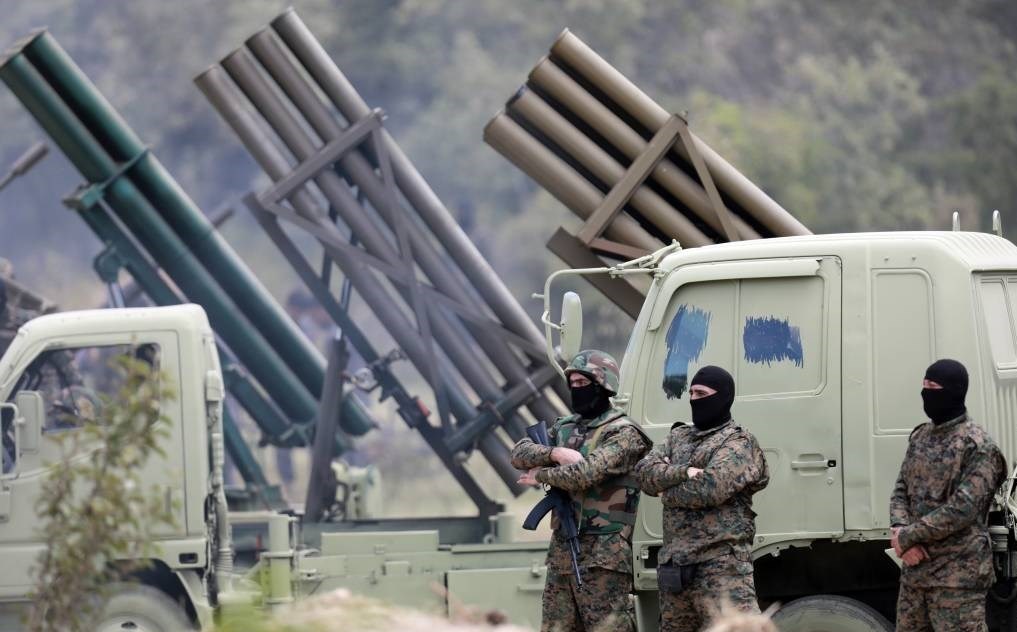
Hezbollah FPV Drones Strike Israeli Tanks and APCs in Border Clash
On 24 May, Hezbollah claimed multiple first-person-view (FPV) drone attacks against Israeli armored vehicles in southern Lebanon and northern Israel, including hits on a Merkava IV tank near Taybeh and several Namer APCs. The strikes occurred amid ongoing cross-border hostilities in the late morning and early afternoon.
Key Takeaways
- Hezbollah reports FPV drone strikes on an Israeli Merkava Mk. IV tank near Taybeh and on three Namer armored personnel carriers in southern Lebanon on 24 May 2026.
- The group used fiber-optic–guided FPV kamikaze drones armed with RPG-based anti-tank warheads, illustrating growing sophistication in loitering-munition tactics.
- These attacks occur as diplomatic efforts aim to fold the Hezbollah–Israel front into a broader US–Iran regional ceasefire arrangement.
- Persistent low-intensity, high-tech engagements raise the risk of sudden escalation along the Israel–Lebanon border.
Around 14:01 UTC on 24 May 2026, Hezbollah-linked channels released footage and claims that a first-person-view (FPV) attack drone had struck an Israeli Merkava Mk. IV main battle tank near Taybeh, close to the Israel–Lebanon border. The system was reportedly a fiber-optic–guided FPV kamikaze drone, likely modified to carry a Soviet-designed PG-7VL anti-tank rocket-propelled grenade warhead, providing sufficient penetration to damage heavy armor if it strikes vulnerable areas.
Earlier, at approximately 12:04 UTC, additional footage and statements indicated that Hezbollah’s FPV drones had hit three Israeli "Namer" armored personnel carriers in southern Lebanon. As with the Merkava attack, these drones appear to be improvised loitering munitions, adapted from commercially available platforms but outfitted with wire-guidance and shaped-charge warheads. While exact damage assessments are not independently confirmed, the pattern shows sustained use of precision drone strikes against Israeli armored units rather than sporadic experimentation.
These engagements are part of an ongoing low-intensity conflict along the Israel–Lebanon frontier, in which Hezbollah and the Israel Defense Forces (IDF) exchange artillery, rocket fire, and drone strikes. Reports earlier on 24 May noted that Hezbollah claimed up to a dozen attacks targeting Israeli air defense sites, including Iron Dome batteries and drone systems in southern Lebanon and northern Israel. Israel has responded with artillery shelling and airstrikes against Hezbollah positions and infrastructure.
Hezbollah’s drone capability has evolved rapidly since the onset of the latest Gaza and regional crises. The group now fields a portfolio of reconnaissance UAVs and FPV strike platforms that can be guided with high precision into tank hatches, engine compartments, or radar arrays. The use of fiber-optic tethering improves resistance to electronic warfare, a critical factor given Israel’s advanced jamming capabilities. This trend mirrors developments in Ukraine and other theaters where small, inexpensive FPV drones have become primary anti-armor and anti-personnel tools.
The timing is especially sensitive given parallel diplomatic moves. Draft terms of a US–Iran memorandum of understanding, discussed publicly on 24 May, include an "end to the regional conflict across all fronts, including Lebanon". That implies pressure on Tehran to restrain Hezbollah’s operations in exchange for sanctions relief and a re-opening of the Strait of Hormuz. Israeli statements suggest that any ceasefire arrangement would still allow preemptive IDF actions to prevent Hezbollah’s rearmament, including air and drone strikes inside Lebanon—a potentially destabilizing carve-out.
The key players are Hezbollah’s military wing, the IDF’s Northern Command and armored units, and their respective political leaderships in Beirut (effectively including Tehran) and Jerusalem. For Hezbollah, successful high-visibility strikes on high-value targets like Merkava tanks serve as both deterrent and propaganda: they demonstrate that Israeli armor is vulnerable even under heavy air-defense cover and signal that Hezbollah can impose costs if Israel escalates. For Israel, repeated drone hits on frontline units increase pressure to intensify suppression campaigns against Hezbollah launch sites and drone workshops.
Outlook & Way Forward
In the near term, expect a familiar cycle: Hezbollah will likely publicize additional FPV footage, while the IDF intensifies surveillance and strike operations targeting suspected drone teams, command posts, and logistical hubs. Both sides have an interest in calibrating violence below the threshold that would trigger a full-scale war—particularly as the fate of the US–Iran MoU, and thus broader regional temperature, remains uncertain. Still, the risk of a misstep is high: a mass-casualty incident involving IDF soldiers or Israeli civilians, or a large Hezbollah loss due to an Israeli deep strike, could quickly change political calculations.
From a technological and tactical standpoint, the continued use of FPV drones against armor will push Israel to expand hard-kill active protection systems, field more counter-drone assets at the tactical edge, and refine combined arms doctrine to reduce exposure in predictable locations. Hezbollah, in turn, will experiment with swarming tactics, multi-axis attacks, and integration of FPVs with indirect fire to saturate defenses.
Over the medium term, the trajectory of the Hezbollah–Israel front will be a critical indicator of whether the proposed regional ceasefire architecture is sustainable. If Iranian authorities genuinely move to constrain Hezbollah operations as part of their commitments, analysts should see a measurable decline in cross-border drone and rocket incidents. Conversely, continued or increased FPV activity would signal limits to Tehran’s leverage or its willingness to exercise it, undermining confidence in any broader US–Iran arrangement. Monitoring the volume, sophistication, and targeting of Hezbollah’s drone attacks will therefore be essential for assessing escalation risk across the Levant.
Sources
- OSINT